

You’re always looking for an edge, a way to stay ahead of the curve in the ever-evolving world of cybersecurity. As a savvy business leader, you understand that your hosting infrastructure is the bedrock of your operations, and its security is non-negotiable. The landscape is shifting rapidly, and what was cutting-edge yesterday is merely standard today. You need to know what’s coming, what innovations will define the next generation of secure hosting. You need to be prepared for 2026.
This isn’t about incremental improvements; it’s about paradigm shifts. It’s about technologies that will fundamentally reshape how you protect your data, applications, and customer trust. Prepare yourself for a deep dive into the innovations that will set the secure hosting standard in two short years.
You’re tired of reactive security, constantly playing catch-up with sophisticated attackers. In 2026, you’ll witness a dramatic leap in automated proactive threat hunting, transforming your cybersecurity posture from defensive to offensive.
1.1 AI-Powered Anomaly Detection Beyond Signatures
Signature-based detection is a relic of the past for truly advanced threats. You’ll be leveraging AI and machine learning models that go far beyond known patterns. These systems will establish intricate baselines of “normal” behavior across your entire hosting environment, from network traffic flow to application process calls and user access patterns. The moment a deviation, however subtle, occurs, it will be flagged. This isn’t just about identifying malware; it’s about detecting novel attack techniques, insider threats, and zero-day exploits before they can inflict damage. You’ll see these systems learning and adapting in real-time, making them incredibly resilient to obfuscation techniques employed by adversaries. Imagine a system that recognizes a slightly altered API call or an unexpected spike in data egress to an unusual destination, not because it matches a known threat, but because it breaks its intricate understanding of your legitimate operations.
1.2 Autonomous Remediation Playbooks
Identifying a threat is just one part of the equation; prompt and decisive action is the other. Manual intervention, even by highly skilled security professionals, introduces delays that attackers exploit. In 2026, you’ll benefit from sophisticated autonomous remediation playbooks. These aren’t simple “quarantine this file” rules. These playbooks, driven by AI, will orchestrate complex responses: automatically isolating compromised virtual machines, revoking suspicious access credentials, patching vulnerabilities on the fly, rerouting network traffic away from affected segments, and initiating forensic data collection – all within milliseconds. You’ll have predefined tiers of automation, allowing you to choose the level of autonomous action based on the confidence level of the threat detection and the criticality of the affected system. This reduces your Mean Time To Respond (MTTR) from hours to seconds, significantly mitigating potential damage.
1.3 Predictive Threat Intelligence Integration
Your security decisions will no longer be based solely on past events. You’ll have access to predictive threat intelligence seamlessly integrated into your hosting infrastructure’s security stack. This intelligence, gathered from a vast global network of sensors, dark web monitoring, and geopolitical analysis, will anticipate emerging threats and attack vectors before they even materialize. Your systems will automatically adjust security policies, deploy micro-segmentation rules, and fine-tune anomaly detection thresholds based on predicted campaigns targeting your industry or region. This foresight allows you to build proactive defenses, essentially fortifying your digital castle walls before the siege begins. You’ll be moving from merely defending against known attacks to actively preparing for predicted ones.
As we explore the advancements in cybersecurity innovations shaping hosting infrastructure in 2026, it’s essential to consider how these developments will impact various business models, including those of solo entrepreneurs. A related article that delves into the essential business tools for solo entrepreneurs is available at The Solo Entrepreneur’s Tech Stack: Essential Business Tools. This resource highlights the importance of robust cybersecurity measures in the tech stacks of small businesses, ensuring they remain secure while leveraging the latest hosting technologies.
2. Quantum-Resistant Cryptography at the Infrastructure Layer
The looming threat of quantum computing breaking current encryption standards is no longer a distant theoretical concern. In 2026, you’ll see a concerted effort to implement quantum-resistant cryptography (QRC) directly into your hosting infrastructure, ensuring future-proof data protection.
2.1 Post-Quantum Key Exchange and Digital Signatures
Your data, both in transit and at rest, relies heavily on cryptographic primitives that are vulnerable to quantum attacks. By 2026, you’ll find hosting providers rolling out infrastructure that supports and leverages post-quantum key exchange algorithms (e.g., CRYSTALS-Kyber, SABER) and digital signature schemes (e.g., CRYSTALS-Dilithium, Falcon). This shift will secure your TLS/SSL connections, VPN tunnels, and code signing processes against adversaries equipped with powerful quantum computers. You’ll benefit from hybrid modes initially, where both current and quantum-resistant algorithms are used concurrently, providing a graceful transition and ensuring backward compatibility while building confidence in the new standards. This means your encrypted communications and integrity checks will remain robust even if a quantum computer were to become practically available.
2.2 Quantum-Safe Data Storage Encryption
Your persistent data stores – databases, object storage, and file systems – are prime targets. You’ll see the adoption of quantum-safe algorithms for data at rest encryption. This extends beyond simple disk encryption to include cryptographic hashing for data integrity, authenticated encryption schemes for data blocks, and secure multi-party computation (MPC) for highly sensitive data where even encrypted data might be at risk if the encryption key is compromised by quantum means. The focus here is on ensuring that even if your encryption keys are eventually broken by a quantum computer, the data itself remains indecipherable. You’ll be offered options to migrate your existing sensitive data to these quantum-safe storage paradigms, ensuring your long-term archival data is protected against future threats.
2.3 Hardware Security Modules (HSMs) with QRC Capabilities
The root of trust for your cryptographic operations often resides in Hardware Security Modules (HSMs). In 2026, these critical components will be upgraded to natively support and accelerate quantum-resistant algorithms. This means that your cryptographic keys, whether classical or quantum-resistant, will be generated, stored, and managed within tamper-proof hardware, impenetrable to both classical and quantum attacks. These new HSMs will also offer secure computation environments for complex QRC operations, minimizing the performance overhead often associated with these more resource-intensive algorithms. You’ll gain an unassailable foundation for your cryptographic security, knowing that your most critical secrets are protected by quantum-proof hardware.
3. Decentralized Identity and Access Management (DIAM)

The traditional centralized identity model is a single point of failure. In 2026, you’ll see a significant move towards decentralized identity and access management (DIAM), offering enhanced security, privacy, and resilience for your hosting infrastructure.
3.1 Self-Sovereign Identity (SSI) for Infrastructure Access
Imagine a world where your administrators, developers, and even automated services don’t rely on a central identity provider that can be breached. Self-Sovereign Identity (SSI) leveraged by blockchain or distributed ledger technologies (DLTs) will become mainstream for critical infrastructure access. Instead of a username and password tied to a single vendor, identities will be composed of verifiable credentials issued by trusted entities and owned by the individual or service. Access privileges will be granted and verified based on these cryptographically secured credentials, without revealing unnecessary personal information. This drastically reduces the attack surface for stolen credentials and eliminates the honey pot of a centralized identity store. You’ll have finer-grained control and a more robust, decentralized trust model for every entity interacting with your hosting environment.
3.2 Zero-Trust Architectures Enhanced by Decentralization
While Zero-Trust has been a buzzword, truly implementing it at scale across complex hosting environments is challenging. DIAM will provide the missing link. Every access request, even from within your seemingly “trusted” internal network, will be meticulously authenticated, authorized, and continuously verified using decentralized identity. This means granular access policies enforced at the edge, where each microservice or component in your infrastructure verifies the verifiable credentials of the interacting entity before granting access. Compromise in one segment will not automatically grant access to others, as each segment will require its own decentralized identity verification. Your trust framework will no longer be based on network location but on cryptographic proof of identity and authorization, eliminating implicit trust within your perimeters.
3.3 Verifiable Credentials for Automated Service-to-Service Communication
It’s not just human users; your microservices, containers, and serverless functions constantly communicate. In 2026, you’ll secure these interactions using verifiable credentials exchanged between services. Instead of sharing API keys or relying on environment variables that can be compromised, services will present cryptographically signed assertions about their identity and authorized actions, validated against distributed ledgers. This creates an unforgeable and auditable trail of machine-to-machine interactions, significantly bolstering the security of your dynamic cloud-native applications. You’ll have confidence that critical internal APIs are only being accessed by truly authorized and authenticated services, dramatically reducing the risk of internal lateral movement post-breach.
4. Federated Confidential Computing and Trusted Execution Environments
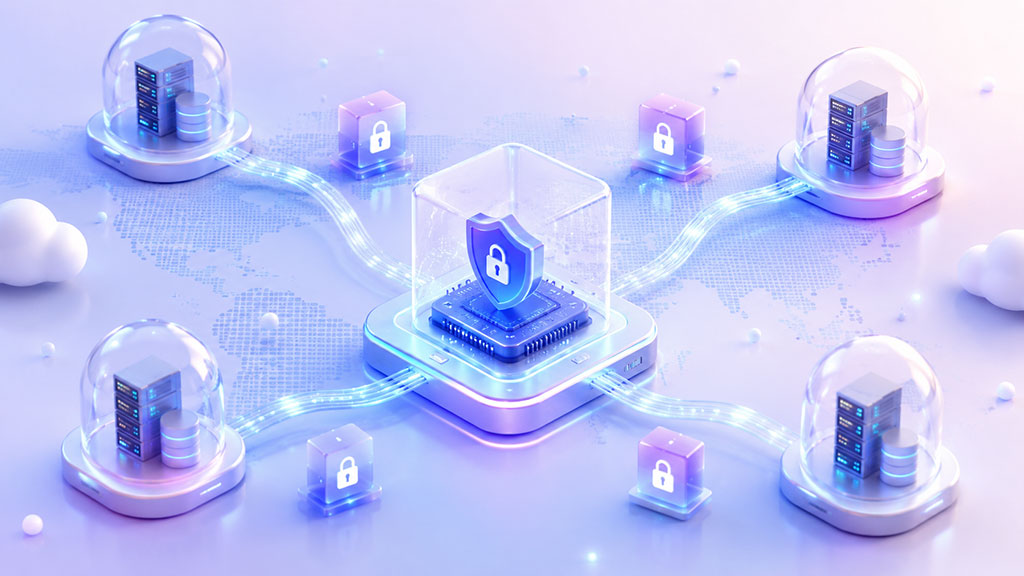
Protecting data in use has been the holy grail of cybersecurity. In 2026, you’ll finally achieve this with widespread adoption of federated confidential computing and advanced Trusted Execution Environments (TEEs) at the hosting infrastructure level.
4.1 Hardware-Enforced Isolation for Workloads
Your sensitive data, even while being processed, interrogated, or manipulated, will remain encrypted or entirely isolated within hardware-enforced TEEs (e.g., Intel SGX, AMD SEV-SNP, ARM CCA). This creates secure “enclaves” where data and code are protected from the operating system, hypervisor, cloud provider, and even privileged administrators. You’ll run critical applications, AI models, and cryptographic operations within these enclaves, ensuring that your data is never unencrypted or accessible outside of this trusted execution space, even in memory. This is a game-changer for industries dealing with highly sensitive information like healthcare, finance, and national security, allowing you to process confidential data without exposing it to the underlying infrastructure or its operators.
4.2 Multi-Party Computation (MPC) as a Service
Collaboration on sensitive datasets without ever exposing the raw data will become a reality. You’ll utilize Multi-Party Computation (MPC) offered as a service within your hosting infrastructure. This allows multiple organizations or departments to jointly compute results on their combined data without any single party revealing their individual inputs to the others. Imagine financial institutions collaboratively detecting fraud patterns without exchanging customer transaction data, or pharmaceutical companies pooling research data without exposing proprietary drug compounds. Your hosting provider will offer secure MPC frameworks and infrastructure, enabling these collaborative, privacy-preserving computations at scale.
4.3 Homomorphic Encryption for Cloud Data Processing
While still computationally intensive, advancements in homomorphic encryption (HE) will make it practical for specific use cases in 2026. This allows you to perform computations on encrypted data without decrypting it first. While not as widespread as TEEs, you’ll see HE being offered by hosting providers for specialized tasks like secure data analytics or AI model inference on highly sensitive, encrypted datasets. This pushes the boundary of data privacy even further, enabling third-party services to derive insights from your data without ever seeing the plaintext. You’ll be able to confidently offload certain analytical tasks to the cloud, knowing your data remains encrypted throughout its entire lifecycle, including during processing.
As we look ahead to 2026, the landscape of hosting infrastructure is being significantly influenced by groundbreaking cybersecurity innovations. These advancements are crucial for ensuring data integrity and protecting sensitive information in an increasingly digital world. For a deeper understanding of how these trends are evolving, you can explore a related article that discusses the dominance of US data centers in the 2025 web hosting market. This insightful piece highlights the importance of robust security measures in maintaining competitive advantage in the hosting industry. To read more, visit this article.
5. Hyper-Personalized and Adaptive Security Policies
<?xml encoding=”UTF-8″>
“`html
| Category | Metrics |
|---|---|
| Cloud Security | Percentage of hosting infrastructure protected by advanced cloud security measures |
| AI and Machine Learning | Number of AI-driven cybersecurity solutions implemented in hosting infrastructure |
| Zero Trust Architecture | Adoption rate of zero trust architecture in hosting infrastructure |
| Container Security | Percentage of hosting infrastructure utilizing container security solutions |
| Encryption | Percentage of data encrypted in hosting infrastructure |
“`
Your security policies today are often static and difficult to manage. In 2026, you’ll benefit from a revolution in security policy management, moving towards highly personalized and adaptive frameworks that respond dynamically to your operational context.
5.1 AI-Driven Policy Orchestration and Optimization
Managing a sprawling web of security policies across a complex cloud-native environment is a nightmare. You’ll leverage AI-driven policy orchestration engines that automatically generate, optimize, and enforce security policies across your container orchestration platforms, serverless functions, and infrastructure as code. These systems will learn your application’s behavior and dependencies, suggesting and implementing least-privilege policies automatically. They will detect policy conflicts, identify redundant rules, and even predict security gaps based on your operational changes. You’ll spend less time manually tweaking access controls and more time focusing on strategic security initiatives, as the AI continuously refines your security posture without human intervention.
5.2 Context-Aware Micro-Segmentation Beyond Network Boundaries
Micro-segmentation is good, but in 2026, it will evolve into ultra-granular, context-aware segmentation. Your system won’t just segment based on network IP or application port; it will segment based on user identity, device posture, application criticality, data sensitivity level, time of day, geographical location, and even the “trust score” of the calling workload or user. This dynamic segmentation will create an extremely fine-grained “zero-trust” environment where each interaction is evaluated against a rich set of contextual attributes. Access to a specific database table, for instance, might only be granted to a particular microservice during business hours, from an authorized IP range, if the user accessing that microservice has an elevated trust score and is using a compliant device.
5.3 Proactive Policy Validation and Drift Detection
Manual policy audits are error-prone and infrequent. You’ll utilize automated systems that continuously validate your security policies against your desired security posture and detect any “policy drift.” This means your infrastructure’s actual security configuration is constantly compared against its intended state, defined through declarative policy as code. Any deviation, whether due to an unauthorized change, a misconfiguration, or a new vulnerability, will be immediately flagged and, in many cases, automatically remediated. This ensures your security policies remain robust and effective, providing continuous compliance and preventing configuration vulnerabilities from emerging unknowingly. You’ll have an always-on “policy guardrail” protecting your environment.
FAQs
What are some key cybersecurity innovations shaping hosting infrastructure in 2026?
In 2026, key cybersecurity innovations shaping hosting infrastructure include advanced threat detection and response systems, AI and machine learning-powered security solutions, zero-trust architecture, and secure access service edge (SASE) frameworks.
How do advanced threat detection and response systems contribute to cybersecurity in hosting infrastructure?
Advanced threat detection and response systems use advanced analytics and machine learning to identify and respond to potential security threats in real-time, helping to protect hosting infrastructure from cyber attacks and breaches.
What role do AI and machine learning-powered security solutions play in hosting infrastructure cybersecurity?
AI and machine learning-powered security solutions help hosting infrastructure by providing proactive threat detection, automated incident response, and the ability to analyze large volumes of data to identify and mitigate potential security risks.
What is zero-trust architecture and how does it enhance cybersecurity in hosting infrastructure?
Zero-trust architecture is a security model that assumes no user or device can be trusted by default, requiring strict identity verification and access controls for all users and devices accessing hosting infrastructure, thereby reducing the risk of unauthorized access and data breaches.
How does secure access service edge (SASE) framework contribute to cybersecurity in hosting infrastructure?
Secure access service edge (SASE) framework integrates network security functions with wide-area networking capabilities to provide secure access to hosting infrastructure from any location, improving overall cybersecurity posture and enabling secure remote access for users.









Add comment