

As a savvy IT professional, you’re constantly battling the specter of server downtime. It’s the invisible enemy that saps productivity, frustrates users, and can cost your organization a hefty sum. But what if there was a way to glimpse into the future, to anticipate failures before they even manifest? Enter predictive monitoring – your proactive shield against the inevitable. This isn’t just about reacting to alerts; it’s about understanding the subtle murmurs and whispers of your infrastructure, interpreting them, and taking decisive action before a critical incident brings your operations to a grinding halt. Prepare to empower yourself with the knowledge to transform your approach to server management, moving from a reactive firefighting stance to a strategic, forward-thinking guardian of uptime.
You understand the pain of downtime. The frantic calls, the sweating IT teams, the frustrated end-users. Predictive monitoring doesn’t just alleviate these symptoms; it targets the root cause, transforming your operational efficiency and reputation.
1.1 Proactive Problem Resolution: Catching Issues Before They Escalate
Imagine knowing a disk is about to fail days before it actually does, or that a memory leak is subtly degrading performance. Predictive monitoring equips you with this foresight. Instead of scrambling to fix a downed server, you’re calmly scheduling maintenance, replacing components, or optimizing configurations before a catastrophic event occurs. This shifts your team from a crisis management mindset to one of strategic planning, allowing them to focus on innovation rather than reacting to emergencies. You’ll find your incident response times plummet, not because you’re fixing things faster, but because you’re preventing them from happening in the first place.
1.2 Reduced Downtime and Improved Uptime SLAs
This is the ultimate prize. Every minute of server downtime translates directly to lost revenue, decreased productivity, and a tarnished brand image. Predictive monitoring is your insurance policy. By identifying and addressing potential issues proactively, you dramatically reduce the likelihood of unplanned outages. This allows you to consistently meet and even exceed your service level agreements (SLAs), fostering trust with your customers and stakeholders. Think of the peace of mind knowing your core services are always available, always performing optimally.
1.3 Enhanced Performance and Resource Optimization
Beyond preventing failures, predictive monitoring illuminates opportunities for performance enhancement. You’ll gain insights into resource utilization trends that might otherwise go unnoticed. Perhaps a particular application consistently hogs CPU, or a database is experiencing escalating query times. Predictive models can highlight these subtle shifts, allowing you to reallocate resources, optimize code, or scale infrastructure strategically. This translates to a more responsive, efficient, and ultimately, a more cost-effective IT environment. You’re not just preventing problems; you’re actively building a better system.
1.4 Financial Savings and ROI
The seemingly abstract benefits of proactive monitoring coalesce into tangible financial gains. Every unplanned outage has a measurable cost, encompassing lost revenue, employee productivity, and even reputational damage. By preventing these outages, you directly save your organization money. Furthermore, optimized resource utilization means you’re getting more out of your existing hardware, potentially delaying costly upgrades or reducing cloud expenditure. The return on investment (ROI) for a robust predictive monitoring solution can be substantial, often paying for itself many times over through avoided losses and increased efficiency.
In the realm of server management, understanding the importance of predictive monitoring is crucial for preventing downtime. A related article that delves into maintaining website health is titled “A Guide on How to Find and Fix 404 Pages.” This resource provides valuable insights into identifying and resolving broken links, which can enhance user experience and reduce the likelihood of server issues. For more information, you can read the article here: A Guide on How to Find and Fix 404 Pages.
2. The Mechanics Behind the Magic: How Predictive Monitoring Works
Don’t be intimidated by the “predictive” aspect. At its core, it’s a sophisticated data analysis approach applied to your server infrastructure. You provide the raw material, and the system delivers actionable insights.
2.1 Data Collection: The Foundation of Foresight
You understand that without data, you’re flying blind. Predictive monitoring thrives on a constant stream of granular data from every corner of your server environment. This isn’t just basic uptime checks; it’s a deep dive into hundreds, if not thousands, of metrics.
2.1.1 System Health Metrics: The Vital Signs of Your Servers
Think of these as the medical readings of your digital patients. You’ll be continuously collecting data on CPU utilization, memory consumption, disk I/O, network bandwidth, and temperature. Are there unusual spikes? Is memory consistently creeping towards its limit? These are the early warning signs that traditional monitoring might miss or only flag after a critical threshold is breached. Predictive monitoring looks for trends in these vital signs, anticipating problems before they become critical.
2.1.2 Application Performance Metrics: Inside the Software Stack
Your servers are only as good as the applications they host. Predictive monitoring extends its gaze into the application layer, collecting data on request latency, error rates, database connection pools, transaction throughput, and garbage collection statistics. A sudden increase in database query times, for example, could indicate a developing bottleneck that will eventually impact server performance. You’re not just looking at the server shell; you’re peering into the heart of your applications.
2.1.3 Log Data Analysis: The Storyteller of Your Systems
Logs are often an untapped goldmine of information. Predictive monitoring solutions ingest vast quantities of log data – error logs, system logs, application logs, security logs – and use advanced parsing and analysis techniques to identify anomalous patterns. A sudden surge in failed login attempts, an unusual sequence of error messages, or repeated warning messages from a particular service could all be harbingers of a looming issue that human eyes might easily overlook in a sea of log entries. You’re transforming raw log noise into actionable insights.
2.1.4 Configuration and Change Management Data: The Human Element
Sometimes, problems aren’t purely technical; they’re introduced by human intervention. Predictive monitoring can incorporate data from your configuration management databases (CMDBs) and change management systems. An unauthorized configuration change, a recent software deployment, or a patch applied to a critical server can all be correlated with subsequent performance deviations or anomalies. By observing these links, you can quickly pinpoint the exact cause of a problem, even if it originated from a seemingly innocuous change.
2.2 Advanced Analytics: From Data to Insight
Collecting data is just the first step. The true power of predictive monitoring lies in its ability to transform this raw information into meaningful, actionable insights. This is where sophisticated algorithms come into play.
2.2.1 Anomaly Detection: Spotting the Outliers
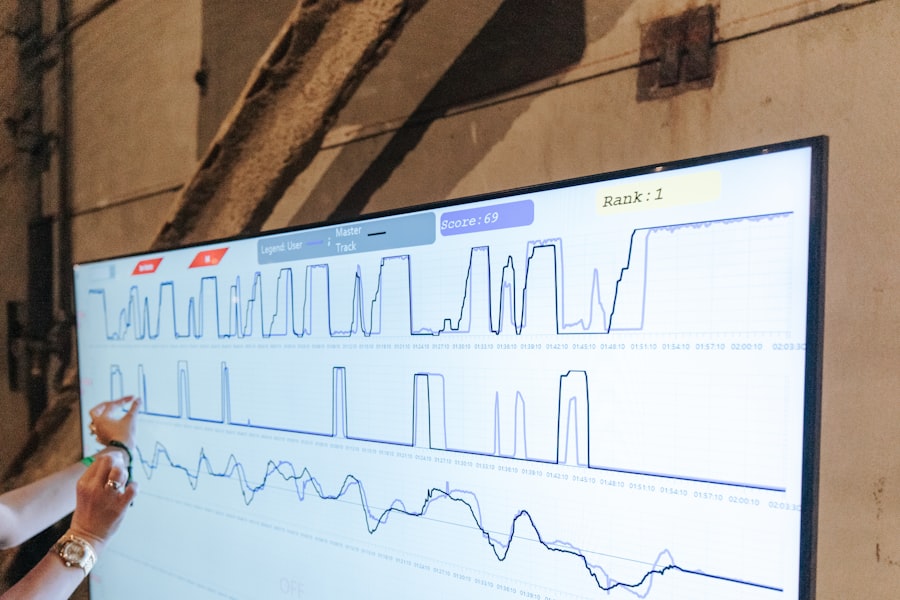
Your systems operate within a normal range. Predictive monitoring establishes baselines for all monitored metrics, dynamically learning what “normal” looks like for your specific environment at different times of day, week, or even year. When a metric deviates significantly from this learned baseline, it’s flagged as an anomaly. This isn’t just about exceeding a static threshold; it’s about identifying statistically improbable events that could indicate an impending problem. You’re looking for the blips on the radar that signal something is amiss.
2.2.2 Trend Analysis and Forecasting: Projecting the Future
This is where the “predictive” really shines. Predictive monitoring uses historical data to identify trends and extrapolate them into the future. For example, if a disk’s free space is consistently decreasing by a certain percentage each day, the system can project exactly when that disk will run out of space. If memory utilization is slowly but steadily increasing on a particular application, the system can estimate when it will hit a critical threshold, allowing you to intervene before an out-of-memory error brings the application down. You’re not just reacting to current problems; you’re anticipating future ones.
2.2.3 Machine Learning and AI: Continuous Improvement
Many modern predictive monitoring solutions leverage machine learning (ML) and artificial intelligence (AI) to refine their predictive capabilities. These algorithms can identify complex, non-obvious correlations between different metrics that human analysts might miss. They can learn from past incidents, improving their accuracy in predicting future failures. The more data they ingest, the smarter and more precise they become, transforming your monitoring system into a continuously self-improving entity. You’re building an intelligent guardian that gets better at its job every day.
2.3 Alerting and Remediation: Actionable Intelligence
Insight without action is useless. Predictive monitoring systems are designed to deliver actionable intelligence in a timely and effective manner.
2.3.1 Intelligent Alerting: Focusing on What Matters
Nobody wants alert fatigue. Predictive monitoring systems employ intelligent alerting mechanisms to ensure you only receive notifications for truly critical or impending issues. This often involves correlation engines that group related anomalies, deduce the root cause, and suppress redundant alerts. Instead of a barrage of individual warnings, you receive a single, consolidated alert explaining the impending problem and its likely impact. You’re moving from a noisy stream of data to focused, critical warnings.
2.3.2 Automated Remediation: Shutting Down Problems Before They Start
For certain predictable issues, you can configure automated remediation actions. If a server’s CPU utilization hits a warning threshold for an extended period, the system could automatically restart a specific service, scale up a resource, or even spin up a new instance. This allows for immediate, rule-based intervention, preventing minor issues from escalating into major outages, especially outside of business hours. You’re building a self-healing infrastructure, where many problems are solved before you even know they exist.
2.3.3 Integration with IT Service Management (ITSM) Tools: Streamlined Workflow
Predictive monitoring doesn’t operate in a vacuum. It integrates seamlessly with your existing ITSM tools, such as ServiceNow, Jira, or PagerDuty. When an impending issue is detected, the system can automatically create a ticket, assign it to the appropriate team, and provide all the necessary contextual information for rapid investigation and resolution. This streamlines your incident management workflow, ensuring that your teams are always working with the most up-to-date and relevant information. You’re not just getting alerts; you’re initiating a coordinated response.
3. Implementing Predictive Monitoring: Your Roadmap to Reliability

You’re convinced of the benefits, but how do you actually put predictive monitoring into practice without a major upheaval? Follow this roadmap to a smoother, more reliable infrastructure.
3.1 Define Your Monitoring Scope and Objectives
Before you deploy any solution, you need a clear vision. What are your most critical applications and services? What are the biggest pain points or most frequent causes of downtime in your current environment? Start small, with a well-defined scope, and build from there. Your objectives might include reducing specific types of outages, improving particular application performance metrics, or achieving higher SLA compliance for a key service. You’re not just monitoring everything; you’re monitoring what matters most.
3.2 Choose the Right Tools and Technologies
The market for monitoring solutions is vast. You’ll need to evaluate options based on several factors, including scalability, integration capabilities with your existing stack, ease of use, and the depth of their predictive analytics features. Look for solutions that offer robust data collection across diverse environments (on-premise, cloud, hybrid), intuitive dashboards, and customizable alerting. Consider open-source options like Prometheus and Grafana for their flexibility, or commercial solutions like Datadog, Dynatrace, or New Relic for their comprehensive feature sets and enterprise-grade support. The right tool acts as an extension of your own intelligence.
3.3 Establish Baselines and Thresholds
Once your monitoring system is deployed, the crucial next step is to establish accurate baselines for “normal” operation. This involves collecting data over a sufficient period (weeks or even months) to capture typical usage patterns, including peak hours, off-peak times, and cyclical trends. Once baselines are established, you can define dynamic thresholds that adjust based on these patterns, rather than static, one-size-fits-all limits. This prevents false positives and ensures alerts are truly indicative of
anomalous behavior. You’re teaching your system what your specific “normal” looks like.
3.4 Integrate with Existing IT Workflows
A standalone monitoring system, no matter how powerful, will be less effective if it operates in isolation. You need to integrate it with your existing IT service management (ITSM) platform, incident management tools, and communication channels (e.g., Slack, Microsoft Teams, email). This ensures that alerts lead directly to actionable tickets, that the right teams are notified immediately, and that all relevant information is centralized for efficient problem resolution. You’re weaving predictive monitoring into the fabric of your operational processes.
3.5 Continuous Optimization and Iteration
Predictive monitoring is not a set-it-and-forget-it solution. Your infrastructure is constantly evolving, applications are updated, and usage patterns shift. You need to continuously review your monitoring configurations, update baselines, refine alerts, and explore new metrics. Regularly analyze historical data to identify areas where your predictions could be more accurate or where new monitoring points might be beneficial. This iterative approach ensures that your predictive capabilities remain sharp and relevant. You’re not just deploying a system; you’re cultivating an intelligent guardian that adapts and grows with your environment.
4. Common Pitfalls to Avoid on Your Predictive Monitoring Journey
You’re embarking on a powerful transformation, but like any significant IT initiative, there are potential stumbling blocks. Being aware of these will help you navigate your implementation smoothly.
4.1 Alert Fatigue and Over-Monitoring
The temptation to monitor everything can lead to alert fatigue, where your team is bombarded with so many notifications that truly critical ones get lost in the noise. Resist this urge. Focus on key performance indicators (KPIs) and metrics directly tied to availability, performance, and business impact. Prioritize alerts based on severity and potential impact, and use intelligent correlation to group related events. It’s about quality over quantity when it comes to alerts. You’re aiming for actionable intelligence, not just more data points.
4.2 Insufficient Data Granularity and Retention
For accurate trend analysis and anomaly detection, your monitoring system needs high-fidelity data. Collecting data every minute is often insufficient for predicting rapid changes or subtle deviations. Aim for granular data collection (e.g., every 5-15 seconds for critical metrics). Furthermore, ensure you have sufficient data retention policies to allow for long-term trend analysis and seasonal pattern recognition. Without enough historical context, your predictions will be less accurate. You need the historical depth to truly see the future.
4.3 Lack of Baselines and Dynamic Thresholds
Relying solely on static thresholds (e.g., CPU > 90%) is a recipe for false positives and missed issues. Your systems behave differently at different times. Without establishing dynamic baselines that adapt to seasonal, daily, and hourly patterns, your predictive models will be ineffective. Invest time in letting your monitoring system learn the normal behavior of your environment before expecting accurate predictions. You’re not just setting limits; you’re understanding the rhythm of your systems.
4.4 Neglecting Application-Level Monitoring
While server-level metrics are crucial, many performance issues and outages originate within the application layer. Ignoring application performance monitoring (APM) means you’re only seeing half the picture. Integrate APM into your predictive monitoring strategy to gain visibility into transaction tracing, code-level performance, and database interactions. Often, a healthy server can host underperforming or failing applications. You need to look inside the black box of your applications to truly predict problems.
4.5 Siloed Tooling and Lack of Integration
A fragmented monitoring landscape, with disparate tools that don’t communicate, severely limits your predictive capabilities. Data from one system can provide critical context for another. Strive for a unified monitoring platform or ensure robust integrations between your chosen tools (e.g., server monitoring, APM, log management, ITSM). This holistic view allows for more accurate root cause analysis and more effective predictions. Your monitoring tools should work together like a symphony, not a collection of soloists.
In today’s digital landscape, ensuring server uptime is crucial for businesses, and one effective strategy is predictive monitoring, which can significantly reduce the risk of unexpected downtime. For those interested in exploring more about optimizing server performance and management, a related article can be found at this link, where various layouts and strategies are discussed to enhance overall server reliability. By implementing these techniques alongside predictive monitoring, organizations can create a robust infrastructure that supports their operational needs.
5. The Future is Proactive: Embracing the Predictive Paradigm
“`html
| Metrics | Benefits |
|---|---|
| Reduced Downtime | Early detection of issues leads to proactive resolution, minimizing server downtime. |
| Improved Performance | Identifying potential performance bottlenecks before they cause downtime. |
| Cost Savings | Preventing revenue loss and potential expenses associated with downtime. |
| Enhanced Security | Early detection of security threats and vulnerabilities, reducing the risk of downtime due to security breaches. |
“`
You’ve moved beyond reactive firefighting. You’ve embraced the power of foresight. This shift isn’t just about technology; it’s about a fundamental change in how you approach server management, leading to a host of significant advantages.
5.1 Enhanced Operational Efficiency and Team Morale
By preventing outages and automating routine checks, your IT operations team can shift their focus from reactive troubleshooting to strategic projects, innovation, and improving existing services. This leads to significantly enhanced operational efficiency, less stress, and higher job satisfaction. When “heroics” become less common because problems are resolved before they impact users, your team will thank you. You’re empowering your team to build, not just fix.
5.2 Improved Business Continuity and Customer Satisfaction
The ultimate goal of predictive monitoring is to ensure your business operations remain uninterrupted. By proactively addressing potential issues, you guarantee higher availability of critical services, minimize service disruptions, and maintain a seamless experience for your customers. Happy customers translate to loyalty, positive reputation, and sustained business growth. You’re not just managing servers; you’re safeguarding your business.
5.3 Strategic Decision Making Backed by Data
Predictive monitoring provides a wealth of data that goes beyond simply preventing outages. It offers deep insights into resource utilization, application performance trends, and future capacity needs. This empowers you to make informed, data-driven decisions about infrastructure scaling, technology investments, and application modernization. Instead of guessing, you’re making strategic choices based on concrete evidence. You’re transforming from an IT manager into a strategic business enabler.
By adopting a predictive monitoring strategy, you’re not just adding another tool to your arsenal; you’re instilling a culture of foresight and proactive management. You are transforming your IT operations from a reactive cost center into a strategic asset, ensuring the stability, performance, and efficiency that your organization demands. The future of server management is not just monitored; it’s anticipated. And with the right approach, you are now equipped to navigate it with confidence and control.
FAQs
What is predictive monitoring?
Predictive monitoring is a proactive approach to monitoring systems and infrastructure to predict and prevent potential issues before they cause downtime. It uses advanced analytics and machine learning to identify patterns and anomalies that could lead to server downtime.
How does predictive monitoring prevent server downtime?
Predictive monitoring prevents server downtime by analyzing historical data, identifying trends, and predicting potential issues before they occur. By detecting early warning signs of potential failures, IT teams can take proactive measures to address the issues and prevent downtime.
What are the benefits of using predictive monitoring for server maintenance?
The benefits of using predictive monitoring for server maintenance include reduced downtime, improved system reliability, cost savings from avoiding emergency repairs, and increased operational efficiency. It also allows IT teams to prioritize and plan maintenance activities based on predictive insights.
What are some common indicators that predictive monitoring looks for to prevent server downtime?
Predictive monitoring looks for common indicators such as abnormal system behavior, performance degradation, resource utilization patterns, and potential hardware or software failures. It also considers environmental factors and external influences that could impact server performance.
How can businesses implement predictive monitoring for their server infrastructure?
Businesses can implement predictive monitoring for their server infrastructure by investing in advanced monitoring tools and platforms that offer predictive analytics capabilities. They can also leverage the expertise of data scientists and IT professionals to develop and deploy predictive monitoring models tailored to their specific server environment.








Add comment