
You’re about to embark on a journey through the pivotal moments that shaped modern high-performance hosting. As a hosting provider striving for unparalleled speed and efficiency, understanding the ascent of NVMe isn’t just academic; it’s a strategic imperative. This isn’t merely a history lesson; it’s a roadmap to the future of data access, a chronicle of how you can deliver blistering performance to your clients.
Before NVMe burst onto the scene, the world of high-performance hosting was grappling with an inherit limitation: the storage bottleneck. You may remember the frustration, the endless tweaking, trying to squeeze every last drop of performance from technologies that were fundamentally constrained.
1.1 The Dominance of Hard Disk Drives (HDDs)
For decades, HDDs were the undisputed kings of mass storage. Their mechanical nature, while offering immense capacity at an affordable price, created an unavoidable performance ceiling. You were constantly wrestling with:
- Rotational Latency: The physical time it took for the platters to spin to the correct sector. Even at 15,000 RPM, this was a measurable delay. Your applications were literally waiting for spinning metal.
- Seek Time: The time the read/write heads needed to move across the platters to locate the data. Multiple users accessing different data points meant constant head thrashing, a performance killer for multi-tenant environments.
- Sequential vs. Random Access: HDDs excelled at sequential reads and writes, like saving a large file. But high-performance hosting primarily deals with myriad small, random access operations – database queries, cached content, user sessions. This was where HDDs truly faltered.
1.2 The Promise of Solid State Drives (SSDs) – SATA’s Inherent Bottlenecks
The arrival of Solid State Drives (SSDs) marked a significant leap forward. You saw the immediate benefits: no moving parts, vastly improved random read/write speeds, and lower latency. However, a new bottleneck quickly emerged – the interface itself.
- SATA’s Legacy: The Serial ATA (SATA) interface was designed for HDDs. It was a sequential, single-queue protocol. While significantly faster than IDE, it wasn’t built to handle the parallel processing capabilities of NAND flash.
- AHCI Protocol Limitations: The Advanced Host Controller Interface (AHCI) protocol, developed for SATA, was another constraint. It allowed for only one command queue with a depth of 32 commands. For individual applications, this was often sufficient, but for enterprise-level hosting with thousands of concurrent operations, it quickly buckled under pressure. You were essentially driving a supercar on a single-lane road.
- The Interface Overhead: Even the fastest SATA SSDs couldn’t fully utilize their internal flash capabilities because the SATA 6Gb/s interface itself became a limiting factor. The protocol overhead further exacerbated this, meaning that often you weren’t even reaching the theoretical maximum bandwidth.
In exploring the advancements in NVMe storage within high-performance hosting, it’s essential to consider how these technologies contribute to overall online presence and reliability. For a deeper understanding of the importance of robust web hosting services, you can refer to the article on maximizing your online presence with reliable web hosting services, which discusses various factors that influence website performance and user experience. You can read it here: Maximize Your Online Presence with Reliable Web Hosting Services.
2. A Paradigm Shift: The Genesis of NVMe – Breaking the Chains
The industry recognized the futility of trying to fit a square peg (SSDs) into a round hole (SATA/AHCI). A radical new approach was needed, one that would unlock the true potential of flash storage. This was the birth of NVMe.
2.1 The PCI Express (PCIe) Revolution for Storage
The key insight was to bypass the legacy storage stack entirely and connect SSDs directly to the processor using the PCI Express (PCIe) bus. You know PCIe as the high-speed interface for graphics cards and network adapters, providing direct, low-latency communication with the CPU.
- Direct CPU Communication: By connecting via PCIe, NVMe drives gained a direct, high-bandwidth pathway to the CPU, eliminating the need to traverse the slower SATA controller and its associated overhead. This was a game-changer for latency-sensitive applications.
- Scalable Bandwidth: PCIe offers multiple lanes (x1, x2, x4, x8, x16), each providing significant bandwidth. NVMe drives typically use x4 lanes, offering vastly more throughput than SATA. You could now scale your storage bandwidth simply by adding more lanes.
- Reduced Latency: The direct connection significantly reduced the round-trip time for data requests, translating into a tangible performance boost for applications dependent on quick data access.
2.2 The NVMe Protocol: Designed for Flash, Not Spinning Disks
PCIe provided the highway, but NVMe (Non-Volatile Memory Express) was the intelligent protocol designed specifically for that highway, tailored for the unique characteristics of NAND flash. This was a departure from everything you knew about storage protocols.
- Massive Parallelism: Unlike AHCI’s single command queue, NVMe supports up to 64,000 command queues, each with a depth of 64,000 commands. Imagine queuing thousands of simultaneous data requests without them waiting in a single, congested line. This is the bedrock of NVMe’s incredible IOPs (Input/Output Operations Per Second).
- Minimized Software Overhead: The NVMe protocol was designed to be lean and efficient, requiring fewer CPU cycles per I/O operation. This meant more CPU resources were available for your applications, not for managing storage.
- Enhanced Error Correction and Data Integrity: NVMe inherently incorporates features for robust data integrity and error handling, critical for reliable enterprise storage.
- Future-Proof Design: The NVMe specification was built with an eye toward future non-volatile memory technologies, ensuring its longevity and adaptability. You were investing in a technology that could grow with your needs.
3. Early Adoption and the Enterprise Advantage: NVMe Finds Its Niche

While initial NVMe drives were expensive, their performance benefits were so profound that early adopters in high-performance computing and enterprise hosting quickly recognized their value. You started seeing these drives appear in critical infrastructure.
3.1 First Generation NVMe Drives: M.2 and U.2 Form Factors
The physical manifestation of NVMe initially came in two primary form factors, appealing to different use cases.
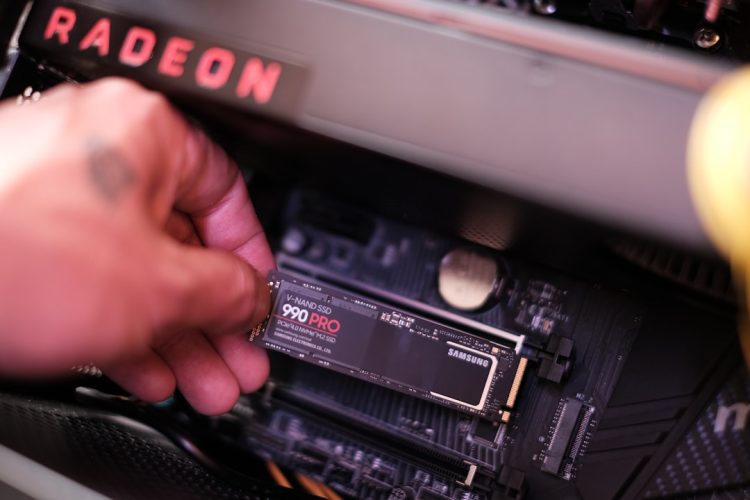
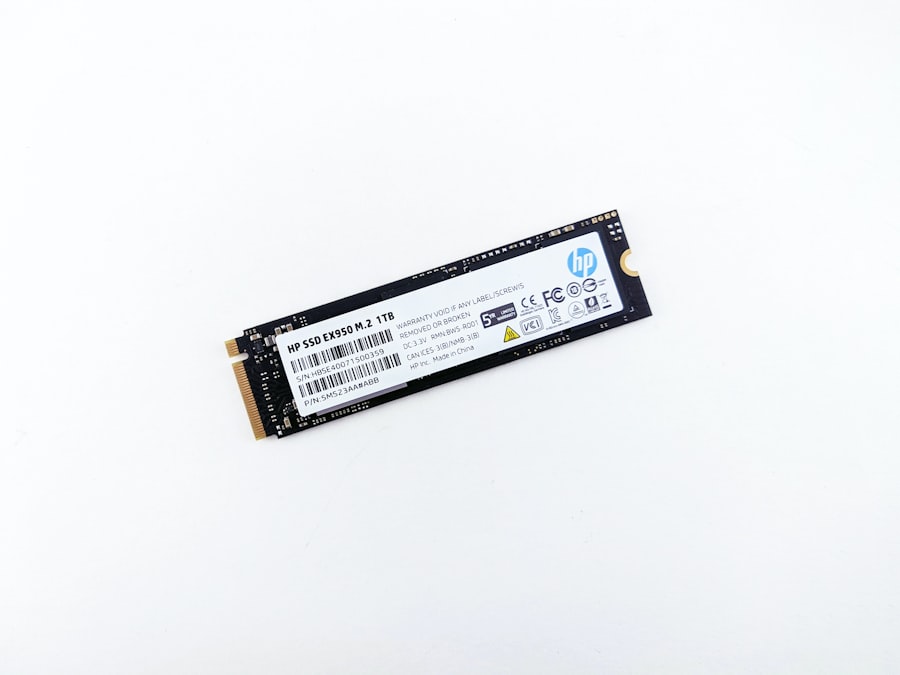
- M.2 NVMe SSDs: Compact and card-like, M.2 drives were ideal for servers with limited space, often used as boot drives or for high-speed caching. Their small footprint made them attractive for edge computing and smaller dedicated server deployments.
- U.2 NVMe SSDs (SFF-8639): These drives looked more like traditional 2.5-inch SSDs but used the U.2 connector for PCIe. They offered hot-swappability and higher capacity options, making them suitable for enterprise storage arrays where serviceability and greater density were crucial. You could easily swap out a failed drive without powering down the system.
3.2 The Performance Metrics Speak for Themselves
The numbers didn’t lie. NVMe storage offered a quantum leap in performance, immediately justifying the higher cost for critical workloads.
- Exponential IOPs: Compared to SATA SSDs, NVMe drives delivered 5x, 10x, or even significantly more IOPs, particularly for random read/write operations. This translates directly to faster database queries, quicker content delivery, and more responsive applications.
- Drastically Lower Latency: Latency dropped from hundreds of microseconds for SATA SSDs to tens of microseconds, and even single-digit microseconds for NVMe. This nearly instantaneous data access made a tangible difference for real-time applications and highly transactional databases.
- Massive Throughput: PCIe Gen3 x4 NVMe drives offered theoretical bandwidths of around 32 Gb/s (4 GB/s), far surpassing SATA 6Gb/s. This meant you could move significantly more data in the same amount of time.
4. Expanding Horizons: NVMe in Mainstream Hosting and Cloud Environments
As the cost of NVMe technology decreased and its benefits became undeniable, you saw a rapid expansion of its adoption beyond the most niche, high-end applications. NVMe became a standard offering, not just a premium add-on.
4.1 NVMe for Dedicated Servers and VPS
For your dedicated server and Virtual Private Server (VPS) offerings, NVMe became a competitive differentiator. Clients started actively seeking servers equipped with NVMe storage.
- Enhanced Application Performance: Databases (MySQL, PostgreSQL, MongoDB, Redis), caching layers (Memcached, Varnish), and complex web applications (e-commerce platforms, SaaS solutions) all saw significant performance improvements. This translated to faster page loads, quicker transaction processing, and a superior user experience.
- Improved Virtualization Density: With NVMe, you could run more virtual machines on a single physical server because the storage wasn’t the bottleneck. Each VM could enjoy snappier storage access, leading to better overall resource utilization.
- Faster Boot Times and OS Responsiveness: For both the host OS and guest VMs, NVMe dramatically reduced boot times and improved overall system responsiveness, making server management and scaling more efficient.
4.2 Hyperscale Cloud Adoption and NVMeoF
Hyperscalers like AWS, Google Cloud, and Azure were quick to integrate NVMe, recognizing its potential for their vast, distributed infrastructure. This led to the development of NVMe over Fabrics (NVMeoF), a true testament to the protocol’s flexibility.
- NVMe over Fabrics (NVMeoF): This extension allowed NVMe commands to be transferred over network fabrics like Ethernet (RoCE, iWARP), Fibre Channel, and InfiniBand. This decoupled compute from storage, enabling highly scalable and flexible storage architectures. You could now pool NVMe drives and offer them as ultra-fast block storage over a network.
- Disaggregated Storage: NVMeoF facilitated disaggregating storage from compute, allowing you to scale each resource independently. This is crucial for cloud environments where resources need to be allocated dynamically based on demand.
- High Performance in Cloud Block Storage: Public cloud providers began offering NVMe-backed block storage services, providing unprecedented performance levels for their users, often with guaranteed IOPs and throughput.
In exploring the advancements in NVMe storage for high-performance hosting, it’s also beneficial to consider how these technologies can be complemented by effective website optimization strategies. A related article discusses essential tips for enhancing website performance, which can significantly impact user experience and site speed. For more insights, you can read about these strategies in the article on website optimization tips for 2023. By integrating NVMe storage with optimized website practices, businesses can achieve remarkable improvements in their online presence.
5. The Future Evolves: PCIe Gen4, Gen5, and Beyond – Sustaining the Momentum
| Year | NVMe Storage Capacity (TB) | Read Speed (GB/s) | Write Speed (GB/s) |
|---|---|---|---|
| 2015 | 1.6 | 2.5 | 1.5 |
| 2017 | 4 | 3.5 | 2.1 |
| 2019 | 8 | 6.5 | 3.5 |
| 2021 | 16 | 7.0 | 5.5 |
The evolution of NVMe is far from over. The underlying PCIe standard continues to advance, pushing the boundaries of what’s possible in storage. You need to stay ahead of these developments to maintain your competitive edge.
5.1 PCIe Generation Advancements: Doubling Down on Bandwidth
Each new generation of PCIe effectively doubles the bandwidth per lane, leading to phenomenal increases in theoretical maximum throughput for NVMe drives.
- PCIe Gen4: The transition to PCIe Gen4 doubled the per-lane bandwidth from 8 GT/s to 16 GT/s. A Gen4 x4 NVMe drive can theoreticaly achieve 64 Gb/s (8 GB/s), a monumental leap from even Gen3 NVMe. You’re already leveraging this in your newer server deployments, providing an undeniable performance boost.
- PCIe Gen5: The latest standard, PCIe Gen5, again doubles the per-lane bandwidth to 32 GT/s. This means a Gen5 x4 NVMe drive can theoretically push 128 Gb/s (16 GB/s) of data. While widespread adoption is still underway, you’re seeing early enterprise deployments, particularly for AI/ML workloads and high-performance databases.
- Future Generations (Gen6+): The PCIe roadmap extends well into the future, promising even greater bandwidth. This ensures that NVMe will continue to be the dominant high-performance storage interface for the foreseeable future.
5.2 New Storage Technologies and Form Factors
The NVMe ecosystem is also embracing new memory types and physical designs to meet diverse hosting requirements.
- NVMe-oF in More Areas: Expect NVMeoF to become even more prevalent, enabling broader use cases for centralized, high-performance storage in both on-premise and hybrid cloud environments.
- Emergence of CXL (Compute Express Link): CXL is a new open standard interconnect that operates over the PCIe physical layer. It allows for advanced memory pooling and cache coherency between CPUs and other devices, including future memory-like storage devices. While not strictly NVMe, CXL will likely intersect with and enhance high-performance storage architectures.
- E1.S and E3.S (EDSFF): Known as Enterprise and Datacenter SSD Form Factor (EDSFF), these new form factors are specifically designed for datacenter environments. They offer improved thermal performance, higher capacity density, and better serviceability compared to M.2. You’ll increasingly see these in your next generation servers, allowing for denser, more efficient storage deployments.
The evolution of NVMe is a testament to the relentless pursuit of performance in the high-performance hosting industry. From battling spinning rust to embracing the lightning-fast capabilities of PCIe and purpose-built protocols, you’ve witnessed a transformation that continues to reshape how data is accessed, processed, and ultimately delivered to your clients. Embracing NVMe isn’t just about faster storage; it’s about building a better, more responsive, and more competitive hosting platform for the future.
FAQs
What is NVMe storage?
NVMe (Non-Volatile Memory Express) is a storage protocol designed for flash storage like SSDs, offering significantly faster data transfer speeds compared to traditional storage protocols like SATA.
How has NVMe storage evolved in high performance hosting?
NVMe storage has evolved in high performance hosting by becoming the standard for storage due to its high speed and low latency, enabling faster data access and processing for high performance applications and workloads.
What are the benefits of NVMe storage in high performance hosting?
The benefits of NVMe storage in high performance hosting include faster data transfer speeds, lower latency, improved I/O performance, and better scalability, all of which contribute to enhanced overall system performance.
What are some use cases for NVMe storage in high performance hosting?
NVMe storage is commonly used in high performance hosting for applications such as database hosting, big data analytics, high frequency trading, content delivery networks, and other data-intensive workloads that require fast and efficient storage.
What are the considerations for implementing NVMe storage in high performance hosting?
When implementing NVMe storage in high performance hosting, considerations include compatibility with existing infrastructure, cost-effectiveness, performance requirements, and the need for proper management and monitoring tools to ensure optimal utilization of the technology.









Add comment