

We’ve probably all encountered them – those little prefixes that come before our main website address. They might seem like a small detail, but we’ve learned firsthand that subdomains are far more than just an organizational quirk. In our ongoing journey to optimize our online presence and drive business growth, we’ve discovered that leveraging subdomains effectively can be a game-changer. They offer a versatile and powerful tool, allowing us to segment our content, target specific audiences, and build out our digital ecosystem in a structured and scalable way.
When we talk about subdomains, we’re essentially referring to distinct sections of our primary domain. Think of it like this: our main website, say ourcompany.com, is our central hub. A subdomain, like blog.ourcompany.com or shop.ourcompany.com, operates as a separate mini-website under that umbrella. This simple conceptual shift has profound implications for how we manage our online assets.
Defining Subdomains and Their Structure
From a technical perspective, a subdomain is a division of a primary domain. It allows us to create separate, yet connected, web addresses. We often use them for specific functions or content areas that might not fit seamlessly within the main website’s navigation or structure. For instance, our customer support portal or our careers page might reside on a subdomain to keep them distinct from our core product offerings.
Differentiating Subdomains from Subdirectories
This is where we sometimes see confusion. While both subdomains (e.g., blog.ourcompany.com) and subdirectories (e.g., ourcompany.com/blog) are used to organize content, their underlying structures and SEO implications can differ. Subdirectories are essentially folders within our main domain, while subdomains are treated more like separate websites by search engines, albeit with a strong link to the parent domain. We’ve found that understanding this distinction is crucial for making informed decisions about our site architecture. For certain purposes, like a blog, a subdirectory might be perfectly acceptable, but for more distinct projects, a subdomain often proves to be the better choice due to its greater independence.
The Strategic Advantages We’ve Discovered
The decision to use a subdomain isn’t just a technical one; it’s a strategic move for us. We’ve found that subdomains offer several key advantages. They allow us to segment our audience more effectively, create dedicated brand experiences, and even experiment with new initiatives without impacting our core website’s performance. This flexibility has been invaluable as we’ve scaled our operations.
For businesses looking to expand their online presence, understanding the role of web hosting services is crucial. A related article that delves into this topic is “Maximize Your Online Presence with Reliable Web Hosting Services,” which provides insights on how choosing the right hosting can enhance your website’s performance and reliability. You can read it here: Maximize Your Online Presence with Reliable Web Hosting Services. This resource complements the strategies discussed in “How to Use Subdomains for Business Expansion” by highlighting the importance of a solid hosting foundation for your subdomain initiatives.
Strategic Applications for Business Growth
We’ve identified numerous ways subdomains can be strategically deployed to fuel our business growth. From enhancing our content marketing efforts to expanding into new markets, the versatility of subdomains has proven to be a significant asset.
Enhancing Content Marketing and SEO
Our content marketing strategy has greatly benefited from the use of subdomains. By creating dedicated content hubs, we can better organize our resources and target specific keywords.
Dedicated Blog or Resource Centers
For us, blog.ourcompany.com is more than just a place to post articles; it’s a knowledge hub. This separation allows us to maintain a distinct voice and style for our content, catering specifically to informational needs, without cluttering our main product pages. We can house our extensive library of guides, whitepapers, and case studies here, all contributing to our authority in the industry.
Targeted SEO for Niche Topics
When we’re targeting highly specific keywords or niche audiences, a subdomain allows us to create a deeply focused site that’s optimized for those terms. For example, if we launched a new product line focusing on a particular industry, we might create industryx.ourcompany.com. This allows us to craft unique content, meta descriptions, and keyword strategies tailored precisely to that niche, potentially ranking higher for those specific searches without diluting the focus of our main site.
Localization and International Expansion
As we’ve expanded into new geographical markets, subdomains have become indispensable for our localization efforts.
Country-Specific Websites
For our international outreach, we’ve found that es.ourcompany.com or de.ourcompany.com allows us to serve our Spanish and German-speaking customers with fully localized content, currency, and pricing. This creates a much more personal and relevant experience than simply translating sections of our main site, fostering trust and rapport with international audiences.
Language-Specific Content
Beyond country-specific sites, subdomains can even be used for language variations within the same country, though we typically prefer subdirectories for this. However, if a particular language group has significantly different cultural nuances and needs a completely separate branding or messaging, a subdomain could be a consideration.
Operational Efficiency and Platform Diversity

Beyond marketing and SEO, we’ve found that subdomains significantly improve our operational efficiency and allow us to diversify our technology stack without complicating our main website.
Separate Platforms for Different Functions
Integrating various third-party services or running different software platforms can be a technical headache if everything has to reside on a single domain. Subdomains offer a clean solution.
E-commerce and Online Stores
We might have shop.ourcompany.com running on a completely different e-commerce platform (like Shopify or Magento) than our main informational website. This allows us to leverage the specialized features and security of these platforms for our sales operations without having to integrate complex e-commerce functionalities directly into our core CMS.
Customer Support Portals and Knowledge Bases
Our customers benefit from a dedicated support portal at support.ourcompany.com. This allows us to use specialized helpdesk software (like Zendesk or Freshdesk) that provides advanced ticketing, knowledge base articles, and live chat features, all under our brand. This separation keeps our support operations streamlined and efficient, providing a better customer experience.
Partner Programs and Affiliates
For our affiliate or partner programs, partners.ourcompany.com provides a secure, branded area where our partners can access resources, track their performance, and manage their accounts. This self-service portal reduces our administrative burden and empowers our partners.
Experimentation and Development Environments
Another crucial use case for us is the ability to experiment and develop without risking our live production environment.
Staging and Development Sites
Before we push any major updates or new features to our main website, we always test them thoroughly on staging.ourcompany.com or dev.ourcompany.com. This isolated environment ensures that any bugs or issues are caught and resolved before they impact our users, preventing costly downtime or errors.
A/B Testing and New Initiatives
When we want to test a completely new product offering, a different landing page strategy, or even a new pricing model, we can do it on a subdomain (e.g., newproduct.ourcompany.com). This allows us to run controlled experiments, collect data, and iterate quickly without disrupting the established user experience on our main site. If the experiment is successful, we can then decide whether to integrate it into the main domain or continue to operate it as a distinct entity.
Branding and User Experience Through Subdomains
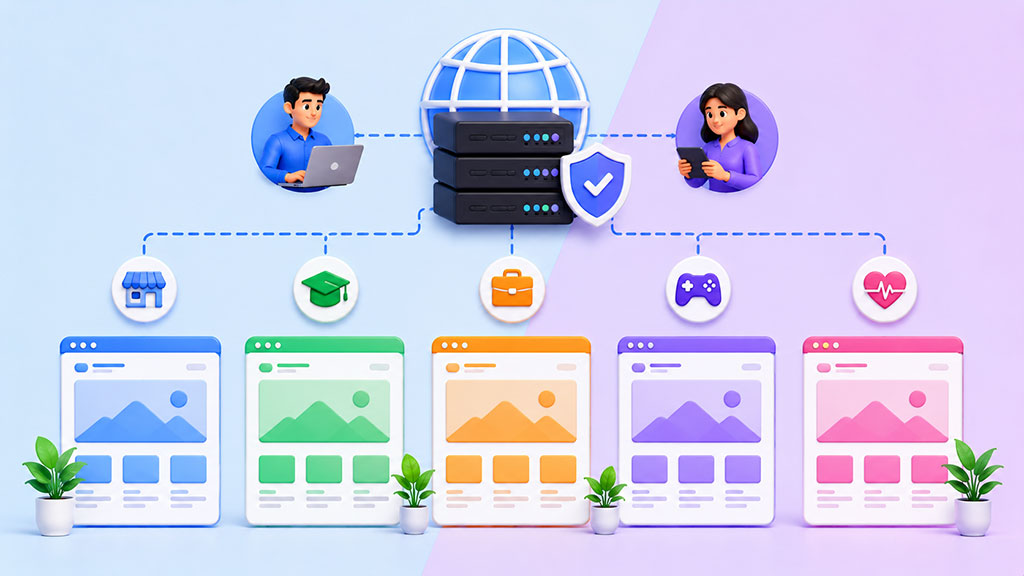
We believe a consistent and intuitive user experience is paramount. Subdomains, when used thoughtfully, can actually enhance our brand perception and simplify navigation for our users.
Creating Branded Microsites
Sometimes, we need to create a dedicated space for a specific campaign, event, or special project that warrants its own identity but still needs to be clearly associated with our main brand.
Campaign-Specific Landing Pages
For our major marketing campaigns, we might use campaign2023.ourcompany.com. This allows us to craft a highly focused, purpose-built landing experience that’s free from the distractions of our main site. It helps us drive conversions for that specific campaign while maintaining our brand identity.
Event Websites and Registration Portals
When we host conferences or webinars, events.ourcompany.com provides a dedicated platform for event information, speaker bios, agendas, and online registration. This keeps event-related logistics separate and organized, providing a clear user journey for attendees.
Streamlining User Journeys
By segmenting our content and services, we paradoxically make it easier for users to find what they need.
Clear Navigation Paths
When users arrive at careers.ourcompany.com, they immediately know they’re in the right place to explore job opportunities. This clarity reduces friction and improves the overall user experience by setting appropriate expectations from the outset.
Distinct User Interfaces for Specific Tasks
Our main website might have a general design, but app.ourcompany.com can have a completely different, more functional and minimalist UI tailored specifically for active users interacting with our software. This distinction allows us to optimize the design for the specific task at hand, whether it’s browsing information or actively using a tool.
In exploring the benefits of using subdomains for business expansion, it’s also essential to understand the underlying hosting options that can support your growth. For instance, shared hosting can be a cost-effective solution for startups looking to establish their online presence. To learn more about this hosting type and its advantages, you can check out this informative article on shared hosting. Understanding these foundational elements can help you make informed decisions as you scale your business.
Best Practices and Considerations
<?xml encoding=”UTF-8″>
| Subdomain | Usage |
|---|---|
| blog.yourdomain.com | For hosting a blog related to your business |
| store.yourdomain.com | For setting up an online store |
| support.yourdomain.com | For providing customer support and FAQs |
| events.yourdomain.com | For promoting and managing events |
While the benefits of subdomains are clear to us, their effective implementation requires careful planning and adherence to best practices. We’ve learned that a haphazard approach can lead to more problems than solutions.
SEO Implications of Subdomains
This is a hot topic and one we monitor closely. The relationship between subdomains, subdirectories, and their impact on SEO is complex and has evolved over time.
Google’s Stance and Link Equity
Historically, there was a debate about whether Google treated subdomains as separate entities for ranking purposes, implying a loss of “link juice” from the main domain. While Google has clarified that they are generally capable of understanding the relationship between a main domain and its subdomains, we still approach this with caution. We ensure that our subdomains are properly linked to our main site, have strong internal linking structures, and receive high-quality backlinks just like any other part of our web presence. Our strategy is to build authority across all our digital assets.
Canonicalization and Indexing
We meticulously implement canonical tags to avoid duplicate content issues, especially when content might overlap slightly between a subdomain and the main site. We also actively monitor our subdomains in Google Search Console to ensure they are being indexed correctly and that we’re not encountering any unexpected crawling errors.
Technical Setup and Maintenance
Implementing subdomains isn’t just about picking a name; it involves technical backend work.
DNS Management and IP Addresses
Setting up subdomains requires proper DNS records (usually A records or CNAME records) pointing to the correct server or provider. This is a fundamental step that we double-check every time to ensure our subdomains resolve correctly.
SSL Certificates
Security is non-negotiable for us. Each subdomain needs a valid SSL certificate (HTTPS) to ensure data encryption and user trust. We often use wildcard SSL certificates which cover all subdomains under a main domain, simplifying management and reducing costs.
Analytics and Tracking
It’s crucial for us to track the performance of each subdomain independently, but also to have a consolidated view of our entire web presence. We implement analytics tracking (like Google Analytics) carefully, often using cross-domain tracking to understand user journeys spanning multiple subdomains. This allows us to attribute conversions and analyze user behavior holistically.
Naming Conventions and User Perception
The names we choose for our subdomains play a significant role in how users perceive our content.
Clear and Descriptive Names
We always aim for subdomain names that are intuitive and clearly indicate the purpose of that section. blog.ourcompany.com is self-explanatory, as is support.ourcompany.com. Avoid generic or confusing names that might disorient users.
Consistency with Branding
While a subdomain can have a distinct purpose, it should always maintain consistency with our overall brand identity. This includes visual elements, tone of voice, and messaging, ensuring a cohesive experience for our users across all our digital properties.
In conclusion, we’ve come to view subdomains not as an afterthought, but as a robust architectural component of our digital strategy. They empower us to organize, specialize, scale, and innovate in ways that would be far more challenging with a monolithic website. By carefully considering their strategic applications, technical implications, and user experience, we believe any business can leverage subdomains to unlock new avenues for growth and solidify their online presence. It’s about building a smarter, more efficient, and more expansive digital ecosystem, and for us, subdomains are an integral part of that vision.
FAQs
What are subdomains and how can they be used for business expansion?
Subdomains are extensions of a main domain that allow businesses to create separate web addresses for specific sections or functions of their website. They can be used for business expansion by creating targeted landing pages, microsites, or international versions of a website.
How can subdomains help with SEO and online visibility?
Subdomains can help with SEO and online visibility by allowing businesses to target specific keywords and create focused content for different subdomains. This can improve search engine rankings and drive more targeted traffic to the website.
What are some examples of how businesses can use subdomains for expansion?
Businesses can use subdomains for expansion by creating separate subdomains for different product lines, services, or geographic locations. For example, a clothing retailer could create subdomains for men’s, women’s, and children’s clothing, or for different countries where they operate.
Are there any potential drawbacks or challenges to using subdomains for business expansion?
One potential drawback of using subdomains for business expansion is that it can dilute the overall domain authority of the main website. Additionally, managing multiple subdomains can require additional resources and may complicate website maintenance.
What are some best practices for using subdomains for business expansion?
Some best practices for using subdomains for business expansion include ensuring that each subdomain has unique and valuable content, using proper internal linking between subdomains and the main website, and monitoring the performance of each subdomain to make data-driven decisions for further expansion.









Add comment