
You’re standing at the precipice of something significant in the world of websites. You’ve likely built them, managed them, or perhaps even just marveled at them. And if you’re anything like many of us, WordPress has played a role in your journey. The platform, once a humble blogging tool, has become the de facto standard for web presence. But the landscape isn’t static. It’s in constant flux, a vibrant ecosystem of innovation and adaptation. You’re about to embark on an exploration of how WordPress hosting and development have evolved, and more importantly, where they’re headed.
Remember the early days? You’d cobble together a WordPress site on a cheap shared hosting plan, sharing resources with dozens, if not hundreds, of other websites. Performance was often a lottery, security a constant worry, and updates a manual chore. You learned to troubleshoot, to optimize your code, and to pray that your site wouldn’t tank during a traffic surge.
The Dawning of Specialized Hosting
The limitations of shared hosting became painfully obvious as WordPress grew in power and popularity. This realization sparked a revolution in hosting. You started seeing providers emerge that understood the unique needs of WordPress.
The Rise of Managed WordPress Hosting
This was a game-changer for you. Managed WordPress hosting took the burden of server management off your shoulders. Think of it as a premium service tailored specifically for your WordPress site.
- Performance Optimization: These hosts focus on speed. They employ sophisticated caching mechanisms, Content Delivery Networks (CDNs) readily integrated or optimized, and server configurations fine-tuned for WordPress. Your site loads faster, and your users are happier.
- Enhanced Security: Security is paramount, and managed hosts understand this. They often provide advanced firewalls, malware scanning, regular backups, and automatic security patching. You can breathe a little easier knowing your site is protected.
- Expert Support: When things go wrong, you need help from people who get WordPress. Managed hosts offer support specifically for WordPress-related issues. You’re not just talking to a generic IT person; you’re talking to a WordPress specialist.
- Automatic Updates and Backups: You no longer have to manually update WordPress core, themes, and plugins, a process that could sometimes lead to compatibility issues. Managed hosts handle these updates, often with staging environments to test them first, reducing the risk of breakage. Backups are also automated and readily available for restoration.
The Nuances of VPS and Cloud Hosting
Beyond managed WordPress, you also saw the rise of more flexible and powerful hosting solutions tailored for growing WordPress sites or those with specific needs.
- Virtual Private Servers (VPS): You wanted more control and dedicated resources. VPS offered you a slice of a server, giving you greater isolation, performance, and scalability than shared hosting, without the full cost and management overhead of a dedicated server. You could customize your environment and install specific software.
- Cloud Hosting: This represented a paradigm shift. Instead of relying on a single physical server, cloud hosting distributes your website across a network of interconnected servers. This offers incredible scalability and reliability. If one server fails, others pick up the slack, ensuring your site remains online. You pay for what you use, making it cost-effective for fluctuating traffic.
As we explore the future trends in WordPress hosting and website development, it’s essential to consider the impact of performance metrics on user experience. A related article that delves into this topic is “Accelerate Your WordPress Site: Mastering Core Web Vitals for 2025,” which discusses how optimizing for Core Web Vitals can significantly enhance site performance and user satisfaction. You can read more about it by following this link: Accelerate Your WordPress Site: Mastering Core Web Vitals for 2025.
The Development Landscape: From Manual Coding to Advanced Frameworks
Your approach to building WordPress websites has also undergone a dramatic transformation. The days of hand-coding every single element are largely behind you, replaced by more efficient and powerful development methodologies.
The Evolution of Themes and Page Builders
The visual aspect of WordPress development has been democratized. You no longer need to be a coding wizard to create visually stunning websites.
- Theme Frameworks: These provided a robust foundation for theme developers, offering pre-built functionalities, customization options, and best practices. You could build upon these frameworks to create unique themes without starting from scratch.
- Child Themes: This concept was crucial for you to customize existing themes without losing your changes during theme updates. You learned to create child themes to inherit the parent theme’s functionality while applying your own styles and modifications.
- The Page Builder Revolution: This is perhaps one of the most significant shifts you’ve experienced. Page builders like Elementor, Beaver Builder, and Divi have empowered you to design and layout pages with drag-and-drop interfaces, visual editors, and pre-designed templates. You can create complex designs without writing a line of code, significantly speeding up your workflow and allowing clients to make minor edits themselves.
The Rise of Headless and Jamstack Architectures
As you began to explore more advanced development approaches, you encountered terms like “headless” and “Jamstack.” These represent a fundamental rethinking of how WordPress can be used.
- Headless WordPress: In a headless setup, WordPress acts solely as a content management system (CMS). Your content is delivered via an API, and you use a separate front-end framework (like React, Vue, or Angular) to build your website. This gives you immense flexibility in design and technology choices, and it’s fantastic for building progressive web apps (PWAs) and mobile-first experiences. You can reuse your content across multiple platforms (website, mobile app, IoT devices).
- Jamstack (JavaScript, APIs, Markup): This architecture leverages pre-rendered static sites, served by a CDN, and dynamically enhanced with JavaScript. For WordPress, this often involves using a headless CMS and a static site generator (like Gatsby or Next.js). The benefits are remarkable: blazing-fast performance, enhanced security (since there’s no server-side code to exploit), and a simplified hosting infrastructure. You generate your site as static files during the build process, which are then deployed to a CDN.
As the landscape of WordPress hosting and website development continues to evolve, it’s essential to stay informed about the latest strategies for enhancing site performance. A related article that offers valuable insights is 8 Best Website Optimization Tips for 2023, which discusses effective techniques to improve loading times and user experience. By integrating these optimization tips, developers can ensure their WordPress sites remain competitive and responsive in an increasingly digital world.
The Power of Advanced Plugins and Custom Development
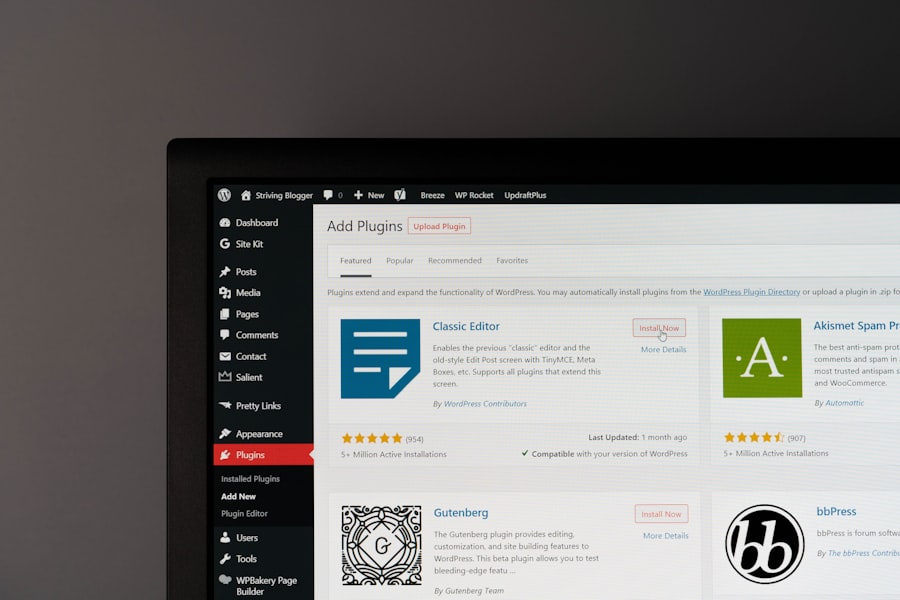
While page builders and themes have made things easier, the power of WordPress also lies in its extensibility through plugins.
- Specialized Plugin Ecosystem: You’ve seen an explosion of plugins for virtually every imaginable functionality: e-commerce (WooCommerce), SEO (Yoast SEO), performance optimization, forms, memberships, and so much more. The challenge for you has been to curate the right plugins and avoid bloat.
- Custom Plugin Development: For unique or complex requirements, you often need to go beyond off-the-shelf solutions. You’ve delved into custom plugin development to create bespoke functionalities that perfectly match your project’s needs. This requires a deeper understanding of the WordPress API and PHP.
- Theme and Plugin Frameworks: Developers have also created frameworks that provide a structured approach to building custom themes and plugins, ensuring maintainability, scalability, and adherence to WordPress best practices.
Future Trends: What’s Next on the Horizon for WordPress?
The evolution you’ve witnessed is far from over. The WordPress ecosystem is a hotbed of innovation, and several trends are shaping its future. You’re about to experience them.
The Dominance of AI and Automation
Artificial Intelligence (AI) is no longer a futuristic concept; it’s actively being integrated into every facet of technology, and WordPress is no exception.
AI-Powered Content Creation and Optimization
Imagine having an AI assistant that helps you write blog posts, generate product descriptions, or even craft compelling marketing copy. This is becoming a reality.
- Content Generation Tools: You’ll see more plugins and services that use AI to suggest topics, draft outlines, and even write entire articles for you. Tools like GPT-3 and its successors are already being leveraged.
- SEO Optimization with AI: AI will further refine your SEO efforts. Expect tools that analyze content for keyword density, readability, and search intent, providing recommendations for improvement.
- Automated Meta Descriptions and Titles: AI can efficiently generate meta descriptions and titles for your posts and pages, saving you valuable time.
AI-Driven Design and User Experience
AI’s influence extends beyond content to the very design and user interaction of your websites.
- Personalized User Experiences: AI can analyze user behavior and adapt website content and layout to individual preferences, leading to more engaging experiences. This could mean showing different product recommendations, highlighting specific articles, or adjusting navigation.
- Automated Website Design Suggestions: You might see AI tools that suggest design layouts, color palettes, and font pairings based on your website’s industry and target audience.
- Chatbots and Virtual Assistants: AI-powered chatbots are becoming increasingly sophisticated, providing instant customer support, answering FAQs, and guiding users through your website.
The Expanding Influence of JavaScript and Modern Frameworks
The trend towards faster, more interactive, and more dynamic websites is undeniable, and JavaScript is at the forefront of this movement.
The Continued Growth of Headless and Jamstack
As you’ve seen, headless WordPress and Jamstack architectures are not just trends; they’re becoming established methodologies.
- Enhanced Performance and Security: The inherent benefits of static sites – speed and security – will continue to drive adoption. You’ll be able to build incredibly fast and resilient websites.
- Developer Flexibility: The ability to decouple the front-end from the back-end (WordPress) gives developers access to the latest JavaScript frameworks and tools, allowing for more modern and innovative user interfaces.
- Integration with Modern Stacks: You’ll see more seamless integrations between WordPress and popular JavaScript frameworks like React, Vue, and Angular, enabling you to build complex, single-page applications (SPAs) powered by WordPress content.
The Rise of Full-Site Editing (FSE) and the Block Editor
WordPress is evolving its core editor to become a more powerful site-building tool.
- Theme as a Collection of Blocks: Full-site editing aims to give you complete control over your entire website’s design and layout using the familiar block editor interface. You’ll be able to edit headers, footers, sidebars, and even entire page templates visually.
- Block-Based Theming: This shift means themes will become more modular, composed of individual blocks that you can arrange and customize. This offers immense flexibility and reduces the need for complex theme customization.
- Empowering Non-Developers: FSE aims to empower users with less coding knowledge to create sophisticated and visually appealing websites without relying on theme developers or page builders. Your role might shift towards guiding and strategizing rather than solely executing.
The Ever-Increasing Importance of Performance and Optimization
In a world where attention spans are short and mobile-first is the norm, website performance is no longer a nice-to-have; it’s a critical requirement.
Advanced Caching Strategies
Caching is king for speed, and you’ll see even more sophisticated approaches to it.
- Server-Level Caching: Managed WordPress hosts will continue to offer highly optimized server-level caching solutions, often with dynamic caching options that adapt to changing content.
- Edge Caching and CDNs: Leveraging Content Delivery Networks (CDNs) will become even more crucial. You’ll see deeper integrations and more intelligent edge caching solutions that serve content from servers geographically closer to your visitors.
- JavaScript and CSS Minification and Deferral: You’ll continue to see advanced tools and automated processes that minify and defer JavaScript and CSS to improve perceived loading times.
Image and Media Optimization
Images are often the heaviest part of a webpage, and their optimization will remain a critical focus.
- Next-Gen Image Formats: You’ll see wider adoption and better support for modern image formats like WebP and AVIF, which offer superior compression and quality compared to traditional formats.
- AI-Powered Image Optimization: Expect AI to play a role in optimizing images by automatically resizing, compressing, and even intelligently cropping them for different devices and screen sizes.
- Lazy Loading and Responsive Images: These techniques are already standard, but you’ll see them become even more refined and automated, ensuring that media is only loaded when it’s actually needed and is appropriately sized for the user’s device.
Enhanced Security Measures and Privacy Compliance
As websites become more complex and data collection becomes more prevalent, security and privacy will be paramount.
Proactive Security and Threat Detection
The focus will shift from reacting to threats to proactively preventing them.
- AI-Powered Threat Detection: Expect AI algorithms to constantly monitor your website for suspicious activity, identify potential vulnerabilities, and even predict emerging threats in real-time.
- Intelligent Firewalls and WAFs: Web Application Firewalls (WAFs) will become more intelligent, capable of distinguishing between legitimate user traffic and malicious bots or attacks.
- Decentralized Security Solutions: You might see the emergence of more decentralized security approaches that spread security responsibilities across multiple points, making them harder to compromise.
The Importance of Data Privacy and Compliance
With regulations like GDPR and CCPA becoming increasingly stringent, you’ll need to prioritize data privacy.
- Privacy-by-Design Principles: You’ll need to build privacy considerations into your website development from the ground up, not as an afterthought.
- Consent Management Platforms (CMPs): Tools for managing user consent for cookies and data tracking will become more sophisticated and integrated.
- Data Minimization and Anonymization: You’ll be encouraged to collect only the data you absolutely need and to anonymize it where possible to reduce the risk of breaches.
The Continued Professionalization of WordPress Development and Hosting
The days of the lone wolf hacker building a website in their garage are increasingly giving way to a more structured and professional approach.
Specialization and Niche Expertise
You’re already seeing this, and it will only intensify.
- Niche Hosting Providers: Beyond general managed WordPress hosting, you’ll see providers specializing in specific industries (e.g., e-commerce, membership sites, agencies) or technologies (e.g., headless WordPress).
- Development Agencies with Specializations: Agencies will continue to refine their focus, becoming experts in specific areas like custom plugin development, performance optimization, or headless implementations.
- Freelancers with Deep Skillsets: You’ll find freelancers who have honed their skills in very specific areas, offering highly targeted and valuable services.
The Role of WordPress as a Headless CMS and its Impact
We’ve touched on this, but its implications for professionalization are significant.
- Integration with Enterprise Solutions: Headless WordPress allows for seamless integration with large-scale enterprise systems, CRMs, and marketing automation platforms, making it a viable solution for bigger businesses.
- API-First Development: This mindset will become more prevalent, with your development focusing on robust APIs and seamless data exchange.
- Microservices Architecture: You might see WordPress integrated as a content microservice within a larger microservices architecture, offering flexibility and scalability.
The journey of WordPress hosting and development has been a remarkable one, and you’ve been a part of it. You’ve witnessed the shift from basic shared hosting to sophisticated managed solutions, from manual coding to intuitive page builders and powerful JavaScript frameworks. As you look to the future, you can expect even more innovation, driven by AI, modern development architectures, and a relentless focus on performance, security, and user experience. Your role as a web professional is evolving, becoming more strategic and specialized. The WordPress you know today is just a stepping stone to what’s coming next, and it’s an exciting time to be building on this incredible platform.
FAQs

What are the future trends in WordPress hosting?
The future trends in WordPress hosting include the adoption of cloud hosting, increased focus on security and performance, and the use of containerization and serverless architecture for scalability and flexibility.
How is website development expected to change in the future?
Website development is expected to change in the future with the increasing use of headless CMS, the rise of AI and machine learning for personalized user experiences, and the integration of voice search and chatbots for enhanced user interaction.
What role will artificial intelligence play in WordPress hosting and website development?
Artificial intelligence is expected to play a significant role in WordPress hosting and website development by automating tasks such as content optimization, personalization, and security monitoring, as well as providing insights for data-driven decision making.
What impact will the rise of mobile usage have on WordPress hosting and website development?
The rise of mobile usage will impact WordPress hosting and website development by driving the need for responsive design, mobile-first development, and performance optimization for mobile devices, as well as the integration of progressive web apps for enhanced user experience.
How will the shift towards serverless architecture affect WordPress hosting and website development?
The shift towards serverless architecture will affect WordPress hosting and website development by enabling greater scalability, reduced infrastructure management, and cost efficiency, as well as facilitating the development of microservices and event-driven architectures for modern web applications.









Add comment