

You are tasked with delivering content to a global audience. Imagine your website or application as a grand storyteller, and your audience as eager listeners scattered across every continent. For your story to be understood and appreciated without frustration, its delivery is paramount. This is where edge computing and Content Delivery Networks (CDNs) step in, acting as vital facilitators of a seamless and responsive experience for your listeners, regardless of their proximity to your central narrative hub. Their importance lies not in flashy innovation alone, but in the fundamental principles of speed, reliability, and accessibility that underpin successful global communication in the digital age.
You want your content to reach your audience instantaneously, like a whispered secret that travels across the room. However, the physical distance between your servers and your users introduces a delay, known as latency. This delay is not an abstract concept; it’s a tangible barrier that impedes the smooth flow of information.
The Physics of Data Transfer
When a user requests information from your website, a signal embarks on a journey. This journey involves traversing miles of cables, being routed through numerous network nodes, and potentially even crossing oceans. Each of these steps adds a fraction of a second to the overall delivery time. While a few milliseconds might seem insignificant to an individual, when aggregated across millions of requests, or when a user is on the opposite side of the globe, this seemingly minuscule delay can accumulate into a noticeable and frustrating lag.
The User Experience Impact: A Tale of Two Audiences
Consider two users: one located geographically close to your server, and another residing thousands of miles away. The user nearby experiences near-instantaneous loading times. Their interaction with your content is fluid, responsive, and engaging. They become engrossed in your story. The user far away, however, encounters noticeable delays. Images load slowly, videos buffer, and interactive elements respond sluggishly. For this user, your story becomes a tedious slog, punctuated by frustrating pauses. This disparity in experience can lead to a bifurcated audience: one satisfied and engaged, the other disillusioned and likely to abandon your offering.
The Economic Consequences of Lag
Beyond user frustration, latency has direct economic implications. For e-commerce sites, slow loading times can significantly reduce conversion rates. Potential customers, faced with an agonizing wait, are more likely to click away and seek faster alternatives. Similarly, for businesses relying on real-time data or collaborative tools for a global workforce, delays can cripple productivity and lead to costly errors. The cost of acquiring and retaining customers, or maintaining operational efficiency, increases dramatically when latency is not addressed.
In the digital age, ensuring that your website performs optimally for a global audience is crucial, which is why understanding the role of edge computing and Content Delivery Networks (CDNs) is essential. These technologies help reduce latency and improve load times, making them vital for reaching users around the world. For those considering a website overhaul or migration, it’s important to be aware of the technical aspects involved. A related article that provides valuable insights on this topic is “How to Migrate Your Website to a New Web Hosting Provider: A Step-by-Step Guide,” which can be found here. This guide can help ensure that your transition to a new hosting provider complements your edge computing and CDN strategies effectively.
The Edge Computing Solution: Bringing the Storytellers Closer
Edge computing represents a paradigm shift in how and where data is processed. Instead of relying solely on centralized data centers, edge computing brings computation and data storage closer to the source of the data generation – your users. Imagine your central data center as a grand library in a capital city. If everyone has to travel to that single library to borrow a book, the journey will be long and arduous for many. Edge computing, in this analogy, is like establishing smaller, well-stocked branch libraries in every town and village, making access to information much more convenient.
Decentralized Processing: The Power of Proximity
At its core, edge computing involves distributing processing power and data storage to the “edge” of the network. This “edge” can encompass a variety of locations, from local servers in regional offices to dedicated micro-data centers strategically placed in urban centers, or even devices themselves. By processing data closer to where it’s generated or consumed, you significantly reduce the physical distance data needs to travel for processing. This localized processing is the antithesis of the centralized model, where every request must travel back to a distant hub.
Reduced Latency, Enhanced Responsiveness
The most immediate and profound benefit of edge computing is the drastic reduction in latency. When computations happen locally, the round trip time for data is significantly shortened. This means that applications can respond much faster to user inputs. For interactive applications, real-time games, or live streaming services, this responsiveness is not just a convenience; it’s a fundamental requirement for a functional and enjoyable experience. Your story can be delivered with the immediacy of a live performance, rather than a delayed broadcast.
Enabling New Possibilities: The Dawn of Real-Time Interactions
Edge computing unlocks the potential for applications that were previously unfeasible due to latency constraints. Consider the possibilities for:
- Real-time analytics: Imagine analyzing customer behavior on your website as it happens, allowing for immediate personalized recommendations or dynamic content adjustments.
- Internet of Things (IoT) applications: For devices that require immediate responses, such as autonomous vehicles or industrial control systems, processing data at the edge is crucial for safety and efficiency.
- Augmented and Virtual Reality (AR/VR): These immersive technologies demand extremely low latency to prevent disorientation and motion sickness. Edge computing is a key enabler for delivering these experiences to a global audience.
The Architecture of the Edge: Diverse Deployments
Edge computing is not a monolithic solution; its implementation can vary significantly:
- Edge Servers: These are typically located in proximity to user populations, such as in metropolitan areas or at the premises of large organizations. They act as mini data centers, capable of performing complex processing tasks.
- IoT Gateways: Devices that aggregate data from multiple IoT sensors and perform initial processing and filtering before sending it to the cloud or a more centralized edge location.
- On-Device Processing: In some cases, the edge can be the device itself. Smartphones, for example, are becoming increasingly powerful and can handle certain processing tasks locally, reducing the need to constantly communicate with remote servers.
The Role of Content Delivery Networks (CDNs): Distributing the Narrative
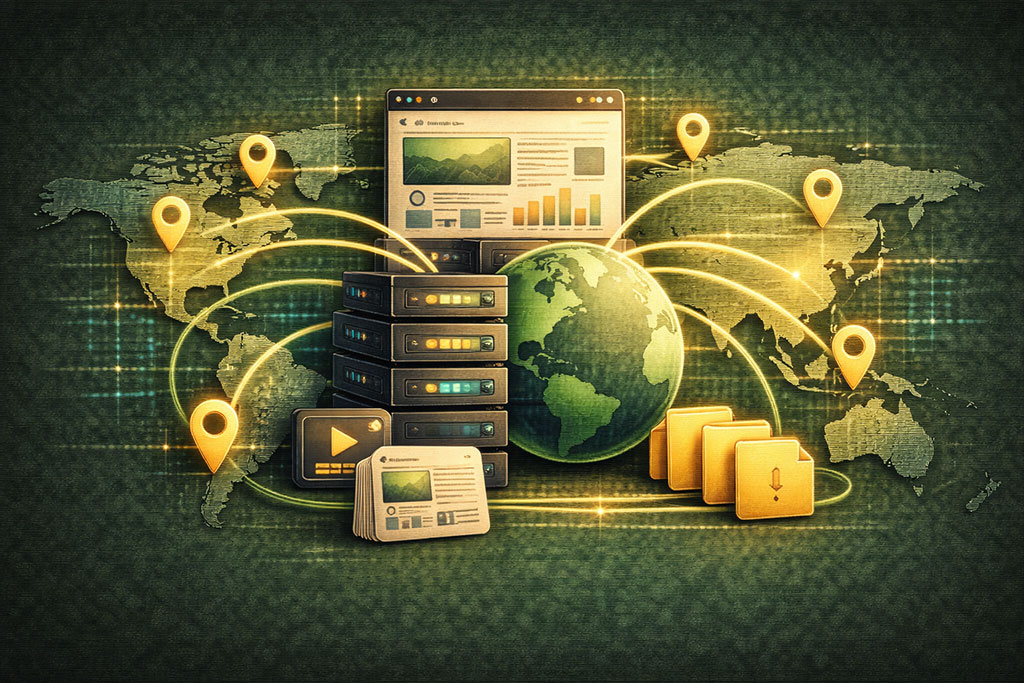
While edge computing focuses on processing, CDNs address the distribution of static and dynamic content. Think of your website’s content – images, videos, stylesheets, and even cached versions of your web pages – as the chapters of your book. A CDN is like a network of bookstores spread across the globe, each stocking copies of your book so that readers can pick them up from their local establishment rather than waiting for a single copy to be shipped from the author’s desk.
Geographic Distribution of Servers: The Network of Bookstores
A CDN consists of a distributed network of servers, often referred to as Points of Presence (PoPs), strategically located in data centers around the world. When you use a CDN, a copy of your website’s content is cached on these servers. When a user requests your content, they are directed to the CDN server that is geographically closest to them. This ensures that the content travels the shortest possible distance, drastically reducing load times.
Caching and Replication: Making Copies Available
The core mechanism of a CDN is caching. Static assets (content that doesn’t change frequently) are stored on CDN servers. When a user’s browser requests an image, for example, the CDN serves that image from its nearest edge server, rather than fetching it from your origin server every single time. This reduces the load on your origin server and, more importantly, significantly speeds up delivery to the end-user. Dynamic content can also be cached, either temporarily or through more sophisticated mechanisms that involve origin shielding or real-time updates.
Reducing Origin Server Load: The Relief for the Central Library
Without a CDN, your origin server would be the sole point of contact for all user requests. This can lead to significant strain, especially for popular websites or during peak traffic periods. A CDN offloads a substantial portion of this traffic by serving cached content. This not only improves performance but also enhances the reliability of your origin server. It’s akin to a central library having to fulfill every single book request versus having a vast network of branches that significantly reduce the burden on the main repository.
Enhancing Website Performance and Scalability: The Foundation for Growth
By delivering content from servers closer to users, CDNs directly contribute to faster website loading times. This leads to a better user experience, reduced bounce rates, and improved search engine rankings. Furthermore, CDNs are designed to handle massive amounts of traffic, making them crucial for scaling your online presence. They act as a buffer, absorbing traffic spikes without compromising performance, ensuring that your story remains accessible even when your audience swells.
The Synergy Between Edge Computing and CDNs: A Powerful Alliance
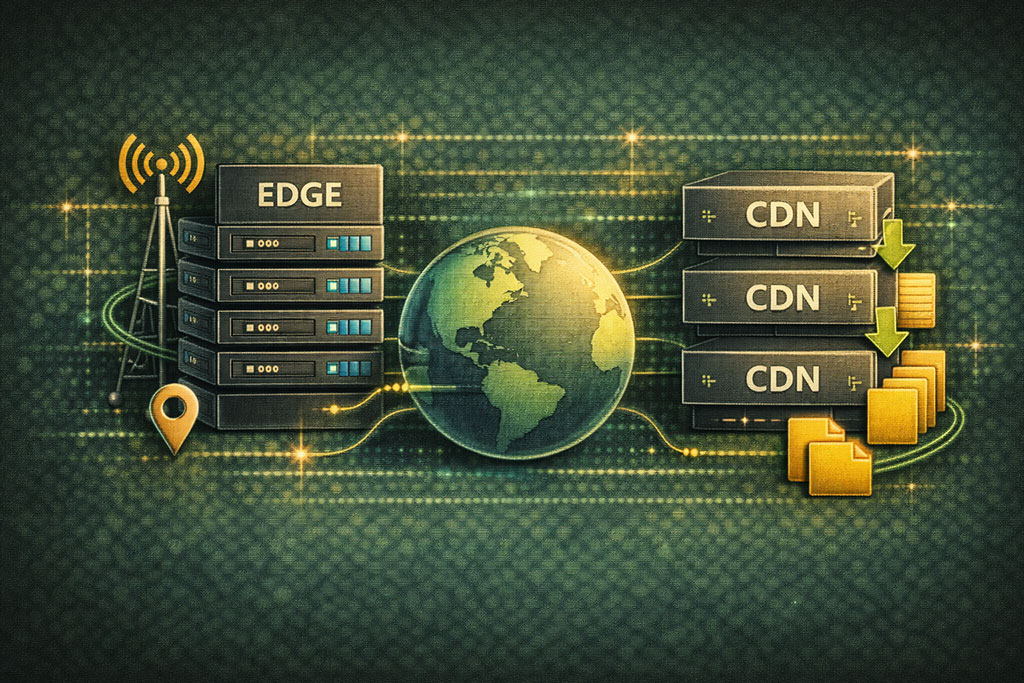
Edge computing and CDNs are not mutually exclusive; in fact, they are highly complementary technologies. When deployed together, they create a powerful infrastructure that delivers unparalleled performance and responsiveness to global audiences. Imagine them as two sides of the same coin, working in concert to achieve a common goal.
Edge as the New CDN Edge: A Unified Delivery Model
As edge computing evolves, it is increasingly blurring the lines with traditional CDN edge locations. Many edge computing platforms are inherently distributed and can be leveraged to cache and deliver content, much like a CDN. This convergence allows for a more unified and efficient delivery model where content caching and localized processing occur at the same physical locations. You are not just bringing the books closer; you are also bringing the librarians who can offer immediate assistance and interpretation.
Processing Content at the Edge, Delivering it from the Edge
Consider a scenario where you have a dynamically generated personalized recommendation system. Instead of your origin server generating these recommendations and then a CDN delivering them, edge computing allows the recommendation logic to run at the edge. The personalized content is then served directly from that nearby edge location. This means that both the processing and the delivery happen at the edge, minimizing latency at every step.
Enhanced Security and Reliability: A Fortified Narrative
The distributed nature of both edge computing and CDNs inherently enhances security and reliability. By distributing data and processing across multiple locations, you reduce the risk of a single point of failure. If one edge server or PoP goes offline, traffic can be automatically rerouted to other available locations. This resilience ensures that your content remains accessible even in the face of network outages or cyberattacks. Furthermore, edge locations can be equipped with security measures, such as Web Application Firewalls (WAFs), to protect your content closer to the user.
Optimized for Dynamic Content Delivery: Beyond Static Files
While CDNs have traditionally excelled at caching static content, the integration with edge computing allows for more sophisticated dynamic content delivery. Edge compute nodes can perform real-time data processing, personalization, and even application logic execution, serving highly dynamic and tailored content to users with minimal latency. This is a significant leap from simply serving pre-canned files and allows for a much richer and more interactive user experience.
In today’s digital landscape, the importance of technologies like edge computing and content delivery networks (CDNs) cannot be overstated, especially for businesses aiming to reach global audiences effectively. These technologies enhance website performance and ensure faster content delivery, which is crucial for user engagement. For those looking to further optimize their online presence, exploring various strategies can be beneficial. A related article that offers valuable insights is available at 8 Best Website Optimization Tips for 2023, where you can discover additional techniques to improve your site’s performance.
Implementing Edge Computing and CDNs: Strategic Considerations
Successfully leveraging edge computing and CDNs requires careful planning and strategic implementation. It’s not simply a matter of adopting new technology; it’s about aligning these solutions with your specific needs and audience.
Choosing the Right CDN Provider: The Gateway to Global Reach
Selecting a CDN provider is a critical decision. You should consider factors such as:
- Global network coverage: Does the CDN have PoPs in the regions where your target audience resides?
- Performance metrics: What are their average latency and throughput rates across different regions?
- Features and capabilities: Do they offer advanced features like real-time analytics, security services, and support for dynamic content acceleration?
- Pricing models: Understand their pricing structure and ensure it aligns with your budget and anticipated traffic.
- Support and reliability: What is their track record for uptime and customer support?
Integrating Edge Computing Solutions: Building Your Distributed Infrastructure
Integrating edge computing involves architecting your applications and infrastructure to take advantage of distributed processing. This might involve:
- Cloud provider edge services: Major cloud providers offer a suite of edge computing services that can be integrated with their existing cloud offerings.
- On-premises edge deployments: For organizations with specific data sovereignty or security requirements, deploying your own edge servers might be necessary.
- Third-party edge platforms: Specialized edge computing platforms can provide a managed solution for deploying and managing edge applications.
Traffic Management and Routing: Directing Your Audience to the Best Experience
Effective traffic management is essential for realizing the full benefits of edge computing and CDNs. This involves:
- DNS-based routing: Directing users to the nearest CDN PoP or edge server based on their geographical location.
- Load balancing: Distributing traffic across multiple servers and locations to prevent overload and ensure optimal performance.
- Health checks and failover: Continuously monitoring the health of your edge infrastructure and automatically rerouting traffic in case of failures.
Content Optimization and Management: Keeping Your Story Fresh and Accessible
While CDNs and edge computing handle delivery, the content itself needs to be optimized for speed and efficiency:
- Image and video compression: Reducing file sizes without compromising quality can significantly improve load times.
- Code minification and concatenation: Optimizing your website’s code for faster parsing and execution.
- Lazy loading: Loading content only when it is visible to the user, reducing initial page load times.
- Regular cache invalidation: Ensuring that users are served the most up-to-date content when changes are made to your origin server.
The Future of Global Content Delivery: A Continuously Evolving Landscape
The importance of edge computing and CDNs is only set to grow as the digital landscape continues to evolve. As more devices connect to the internet and user expectations for real-time interactions increase, these technologies will become even more indispensable.
The Rise of the Metaverse and Immersive Experiences
The development of immersive technologies like the metaverse will necessitate an unprecedented level of low-latency, high-bandwidth delivery. Edge computing and CDNs will be the bedrock upon which these virtual worlds are built, enabling seamless interaction and engagement for users worldwide. Imagine attending a global concert in a virtual space, with every attendee experiencing the same, near-instantaneous audio and visual cues – this is the promise of a truly edge-enabled metaverse.
AI and Machine Learning at the Edge: Intelligent Content Delivery
The integration of Artificial Intelligence (AI) and Machine Learning (ML) at the edge will further revolutionize content delivery. AI algorithms can analyze user behavior in real-time at the edge to personalize content, optimize delivery paths, and even proactively identify and resolve potential issues before they impact the user. This moves beyond simply delivering content to intelligently crafting and refining the user’s experience on the fly.
Increased Demand for Real-Time Data and Analytics
As businesses increasingly rely on real-time data for decision-making, the demand for edge computing solutions that can process and analyze this data closer to its source will continue to surge. This enables faster insights and more agile responses to changing market conditions or operational challenges.
The Environmental Impact: Decentralization and Efficiency
While not always the primary driver, the decentralization inherent in edge computing and CDN architectures can offer environmental benefits. By reducing the need for massive, centralized data transfers, and by enabling more efficient resource utilization closer to the user, these technologies can contribute to a more sustainable digital infrastructure.
In conclusion, you cannot afford to ignore the fundamental principles of speed, reliability, and accessibility when engaging with a global audience. Edge computing and CDNs are no longer optional extras; they are essential components of a robust and responsive digital strategy. By embracing these technologies, you are not just delivering content; you are building bridges of seamless communication and ensuring that your message, your story, resonates with every listener, no matter where they are in the world.
FAQs
What is edge computing and how does it work?
Edge computing is a distributed computing paradigm that brings data processing and storage closer to the location where it is needed, typically near the end users or devices. By processing data at the network edge rather than relying solely on centralized data centers, edge computing reduces latency, improves response times, and decreases bandwidth usage.
What are Content Delivery Networks (CDNs)?
Content Delivery Networks (CDNs) are systems of distributed servers strategically located around the world to deliver web content and media to users more efficiently. CDNs cache copies of content closer to users, which helps reduce load times, improve availability, and enhance the overall user experience.
Why are edge computing and CDNs important for global audiences?
For global audiences, edge computing and CDNs are vital because they minimize latency and improve content delivery speed regardless of the user’s geographic location. This ensures faster access to websites, applications, and streaming services, leading to better performance and user satisfaction worldwide.
How do edge computing and CDNs improve website and application performance?
By processing data and serving content closer to users, edge computing and CDNs reduce the distance data must travel. This decreases latency, reduces network congestion, and speeds up load times. Additionally, they help distribute traffic loads, preventing bottlenecks and improving reliability during high demand.
Can edge computing and CDNs enhance security for global users?
Yes, both edge computing and CDNs can enhance security by providing distributed points of presence that can detect and mitigate cyber threats closer to the source. They can offer features like DDoS protection, secure data transmission, and localized compliance with data privacy regulations, thereby improving overall security for global users.









Add comment