

You have meticulously crafted a brand, a digital identity that represents your vision and values. However, in the vast and ever-expanding landscape of the internet, this identity can be vulnerable. Just as a physical fortress requires multiple layers of defense, your digital brand necessitates a comprehensive strategy to withstand potential threats. Registering a single domain extension, while a foundational step, leaves you exposed to a multitude of risks. This article will guide you through the imperative of securing multiple domain extensions, offering a strategic blueprint for safeguarding your brand in the contemporary online environment.
The internet operates as a sprawling global marketplace, and within this dynamic ecosystem, your brand’s digital presence is a critical asset. However, this environment also presents inherent vulnerabilities that, if left unaddressed, can undermine your hard-earned reputation and market position.
Cybersquatting: The Digital Land Grab
Cybersquatting, also known as domain squatting, is the practice of registering, trafficking in, or using a domain name with the bad-faith intent of profiting from the goodwill of a trademark belonging to someone else. Imagine purchasing prime real estate for your business, only to find a speculator has already bought up similar plots surrounding you, demanding exorbitant prices or using them to mislead your customers.
- Typo-squatting: A common form of cybersquatting involves registering domain names that are misspellings of your brand. For instance, if your brand is “BrandName.com,” a typo-squatter might register “BranName.com” or “BrandNane.com.” Unwitting customers, making a simple typing error, could then be redirected to a competitor’s site, a phishing scam, or a site hosting malicious software.
- Variant squatting: This involves registering close variations of your brand name, perhaps adding a hyphen, a common prefix or suffix, or using a less common abbreviation. This can create confusion and dilute your brand’s authority.
- “Bad Faith” Intent: The legal framework around cybersquatting often hinges on proving “bad faith” intent. By proactively registering relevant extensions, you establish a clear claim to your brand identity, making it demonstrably harder for others to claim legitimate use.
Brand Confusion: Erosion of Identity
In a crowded digital space, clarity is paramount. When multiple entities use similar or identical brand identifiers, brand confusion inevitably arises. This can lead to a fragmentation of your brand’s message and a dilution of its distinctiveness.
- Customer Misdirection: Potential customers, recalling your brand name but uncertain of the exact domain, might inadvertently land on a different website. This misdirection translates directly into lost traffic, diminished sales opportunities, and a frustrating customer experience.
- Reputational Damage: If a non-affiliated entity operating under a similar domain engages in unethical practices, provides inferior products or services, or promotes content contrary to your brand’s values, your reputation can suffer severe damage by association.
- Market Share Erosion: Every customer who is confused or misdirected is a potential customer lost to your competitors. Over time, this erosion of market share can have significant financial implications.
Phishing and Malicious Impersonation: The Digital Wolf in Sheep’s Clothing
Phishing attacks and malicious impersonation are among the most insidious threats to both your brand and your customers. These highly deceptive tactics exploit trust to gain access to sensitive information or to distribute malware.
- Credibility Exploitation: Attackers often register domain names that closely resemble your official domain, then use these deceptive domains to launch phishing campaigns. They might send emails appearing to be from your company, luring unsuspecting customers into divulging login credentials, financial information, or other personal data.
- Trust Undermining: A successful phishing attack, even if quickly identified, can irrevocably damage customer trust in your brand. Users may become wary of interacting with your company online, even through legitimate channels.
- Regulatory Consequences: Incidents of data breaches stemming from phishing attacks can trigger severe regulatory penalties, particularly under data protection laws such as GDPR or CCPA, leading to substantial fines and further reputational harm.
Search Engine Optimization (SEO) and Traffic Control: Guiding the Digital Flow
Your brand’s visibility in search engines is a cornerstone of its online success. Uncontrolled domain variations can undermine your SEO efforts and scatter your digital footprint.
- Fragmented SEO Authority: When your brand identity is spread across numerous, unowned domains, search engine algorithms may struggle to consolidate your authority around a single, canonical source. This can lead to lower search rankings for your official website.
- Lost Backlinks: Valuable backlinks earned by your brand might inadvertently be pointed towards competing or unauthorized domains if they were registered under similar names. Each lost backlink represents a missed opportunity to enhance your site’s domain authority.
- Redirect Strategies: By owning multiple extensions, you gain the ability to implement strategic redirects. For instance, if you own “BrandName.net” and “BrandName.org,” you can configure these to seamlessly direct traffic to your primary “BrandName.com” website. This consolidates traffic, improves user experience, and reinforces your core digital presence.
In today’s digital landscape, protecting your brand is more crucial than ever, and one effective strategy is registering multiple domain extensions. This approach not only helps in safeguarding your brand identity but also enhances your online presence. For a deeper understanding of how web hosting plays a vital role in establishing and maintaining your brand’s online footprint, you can read more in this related article: What is Web Hosting and How Does it Work?.
Multi-Extension Domain Strategy: Building Your Digital Citadel
A proactive and comprehensive multi-extension domain strategy is not merely an expense; it is an investment in the long-term security and growth of your brand. It serves as a formidable digital citadel, protecting your assets from various incursions.
Core Domain Foundation: The Bedrock of Your Identity
Your primary domain, typically a .com, forms the bedrock of your online identity. It is the most recognized and often the default expectation for internet users.
- The Enduring Power of .com: Despite the proliferation of new gTLDs,
.comretains its status as the most trusted and universally recognized domain extension. For many, it remains the first port of call when seeking a brand online. - Establishing Authority: Securing your brand name as a
.comestablishes a fundamental level of authority and credibility. It signals a global presence and often makes it easier for users to remember and recall your website. - Global Reach: The
.comdomain transcends geographical boundaries, making it an ideal choice for businesses with international aspirations or a global customer base.
Geographical Reach: Extending Your Influence Locally and Globally
Beyond your core domain, consider the geographical reach of your brand. Targeting specific regions or countries requires a thoughtful approach to domain registration.
- Country-Code Top-Level Domains (ccTLDs): If your business operates in or has significant customer bases in specific countries, registering the corresponding ccTLDs is crucial. Examples include
.co.ukfor the United Kingdom,.cafor Canada,.defor Germany, and.jpfor Japan. - Local Trust and SEO: ccTLDs often convey a sense of local legitimacy and can enhance your brand’s visibility in country-specific search engine results. Search engines frequently prioritize local domains for local searches.
- Legal Compliance: In some jurisdictions, having a local ccTLD may be a prerequisite or highly recommended for businesses operating within that country, especially if you handle local customer data or conduct transactions.
- Mitigation of Geo-Targeted Cybersquatting: Just as global cybersquatting is a threat, local cybersquatting on ccTLDs can also occur, targeting specific national markets.
- Regional Domains: Beyond specific countries, some regions have their own dedicated top-level domains. Assess your market scope to determine if these are relevant to your strategy.
Industry-Specific and Niche Extensions: Carving Out Your Digital Niche
The advent of new generic top-level domains (gTLDs) has brought about a wave of industry-specific and niche extensions. These can be powerful tools for branding and protection.
- Relevance and Memorability: Extensions like
.techfor technology companies,.storefor e-commerce,.lawfor legal firms,.dentalfor dental practices, or.photographyfor photographers can immediately convey the nature of your business. This enhances memorability and relevance for your target audience. - Enhanced Branding: A domain like “YourBrand.tech” can reinforce your brand’s identity within a specific industry, signaling specialization and expertise.
- Defensive Registration: Even if you don’t intend to actively use “YourBrand.store,” registering it defensively prevents a competitor or malicious entity from acquiring it and potentially misrepresenting your services or setting up a misleading e-commerce site.
- Future-Proofing: As the internet evolves, new gTLDs may gain prominence. Proactively securing relevant industry-specific extensions ensures your brand remains agile and protected in an ever-changing digital landscape.
The Evolving Landscape: New gTLDs and Global Expansion
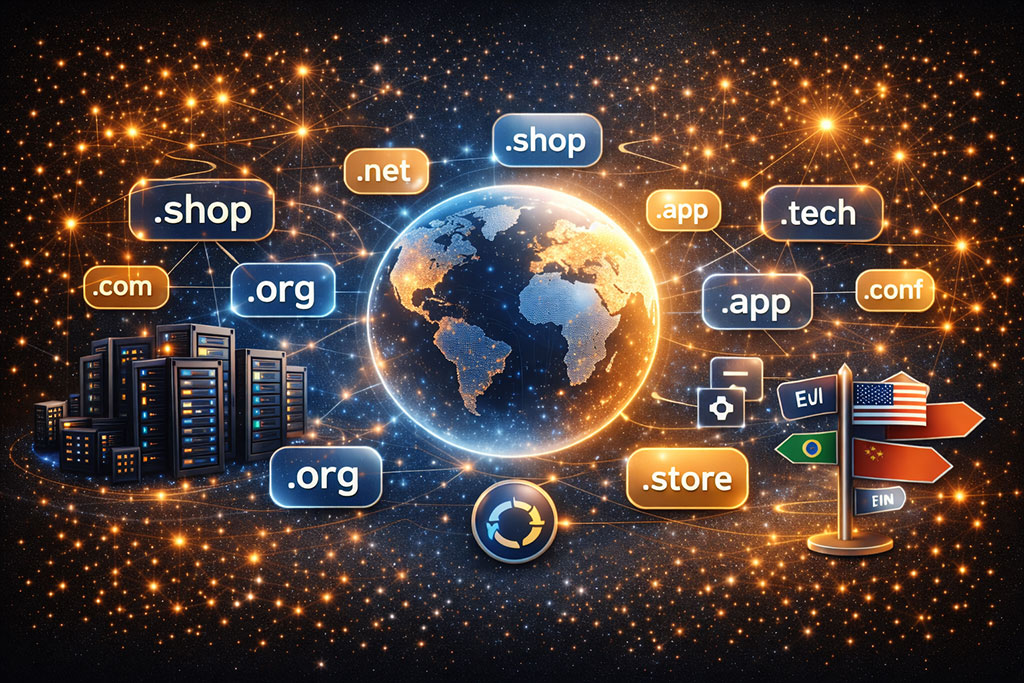
The internet’s domain system is not static. Significant expansions are underway, presenting both opportunities and additional considerations for brand protection.
ICANN’s New gTLD Rounds: A Tectonic Shift
The Internet Corporation for Assigned Names and Numbers (ICANN) is continually expanding the universe of available gTLDs. This expansion represents a significant shift in the internet’s naming architecture.
- Second Major Expansion Round: ICANN is launching a second major expansion round of generic top-level domains (gTLDs), with applications opening on April 30, 2026. The applicant guide has been approved by the ICANN Board, signaling the commencement of this pivotal phase. This provides a critical window for brands to proactively secure their digital footprint in nascent domain spaces.
- Increased Diversity in Applications: The Applicant Support Program has already seen 75 applications from across ICANN’s five regions, with a strong interest from Asia-Pacific (38 applications) – a significant increase compared to the 2012 round. This indicates a growing global recognition of the strategic importance of new domain extensions and a likely increase in competition for desirable names.
- Brand TLDs in Focus: Approximately 34% of applications in the previous round were for brand extensions (e.g., .yourbrand). This trend is anticipated to continue in 2026. If your organization has the resources and strategic inclination, applying for your own
.brandTLD offers the ultimate level of control and protection, transforming your brand name into a functional internet address. - Linguistic Diversity Encouraged: The new round emphasizes applications in all writing systems, including non-Latin scripts such as Arabic (.موقع) and Japanese (.みんな). If your brand operates in multilingual markets, securing domains in relevant non-Latin scripts is becoming increasingly important for both defensive and strategic reasons, enhancing accessibility and preventing exploitation of your brand in these languages.
The Strategic Imperative of Monitoring and Adaptation
The dynamic nature of the domain landscape necessitates ongoing vigilance and a willingness to adapt your strategy.
- Continuous Monitoring: Regularly monitor new gTLD announcements and the availability of relevant extensions. New extensions emerge, and what might seem irrelevant today could become critical tomorrow.
- Trademark Clearinghouse (TMCH): The TMCH is a central repository for trademark information, designed to protect trademark holders during the launch of new gTLDs. Registering your trademark with the TMCH can provide you with early notification of domain registrations that match your mark in newly launched gTLDs, allowing you to take pre-emptive action.
- Flexibility and Foresight: An effective brand protection strategy is not a one-time endeavor. It requires flexibility and foresight to anticipate future trends and challenges in the ever-evolving digital ecosystem.
Benefits Beyond Protection: Unlocking Value

While brand protection is the primary driver for securing multiple domain extensions, this strategy also unlocks several tangible benefits that contribute to your overall digital success.
Enhanced Brand Consistency: A Unified Digital Voice
In an increasingly fragmented digital world, a consistent brand identity is crucial for recognition and trust.
- Eliminating Ambiguity: By owning all relevant domain variations, you present a unified front to your audience. There is no ambiguity about where your official online presence resides.
- Reinforcing Brand Message: A consistent domain strategy reinforces your brand’s message across all digital touchpoints, from marketing materials to social media profiles.
- Professionalism and Authority: Owning a comprehensive set of domains projects an image of professionalism and authority, signaling that your brand is serious about its digital presence and takes measures to protect its reputation.
SEO Advantages: Consolidating Your Digital Power
A well-executed multi-extension strategy can significantly bolster your search engine optimization efforts, driving more organic traffic to your core website.
- Consolidating Link Juice: By redirecting all owned domain variations to your primary website, you consolidate “link juice” (the equity passed from one page to another through hyperlinks). This strengthens the authority of your main domain in the eyes of search engines.
- Keyword Optimization (Indirect): While the gTLD itself may not be a direct ranking factor for keywords, owning descriptive gTLDs like
.techor.storecan subtly reinforce your brand’s relevance to specific search queries, improving click-through rates. - Improved User Experience: Seamless redirects from alternative domains ensure that users always land on your intended website, regardless of which domain they initially entered. A positive user experience is increasingly valuable for SEO.
Strategic Traffic Control: Directing the Digital Current
Owning multiple domains gives you precise control over the flow of internet traffic related to your brand, much like managing a complex canal system.
- Redirect for Centralization: As previously mentioned, 301 redirects (permanent redirects) are essential for guiding traffic from all owned extensions to your primary website. This centralizes your traffic, making it easier to track analytics and convert visitors.
- Campaign-Specific Landing Pages: In some instances, you might choose to use a specific domain for a particular marketing campaign or special offer (e.g., “YourBrandOffers.com”), then redirect it back to your main site after the campaign concludes. This offers flexibility without diluting your core brand.
- Affordable Protection: Compared to the potential costs of legal battles against cybersquatters, the financial repercussions of lost sales and reputation due to brand confusion, or the expenses associated with recovering from a phishing attack, the cost of defensively registering multiple domain extensions is remarkably affordable. It is a preventative measure that offers significant return on investment.
In today’s digital landscape, protecting your brand is more crucial than ever, and one effective strategy is registering multiple domain extensions. This approach not only helps safeguard your brand identity but also enhances your online presence. For those looking to improve their website’s performance alongside brand protection, exploring high-quality hosting options can be beneficial. You can read more about this in the article on how to boost your website’s performance with reliable WordPress hosting. By combining these strategies, you can ensure that your brand remains strong and competitive in the market.
Conclusion: An Ounce of Prevention
<?xml encoding=”UTF-8″>
| Benefit | Description | Impact on Brand Protection | Example Metrics |
|---|---|---|---|
| Prevents Cybersquatting | Registering multiple extensions stops others from registering similar domain names to exploit your brand. | Reduces risk of brand impersonation and phishing attacks. | Number of blocked domain registrations: 15+ per year |
| Enhances Brand Visibility | Owning multiple extensions increases chances of customers finding your brand online. | Improves search engine presence and customer trust. | Increase in direct traffic by 20% |
| Protects Against Competitor Encroachment | Prevents competitors from acquiring similar domain names that could confuse customers. | Maintains market share and brand integrity. | Zero competitor domain acquisitions in protected extensions |
| Supports Marketing Campaigns | Different extensions can be used for targeted campaigns or regional marketing. | Improves campaign effectiveness and tracking. | Campaign conversion rate increase by 10% |
| Facilitates International Expansion | Registering country-specific extensions helps localize your brand presence. | Builds trust with local customers and complies with regional regulations. | Growth in international traffic by 25% |
The digital landscape is a dynamic and occasionally treacherous environment for brands. While your core domain name serves as your digital home address, relying solely on it leaves your brand vulnerable to a myriad of threats, from cybersquatting and brand confusion to phishing attacks and fragmented SEO.
By adopting a proactive strategy of securing multiple domain extensions – encompassing global .com, relevant country-code TLDs, and pertinent industry-specific gTLDs – you construct a robust digital fortress around your brand. This comprehensive approach is an investment, not an expense, offering affordable protection against significant financial and reputational losses. As ICANN’s new gTLD application rounds continue to expand the digital frontier, vigilance and strategic foresight are paramount. Safeguarding your brand through this multi-layered domain strategy is not merely an option; it is an imperative for long-term success and enduring digital security.
FAQs
What are domain extensions and why are they important for brand protection?
Domain extensions, also known as top-level domains (TLDs), are the suffixes at the end of a web address, such as .com, .net, or .org. Registering multiple extensions helps protect your brand by preventing others from using similar domain names that could confuse customers or damage your brand reputation.
How does registering multiple domain extensions benefit my brand?
Registering multiple domain extensions secures your brand’s online presence by blocking competitors or cyber squatters from acquiring similar domain names. It also ensures consistent branding across different platforms and can improve your search engine visibility.
Which domain extensions should I consider registering for my brand?
Common domain extensions to consider include .com, .net, .org, and country-specific TLDs relevant to your market. Additionally, industry-specific extensions like .tech or .store may be beneficial depending on your business sector.
Is it expensive to register multiple domain extensions?
The cost varies depending on the domain registrar and the specific extensions chosen. While registering multiple domains involves additional fees, the investment is often justified by the protection and control it provides over your brand identity online.
Can registering multiple domain extensions improve my website’s SEO?
While having multiple domain extensions does not directly boost SEO rankings, it helps prevent competitors from using similar domains that could divert traffic. Consistent branding across domains can indirectly support your SEO efforts by maintaining user trust and reducing confusion.








Add comment