

You stand at the precipice of a new era for dedicated servers, a domain long defined by raw power and predictable performance. But the landscape is shifting, driven by relentless innovation and an insatiable demand for agility, efficiency, and intelligence. This isn’t about incremental upgrades; it’s about a fundamental reimagining of what a dedicated server can be. You’re about to explore the exciting frontiers of dedicated server architecture, where future innovations promise to redefine performance, security, and your overall experience.
The traditional CPU, while powerful, often represents a compromise. It’s designed for general-purpose tasks, meaning it excels at many things but is a master of none. The future of dedicated server architecture lies in the strategic deployment of hyper-specialized processors, tailored to the exact demands of your workloads. Imagine an AI inferencing server equipped with dedicated Tensor Processing Units (TPUs) or Neural Processing Units (NPUs) that dwarf the performance of even the most powerful general-purpose CPUs for machine learning tasks. Your data processing will no longer be bottlenecked by generic silicon.
AI Acceleration on the Edge and Core
The democratization of AI has led to an explosion of inference workloads. You’ll find dedicated servers increasingly populated with hardware accelerators designed specifically for these tasks. This isn’t just about speeding up model training; it’s about enabling real-time decision-making at the very edge of your network or within the core of your data center. Consider real-time video analytics, fraud detection, or predictive maintenance applications that require instantaneous processing. These specialized processors will make such demanding workloads not just possible, but effortlessly efficient. You’ll see a shift from using GPUs for inference, which are still powerful but often power-hungry and optimized for graphics, towards more energy-efficient and purpose-built NPUs and TPUs. These units will be deeply integrated into the server architecture, often with direct memory access and optimized interconnects to minimize latency.
Genomics and Scientific Computing Powerhouses
The sheer computational demands of fields like genomics, drug discovery, and advanced scientific simulations require resources far beyond what a standard server can offer. Future dedicated servers will feature specialized processing units optimized for these domains. Think about hardware designed for DNA sequencing, protein folding simulations, or complex fluid dynamics calculations. These processors will boast architectures that accelerate specific algorithms and data structures common in these scientific disciplines, unlocking unprecedented research capabilities. You’ll witness the emergence of co-processors that handle complex mathematical operations, matrix manipulations, and data parallelization at a level that would be prohibitively expensive or slow with general-purpose CPUs.
The Rise of Domain-Specific Architectures (DSAs)
Beyond individual processor types, we’re seeing a broader trend towards Domain-Specific Architectures (DSAs). These are not just new chips; they are entire server designs optimized for a particular application or industry. A DSA for financial trading might prioritize low-latency processing and high-throughput data handling, while a DSA for media rendering might focus on massive parallelization of graphical computations. You’ll be able to choose servers built from the ground up for your specific industry, eliminating compromise and maximizing efficiency. This goes beyond just the CPU; it involves optimized memory hierarchies, specialized I/O controllers, and even custom interconnect fabrics that are all tuned for a particular set of tasks.
As we explore the landscape of future innovations in dedicated server architecture, it’s essential to understand the foundational concepts of web hosting and its various types. A related article that delves into the intricacies of web hosting is available at What is Web Hosting and How Does It Work?. This resource provides valuable insights into how dedicated servers fit into the broader web hosting ecosystem, highlighting their significance in delivering reliable and efficient online services.
Disaggregated and Composable Infrastructure: The Fabric of Flexibility
The monolithic nature of traditional dedicated servers is giving way to a more fluid and adaptable model: disaggregated and composable infrastructure. This paradigm shift means you can break down the server into its core components – compute, memory, storage, and networking – and then recompose them dynamically as needed. This is like having a toolbox of server parts that you can assemble and reassemble on demand, ensuring you always have the perfect configuration for any task.
Resources as Services: The API-Driven Datacenter
In this future, every server component will be treated as a service, accessible and controllable via robust APIs. You won’t be manually configuring hardware; you’ll be requesting resources programmatically. Need more RAM for a temporary workload? Your automation system can provision it instantly. Storage requirements change? You can dynamically scale your storage capacity without physical intervention. This “Infrastructure as Code” approach will extend to the physical hardware layer, offering unprecedented agility and resource optimization. You’ll interact with your infrastructure at a higher level of abstraction, focusing on your applications and workloads rather than the underlying hardware.
Elastic Compute and Storage Pools
Imagine vast pools of compute and storage resources that you can draw from and return to as needed. Disaggregated architecture enables this elastic scaling. Instead of procuring entire servers for peak loads that might only last a few hours, you can tap into these shared pools, paying only for what you consume. This drastically reduces underutilization and optimizes your operational expenditure. You’ll move away from the traditional procurement cycle of buying servers and waiting for them to be deployed to a model where resources are available on-demand. This has profound implications for cost management and the ability to respond to rapidly changing business needs.
Network-Attached Processing Units (NAPUs)
As a logical extension of disaggregation, you might see the emergence of Network-Attached Processing Units (NAPUs). These are specialized processing units – much like the AI accelerators mentioned earlier – that are not housed within a single server chassis but are accessible over the network. This allows you to distribute processing power across your datacenter, bringing compute closer to the data without the need for a full server. This can be particularly beneficial for edge computing scenarios or for offloading specific, computationally intensive tasks from general-purpose servers. Think of it as having compute nodes that are as fungible and scalable as storage arrays.
Intelligent and Self-Optimizing Architectures
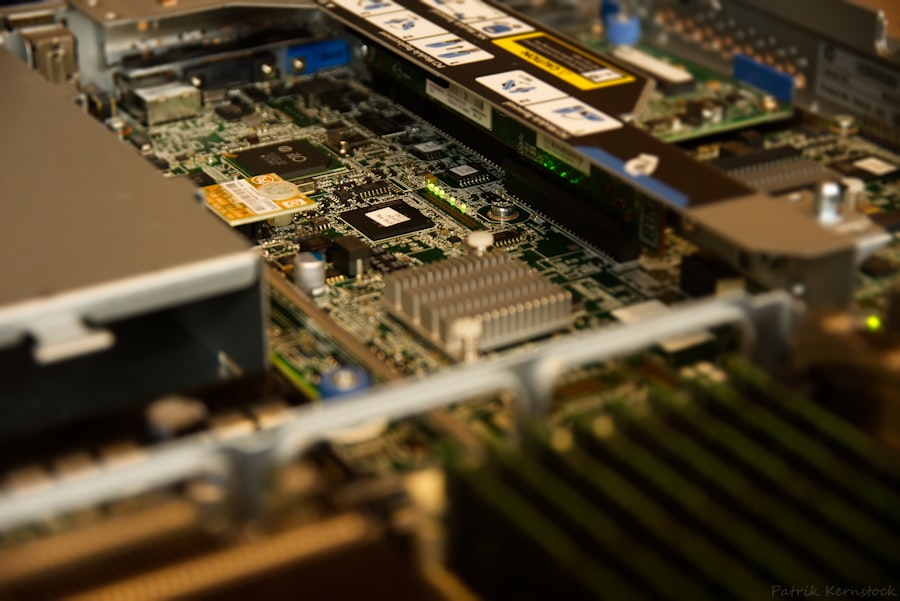
The future dedicated server won’t just perform tasks; it will actively learn, adapt, and optimize itself. Leveraging AI and machine learning, these servers will become proactive rather than reactive, anticipating needs and resolving issues before they even surface. You’ll be freed from the burden of constant manual tuning and troubleshooting.
Predictive Maintenance and Anomaly Detection
Gone are the days of waiting for hardware to fail. Intelligent server architectures will constantly monitor their own health, predicting potential component failures with remarkable accuracy. They’ll analyze performance metrics, temperature logs, and error codes to identify subtle anomalies that indicate an impending issue. This allows for proactive maintenance, minimizing downtime and ensuring uninterrupted service. You’ll receive alerts and automated remediation actions before a tangible problem impacts your users.
Dynamic Workload Balancing and Resource Allocation
These intelligent architectures will go beyond simple load balancing. They will understand the nuances of your workloads, identifying the most efficient way to allocate resources in real-time. If a particular application suddenly experiences a surge in demand, the server will automatically reallocate available CPU, memory, and I/O to meet that demand, ensuring consistent performance. This dynamic optimization will be continuous, adapting to the ever-changing rhythm of your operations. You’ll see systems that can learn the performance characteristics of different applications and tailor resource allocation accordingly, optimizing not just for raw throughput but also for latency and cost-effectiveness.
Self-Healing and Autonomous Operation
The ultimate goal is a self-healing infrastructure. Should a component fail, the intelligent server will automatically reroute traffic, reallocate tasks, and even provision replacement resources from a disaggregated pool, all without human intervention. This leads to incredibly resilient and autonomous systems that require significantly less operational overhead. You’ll be able to deploy and manage a much larger infrastructure with a smaller operations team, freeing up valuable human capital for more strategic initiatives. Imagine a server that can diagnose a faulty network interface card, isolate itself from the network, provision a replacement from a pool of spares, and seamlessly reintegrate itself – all without you ever being notified of the issue unless you choose to be.
Enhanced Security Through Hardware-Rooted Trust and AI
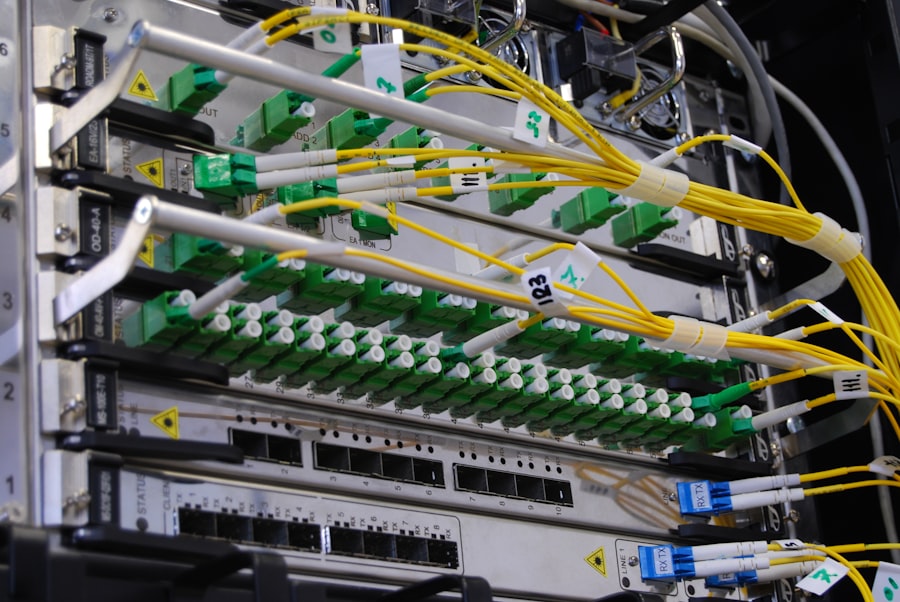
Security is no longer an add-on; it’s woven into the very fabric of future dedicated server architecture. We’re moving towards hardware-rooted trust, where security is established at the deepest level of the system, making it far more resistant to traditional software-based attacks. Coupled with AI-powered threat detection, these servers will offer an unprecedented level of protection for your sensitive data.
Hardware-Enforced Isolation and Sandboxing
Future dedicated servers will feature hardware-level mechanisms for isolating workloads and creating secure sandboxes. This means that even if one application on your server is compromised, it will be unable to affect other applications or the underlying operating system. Technologies like memory encryption, secure enclaves, and processor-based virtualization will become standard, providing robust boundaries that are extremely difficult to breach. You’ll be able to run multiple tenants or perform sensitive operations with the confidence that your data and processes are truly compartmentalized.
AI-Powered Threat Detection and Response
Beyond static security measures, AI will play a crucial role in identifying and responding to evolving threats in real-time. Machine learning algorithms will analyze network traffic, system behavior, and user activity to detect sophisticated attacks, including zero-day exploits that traditional signature-based methods would miss. When a threat is detected, the system can automatically initiate countermeasures, such as isolating the compromised entity, blocking malicious traffic, or even triggering automated incident response playbooks. This proactive security posture is essential in today’s complex threat landscape.
Quantum-Resistant Cryptography Integration
While still in its nascent stages, the threat of quantum computing breaking current encryption standards looms on the horizon. Future dedicated servers will begin to integrate quantum-resistant cryptographic algorithms into their hardware and firmware. This forward-thinking approach will ensure that your data remains secure not just today, but also in the face of future technological advancements. You’ll be laying the groundwork for long-term data security, future-proofing your infrastructure against an eventual quantum leap.
As businesses increasingly rely on advanced technology, the evolution of dedicated server architecture plays a crucial role in enhancing performance and reliability. For those interested in understanding how various tech tools can support solo entrepreneurs, a related article discusses essential business tools that can complement these innovations. You can explore this insightful piece here, which highlights the importance of a robust tech stack in driving efficiency and growth.
Sustainable and Energy-Efficient Architectures
| Metrics | Data |
|---|---|
| Processor Speed | 3.5 GHz |
| Memory Capacity | 64 GB |
| Storage Capacity | 1 TB SSD |
| Network Bandwidth | 10 Gbps |
| Energy Efficiency | 90% |
The environmental impact of data centers is a growing concern. Future dedicated server architectures will prioritize energy efficiency and sustainability, not just as an ethical imperative but as a smart economic decision. Reduced power consumption translates directly into lower operational costs.
Advanced Power Management and Cooling Solutions
You’ll see more sophisticated power management techniques at the hardware level, allowing individual components to enter low-power states when not in use and to dynamically adjust their performance based on the current workload. Furthermore, innovative cooling solutions, from liquid cooling integrated directly into server designs to AI-controlled fan speeds that optimize airflow, will significantly reduce the energy required to keep these powerful machines running. You’ll witness a move away from brute-force cooling towards intelligent and adaptive systems.
Reconfigurable Computing and Resource Optimization
Reconfigurable computing, where hardware can be dynamically reprogrammed to perform specific tasks, offers a path towards greater energy efficiency. Instead of relying on fixed-function hardware that may be idle for much of the time, you can reconfigure computational resources on demand. This allows you to use precisely the right amount of processing power for each task, minimizing wasted energy. This also ties back into composable infrastructure, where you can dynamically assemble and disassemble compute resources, ensuring you are only consuming power for actual computational needs.
Sustainable Component Sourcing and Lifecycle Management
Beyond energy consumption, the manufacturing and disposal of server components contribute to the overall environmental footprint. Future innovations will encompass more sustainable sourcing of materials, extended component lifecycles through modular design and upgradeability, and responsible end-of-life recycling programs. You’ll be choosing infrastructure that aligns with your organization’s broader sustainability goals. This includes looking at servers that are designed for repairability and upgradability, extending their useful life and reducing the need for premature replacement.
The dedicated server is undergoing a profound metamorphosis. You are at the forefront of this revolution, where the lines between hardware and software blur, intelligence is embedded at every level, and adaptability is the new constant. By embracing these future innovations, you will unlock unprecedented levels of performance, security, and efficiency, transforming your infrastructure from a static resource into a dynamic, intelligent engine for your business. The era of the hyper-specialized, composable, and self-optimizing dedicated server is not just coming – it’s already beginning to take shape. You have the opportunity to ride this wave of innovation and redefine what’s possible.
FAQs
What are the current challenges in dedicated server architecture?
The current challenges in dedicated server architecture include scalability, security, and performance optimization. As technology advances, the demand for more powerful and efficient dedicated servers continues to grow.
What are some future innovations in dedicated server architecture?
Future innovations in dedicated server architecture include the development of more powerful processors, increased memory capacity, and improved storage solutions. Additionally, advancements in virtualization and containerization technologies are expected to play a significant role in shaping the future of dedicated server architecture.
How will future innovations impact the performance of dedicated servers?
Future innovations in dedicated server architecture are expected to significantly improve performance by enabling faster data processing, reduced latency, and enhanced scalability. These advancements will allow dedicated servers to handle increasingly complex workloads and deliver higher levels of performance.
What role will artificial intelligence and machine learning play in dedicated server architecture?
Artificial intelligence and machine learning are expected to play a significant role in optimizing dedicated server architecture. These technologies can be used to automate server management tasks, improve resource allocation, and enhance security measures, ultimately leading to more efficient and reliable dedicated server performance.
How will future innovations in dedicated server architecture impact businesses and industries?
Future innovations in dedicated server architecture are expected to have a profound impact on businesses and industries by enabling them to leverage more powerful and efficient computing resources. This will result in improved productivity, enhanced data processing capabilities, and the ability to support increasingly complex applications and workloads.








Add comment