

You’re at a crossroads. Your business is growing, and with that growth comes increasing data, more complex applications, and an ever-present demand for agility. The traditional IT models that once served you so well are starting to creak under the strain. You need a solution that offers the best of all worlds – the control of on-premises infrastructure, the scalability of the cloud, and the seamless integration of both. This is where hybrid infrastructure steps in, not just as a buzzword, but as a critical driver for your sustained business growth. You’re not just adopting technology; you’re strategically positioning yourself for the future.
Before you embark on this transformative journey, it’s crucial to understand what hybrid infrastructure truly entails and why it’s not just another fleeting trend. You’re looking at a strategic approach that blends your on-premises data centers with public and private cloud environments, creating a unified and fluid IT ecosystem. This isn’t about choosing one over the other; it’s about intelligent integration.
What is Hybrid Infrastructure, Really? Yourself, Explained.
Imagine your on-site servers, network, and storage, tightly integrated with resources provisioned from a public cloud provider like AWS, Azure, or Google Cloud. You also might have a private cloud, offering dedicated resources within your own data center or a co-located facility. The “hybrid” aspect means you can seamlessly move workloads and data between these environments based on your specific needs. You’re gaining flexibility you’ve never had before.
Why Are You Considering Hybrid? The Pressures and Promises.
Your motivations for exploring hybrid infrastructure are likely multifaceted. Perhaps you’re grappling with the spiraling costs of maintaining an all-on-premises environment, or you’re missing the agility demanded by your rapidly evolving market. Maybe regulatory compliance restricts what data you can move to the public cloud. Whatever your specific challenges, hybrid offers compelling promises:
- Cost Optimization: You’re not paying for idle cloud resources when demand is low, and you’re not over-provisioning on-premises hardware for peak loads.
- Enhanced Agility: You can rapidly spin up new resources in the cloud for development, testing, or temporary projects, without waiting for hardware procurement.
- Improved Resiliency: Your data and applications can be replicated across different environments, significantly reducing downtime risks.
- Data Sovereignty & Compliance: You can keep sensitive data on-premises or in a private cloud while still leveraging the public cloud for less sensitive workloads.
- Modernization: You’re empowering your legacy applications to interact with cloud-native services, extending their lifespan and value.
In the context of how hybrid infrastructure is supporting business growth, it’s essential to consider the importance of having a well-structured online presence. A related article that provides valuable insights on this topic is titled “How to Build a One-Page Website in 10 Easy Steps.” This resource outlines practical steps for creating an effective website, which can be a crucial component of leveraging hybrid infrastructure for business expansion. You can read the article here: How to Build a One-Page Website in 10 Easy Steps.
Strategic Advantages: How Hybrid Fuels Your Business Engine
When you implement a well-designed hybrid infrastructure, you’re not just solving IT problems; you’re unlocking strategic advantages that directly contribute to your bottom line. You’re transforming your IT department from a cost center into a growth engine.
Flexibility and Scalability: Your Business, Unbound.
One of the most compelling reasons you’re considering hybrid is the unparalleled flexibility it offers. You’re no longer constrained by the physical limits of your data center or the rigid pricing models of a single cloud provider.
- Bursting Capabilities: Imagine your e-commerce site during a major holiday sale. You can seamlessly “burst” excess traffic and processing to the public cloud, ensuring your customers experience smooth service without having to invest in massive on-premises over-provisioning you’ll only use a few times a year. You’re avoiding costly downtime and lost sales.
- Development and Testing Environments: You can quickly provision temporary development and testing environments in the cloud, allowing your teams to innovate faster without impacting your production systems. Once testing is complete, you can de-provision these resources, paying only for what you used. You’re accelerating your time-to-market.
- Geographic Expansion: As your business expands globally, you can leverage public cloud regions in new territories to serve customers with low latency, while still maintaining central data management on-premises or in a private cloud. You’re reaching new markets efficiently.
Cost Optimization and Efficiency: Smart Spending, Smart Growth.
You understand that every dollar counts. Hybrid infrastructure allows you to be much more strategic with your IT spending, converting capital expenditures into operational expenditures where it makes sense, and optimizing resource utilization across the board.
- Right Workload, Right Environment: You’re able to place each workload in the most appropriate and cost-effective environment. High-security, low-fluctuation workloads stay on-premises, while burstable, less sensitive applications leverage the scalability and pay-as-you-go model of the public cloud. You’re not shoehorning everything into one solution.
- Reduced Capital Expenditure (CapEx): By leveraging cloud resources for fluctuating needs, you can significantly reduce the need for large upfront hardware purchases. You’re shifting from buying servers to subscribing to services.
- Improved Resource Utilization: You’re maximizing the return on investment for your on-premises hardware by offloading peak loads to the cloud. You’re making your existing investments work harder.
- Operational Efficiencies: Automation tools and unified management platforms streamline operations across your hybrid environment, reducing the manual effort required to manage disparate systems. You’re freeing up your IT staff for more strategic initiatives.
Enhanced Security and Compliance: Your Data, Protected and Accountable.
Security is paramount. In a world of increasing cyber threats and stringent regulations, you need an infrastructure that can protect your valuable data and ensure compliance. Hybrid offers a robust framework for achieving this.
- Data Sovereignty: You can keep sensitive customer data, intellectual property, or data subject to specific regulatory mandates (like GDPR, HIPAA, or local data residency laws) securely within your private cloud or on-premises data center. You’re meeting your legal obligations.
- Layered Security: By combining the security controls of your private infrastructure with the advanced security features and expertise of public cloud providers, you’re creating a more resilient and multi-layered defense. You’re leveraging the best of both worlds.
- Disaster Recovery (DR) and Business Continuity (BC): You can implement highly effective disaster recovery strategies by replicating data and applications to a public cloud region or a geographically separate private cloud. In the event of a localized outage, you can rapidly failover to your alternative environment, minimizing downtime and data loss. You’re safeguarding your business against unforeseen events.
Overcoming Challenges: Your Path to a Seamless Hybrid Journey
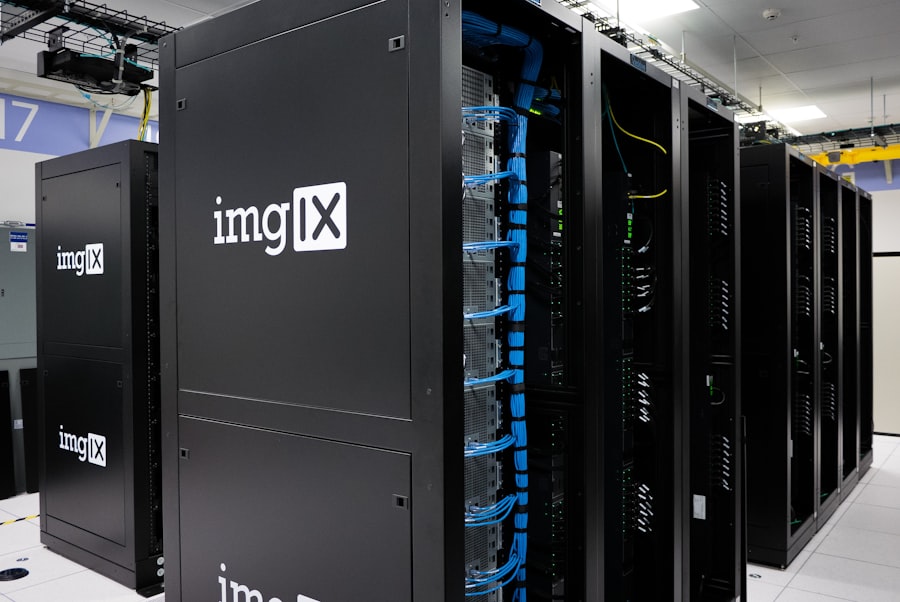
While the benefits are clear, adopting a hybrid infrastructure isn’t without its complexities. You’ll need a thoughtful approach to navigate potential pitfalls and ensure a smooth transition.
Integration Complexities: Bridging the Divide.
One of the biggest hurdles you’ll face is ensuring seamless integration between your disparate environments. You need a unified view, not a patchwork of isolated systems.
- Networking: Establishing secure, high-bandwidth connectivity (e.g., VPNs, direct connect services) between your on-premises data center and your cloud environments is critical. You need to ensure data flows efficiently and securely.
- Data Synchronization: Maintaining consistency and integrity of data across different environments can be challenging. You’ll need robust data replication and synchronization strategies, especially for applications that span both.
- Identity and Access Management (IAM): You need a unified IAM solution that allows users to seamlessly access resources across your hybrid environment without managing multiple sets of credentials. You’re simplifying security.
Management and Orchestration: Your Command Center.
Managing a hybrid environment effectively requires a unified approach. You can’t afford to treat each environment as a separate silo.
- Unified Management Platforms: You’ll need tools that provide a single pane of glass for monitoring, managing, and automating operations across your on-premises, private cloud, and public cloud resources. This could involve cloud vendor-specific tools, third-party solutions, or a combination.
- Automation: Automating tasks like provisioning, configuration, and scaling across your hybrid environment is crucial for efficiency and consistency. You’re reducing manual errors and speeding up operations.
- Skill Gaps: Your IT team may need new skills to manage and optimize a hybrid environment. Investing in training for cloud architects, DevOps engineers, and security specialists is essential. You’re empowering your team.
Security and Governance: Maintaining Control.
While hybrid can enhance security, it also introduces new considerations. You need to extend your security policies and governance frameworks across all components of your hybrid landscape.
- Consistent Security Policies: You must ensure that your security policies, firewalls, intrusion detection/prevention systems, and data encryption are consistently applied across your on-premises and cloud environments. You’re removing potential weak points.
- Compliance Across Environments: Verifying that your hybrid setup meets all relevant regulatory and industry compliance standards can be complex. You need a clear understanding of data residency and processing requirements for every piece of data.
- Cloud Security Best Practices: You need to adopt cloud-native security best practices, including proper configuration of cloud services, strong access controls, and regular security audits of your cloud environments. You’re leveraging cloud security expertise.
The Future is Hybrid: Your Next Steps for Growth

The trajectory is clear: hybrid infrastructure is not just a temporary stop but a fundamental shift in how businesses like yours operate. You’re moving towards an era where agility, resilience, and cost-effectiveness are paramount.
Adopting a Cloud-First, Hybrid-Right Mentality: Your Strategic Vision.
Moving forward, you should adopt a “cloud-first, hybrid-right” mentality. This means evaluating cloud solutions as your default option for new applications and services, but always considering where your data and workloads are best suited for optimal performance, cost, and security within your overall hybrid strategy.
- Application Modernization: You’ll progressively modernize your legacy applications, either by re-platforming them to run in containers or microservices that can easily span hybrid environments, or by integrating them with cloud-native services. You’re extending the life and value of your existing investments.
- Data Management Strategies: Implementing robust data management strategies, including data classification, data governance, and data lifecycle management, is critical for success in a hybrid world. You’re knowing what data you have and where it belongs.
- Embracing Automation and AI/ML: You will increasingly leverage automation, artificial intelligence, and machine learning for managing your hybrid infrastructure. These technologies can optimize resource allocation, predict outages, and enhance security, allowing your teams to focus on higher-value tasks. You’re building an intelligent infrastructure.
The Role of Edge Computing: Extending Your Hybrid Reach.
As you look to the future, you’ll find that hybrid infrastructure is increasingly converging with edge computing. This involves processing data closer to its source, often at the “edge” of your network, before sending it to a central cloud or data center.
- IoT and Real-time Analytics: For industries relying heavily on IoT devices and real-time data processing (e.g., manufacturing, smart cities, healthcare), edge computing combined with hybrid provides a powerful solution. You can perform initial data processing at the edge for immediate action, then send aggregated or refined data to the cloud for deeper analytics or long-term storage.
- Low Latency Applications: Applications requiring ultra-low latency, such as autonomous vehicles or augmented reality, will benefit immensely from edge processing within a hybrid architecture. You’re delivering superior user experiences.
- Distributed Architectures: Your hybrid strategy will naturally evolve to include more distributed architectures, with workloads running across data centers, public clouds, and numerous edge locations. You’re building truly resilient and globally accessible services.
As businesses increasingly adopt hybrid infrastructure to enhance their operational efficiency and scalability, it is essential to address potential challenges that may arise, such as broken links on their websites. A related article discusses effective strategies for identifying and resolving these issues, which can significantly impact user experience and search engine rankings. For more insights on this topic, you can read about how to find and fix 404 pages in this informative piece here.
Your Path Forward: Actionable Steps for Hybrid Success
| Metrics | Data |
|---|---|
| Increased Scalability | Ability to scale resources up or down based on demand |
| Improved Flexibility | Ability to choose between on-premises and cloud resources |
| Enhanced Security | Combining private and public cloud for better security measures |
| Cost Savings | Optimizing costs by using a mix of on-premises and cloud infrastructure |
| Business Continuity | Ensuring operations continue even in the event of a disaster |
Your journey to a successful hybrid infrastructure isn’t a single event but an ongoing process. To ensure your business growth is consistently driven by your IT strategy, you need to take deliberate and well-planned steps.
Assess Your Current State: Know Thyself.
Before making any significant changes, you need a clear understanding of your existing IT landscape.
- Inventory Your Applications and Data: Cataglorize all your applications and data, assessing their criticality, performance requirements, security needs, and regulatory constraints. Which applications are cloud-native ready? Which are better suited to stay on-premises? You’re gaining clarity.
- Evaluate Your Current Infrastructure: Examine your existing hardware, networking, virtualization platforms, and security solutions. Identify redundancies, bottlenecks, and areas for improvement. You’re finding your starting point.
- Analyze Your Workload Patterns: Understand your peak and off-peak demands, seasonal fluctuations, and growth projections for different workloads. This will inform your capacity planning. You’re anticipating your needs.
Define Your Hybrid Strategy: Charting Your Course.
Based on your assessment, you can then articulate a clear hybrid strategy that aligns with your business objectives.
- Identify Appropriate Workloads for Cloud Migration: Start with less critical applications or development environments as proof-of-concept projects. This allows your team to gain experience and refine processes without significant risk. You’re learning by doing.
- Choose Cloud Providers Wisely: Research and select public cloud providers (e.g., AWS, Azure, Google Cloud) that best meet your technical requirements, budget, and compliance needs. Consider multi-cloud for even greater flexibility and vendor lock-in avoidance. You’re making informed decisions.
- Establish Connectivity and Security Frameworks: Design your networking architecture, VPNs, direct connect solutions, and a robust security framework that consistently applies across all your hybrid environments. You’re building a secure foundation.
Implement and Optimize: Building and Refining.
Once your strategy is defined, it’s time for execution, followed by continuous optimization.
- Pilot Projects: Begin with small, manageable pilot projects to test your hybrid integration, management tools, and operational processes. Learn from these pilots and iterate. You’re minimizing risk.
- Invest in Skills and Training: Train your IT staff on new cloud technologies, management tools, and security best practices relevant to your hybrid environment. Your team is your greatest asset.
- Implement Automation Tools: Deploy automation for provisioning, configuration management, monitoring, and scaling to streamline operations and ensure consistency across your environments. You’re boosting efficiency.
- Monitor and Optimize Continuously: Implement comprehensive monitoring tools to track performance, costs, and security posture across your hybrid infrastructure. Regularly review your resource utilization and adjust your strategy to optimize for cost and performance. You’re adapting and improving.
By embracing hybrid infrastructure, you’re not just adopting a technology; you’re adopting a mindset that prioritizes agility, resilience, and intelligent resource allocation. You’re future-proofing your business, ensuring that as you grow, your IT infrastructure grows with you, seamlessly adapting to new opportunities and challenges. This isn’t just about survival; it’s about thriving in an ever-evolving digital landscape. Your business growth depends on it, and you’re ready to lead the way.
FAQs
What is hybrid infrastructure?
Hybrid infrastructure refers to a combination of on-premises and cloud-based resources that work together to support an organization’s IT needs. This can include a mix of physical servers, virtual servers, and cloud services.
How does hybrid infrastructure support business growth?
Hybrid infrastructure allows businesses to scale their IT resources more easily and cost-effectively. It provides the flexibility to leverage both on-premises and cloud resources, enabling organizations to adapt to changing business needs and customer demands.
What are the benefits of using hybrid infrastructure?
Some benefits of using hybrid infrastructure include improved agility, cost savings, enhanced security, and the ability to leverage the best of both on-premises and cloud environments. It also allows for better disaster recovery and business continuity planning.
What are some common challenges associated with hybrid infrastructure?
Common challenges with hybrid infrastructure include managing complexity, ensuring seamless integration between on-premises and cloud resources, and maintaining consistent security and compliance standards across the hybrid environment.
How can businesses effectively implement and manage hybrid infrastructure?
Businesses can effectively implement and manage hybrid infrastructure by conducting a thorough assessment of their IT needs, leveraging automation and orchestration tools, implementing a robust monitoring and management strategy, and ensuring strong collaboration between IT teams and business stakeholders.









Add comment