

You stand on the precipice of a technological shift, a seismic wave gathering momentum that will ripple through the very foundations of how you store, process, and access information. Quantum computing, once a theoretical curiosity confined to the hushed halls of research institutions, is now poised to fundamentally alter the landscape of hosting infrastructure. This isn’t just a faster microchip; it’s a paradigm shift, a new language of computation that speaks in probabilities and superposition, capable of tackling problems that currently lie beyond the reach of even our most powerful supercomputers. For you, as a user, manager, or builder of digital infrastructure, understanding this impending transformation is paramount to navigating the future and ensuring your systems remain relevant and secure.
The hosting infrastructure you rely on today is built upon the bedrock of classical computing. Transistors, acting as on/off switches, form the basis of logical operations, processing information in binary bits—0s and 1s. This has served us admirably for decades, powering everything from your humble laptop to colossal data centers. However, quantum computing introduces a radically different architecture, leveraging principles of quantum mechanics to perform computations. This necessitates a complete rethink of the hardware that underpins our digital world.
Qubits: The Heartbeat of Quantum Computation
Instead of bits, quantum computers employ qubits. A qubit, unlike a classical bit, can exist not only as a 0 or a 1, but also as a superposition of both states simultaneously. Imagine a spinning coin; while it’s spinning, it’s neither heads nor tails, but a combination of both. Once it lands, it resolves to one state. Qubits operate similarly, offering a vastly expanded computational space. This means that for a given number of qubits, a quantum computer can explore an exponentially larger number of possibilities concurrently compared to its classical counterpart. For hosting infrastructure, this translates to the potential for processing vast datasets and complex calculations in fractions of the time.
The Implications for Processing Power
The exponential advantage of qubits means that a quantum computer with just a few hundred qubits could, in theory, outperform any classical computer that has ever been built, in terms of specific problem-solving capabilities. This isn’t about a linear increase in speed; it’s about a leap, like trading a bicycle for a spaceship when it comes to tackling certain challenges. Your current servers, designed for sequential processing, will eventually be like abacuses in the face of quantum calculators for specific tasks.
Challenges in Qubit Stability and Error Correction
The power of superposition comes with a significant fragility. Qubits are incredibly susceptible to environmental noise—vibrations, temperature fluctuations, electromagnetic interference—which can cause them to decohere, collapsing their superposition and leading to errors. Think of an orchestra playing a symphony; a single off-key note can disrupt the entire harmony. Maintaining qubit coherence and implementing robust quantum error correction are therefore critical engineering challenges that hosting providers must address. This means developing specialized cooling systems, isolation chambers, and sophisticated algorithms to detect and correct these quantum errors.
Quantum Processors: From Lab Benches to Server Racks
The physical manifestations of quantum processors are diverse and still evolving. Different approaches, such as superconducting circuits, trapped ions, photonic systems, and topological qubits, are being explored. Each has its own unique set of advantages and disadvantages in terms of scalability, coherence times, and ease of fabrication. The hosting industry will need to adapt to these vastly different physical requirements.
Superconducting Qubits and Their Demands
Superconducting qubits, like those employed by many leading quantum computing companies, require extremely low temperatures, often near absolute zero. This means hosting environments will need to accommodate sophisticated cryogenic infrastructure, far beyond the standard air conditioning of today’s data centers. The energy consumption and maintenance requirements for these cooling systems will represent a significant operational cost increase.
Trapped Ions and Laser Control
Trapped ion quantum computers use electromagnetic fields to suspend individual ions, which are then manipulated by precisely tuned lasers. While these systems may not require the same extreme cold, they demand exceptionally stable laser systems and vacuum environments. The complexity of aligning and controlling these lasers for large numbers of ions will present a unique set of engineering challenges for scaling up.
The Rise of Hybrid Architectures
Realistically, the transition won’t be a sudden complete handover to quantum. For the foreseeable future, you’ll likely see hybrid quantum-classical architectures. This means quantum processors will act as specialized accelerators, offloading computationally intensive tasks from classical systems. Your hosting infrastructure will then need to be designed to seamlessly integrate these vastly different types of processors, managing the flow of data and computation between them. This is akin to having a team of incredibly skilled specialists working alongside a larger, more generalist workforce.
In exploring the transformative potential of quantum computing in future hosting infrastructure, it is also essential to consider the tools that will optimize performance in this evolving landscape. A related article that delves into this topic is “7 Essential WordPress Optimization Plugins for 2025,” which discusses various plugins that can enhance website performance and user experience as hosting technologies advance. You can read more about it here: 7 Essential WordPress Optimization Plugins for 2025.
The Cryptographic Apocalypse: Quantum’s Threat to Security
One of the most immediate and profound impacts of quantum computing will be on cybersecurity. The very algorithms that secure your online transactions, protect your sensitive data, and authenticate your digital identities are vulnerable to quantum attacks. This isn’t a hypothetical threat; it’s a ticking clock.
Breaking Encryption: The Fall of Public-Key Cryptography
The backbone of modern secure communication, such as SSL/TLS encryption used for secure websites, relies on public-key cryptography. Algorithms like RSA and Elliptic Curve Cryptography (ECC) derive their security from the computational difficulty of certain mathematical problems, specifically the factorization of large numbers or the discrete logarithm problem. However, quantum computers, armed with Shor’s algorithm, can solve these problems exponentially faster than any classical computer. This means that current encryption methods will become obsolete, rendering vast amounts of previously secure data vulnerable. Consider it like having a master key that can unlock any lock, rendering your current security measures useless.
The Need for Post-Quantum Cryptography
The urgent response to this threat is the development and implementation of post-quantum cryptography (PQC). These are new cryptographic algorithms designed to be resistant to attacks from both classical and quantum computers. They rely on different mathematical problems, such as lattice-based cryptography, code-based cryptography, and hash-based cryptography, which are believed to be intractable for quantum computers.
Hosting Providers as Guardians of the New Encryption
Hosting providers will play a critical role in transitioning the internet to PQC. This will involve updating servers, software, and security protocols to support these new algorithms. The sheer scale of this undertaking is immense, requiring a massive global effort to secure the digital infrastructure before quantum computers become powerful enough to break current encryption. This will be a logistical challenge of unprecedented proportions.
The Quantum Advantage in Cyber Warfare
Beyond breaking existing encryption, quantum computing also poses a threat in terms of developing more sophisticated cyberattacks. Quantum algorithms could be used to accelerate the search for vulnerabilities, optimize brute-force attacks, and even develop novel malware with unprecedented capabilities. This necessitates a proactive approach to security, not just reacting to threats, but anticipating them.
Advanced Threat Detection Through Quantum Machine Learning
Conversely, quantum computing also offers new tools for defense. Quantum machine learning algorithms have the potential to analyze vast datasets of network traffic and identify subtle patterns indicative of malicious activity with greater speed and accuracy than classical methods. Hosting providers can leverage this to build more intelligent intrusion detection systems and predictive security models.
Revolutionizing Data Processing and Storage

The ability of quantum computers to explore vast possibility spaces simultaneously has profound implications for how we process and store data. Many computationally intensive tasks currently bottlenecked on classical systems will be unlocked by quantum capabilities.
Big Data Unlocked: Speeding Up Analysis and Insights
The sheer volume of data generated today is staggering. Extracting meaningful insights from this “big data” often involves complex algorithms and extensive processing time. Quantum algorithms, such as Grover’s algorithm, can significantly speed up searching unsorted databases, and other quantum algorithms can optimize complex simulations and statistical analyses. This means that fields like scientific research, financial modeling, and AI development will see an acceleration in their progress.
Quantum Algorithms for Optimization
Many real-world problems can be framed as optimization problems, from logistics and supply chain management to financial portfolio optimization and drug discovery. Quantum computers, with their ability to explore complex solution spaces, are ideally suited for these tasks. Hosting providers will offer services that leverage these quantum optimization capabilities, allowing businesses to find the most efficient and profitable solutions to their complex challenges.
The Future of Databases and Information Retrieval
While quantum computers are unlikely to replace classical databases entirely for everyday storage, they could revolutionize how we interact with and retrieve information from them. Imagine querying a massive database and receiving results not just based on exact matches, but on complex relationships and probabilistic inferences.
Quantum Search and Knowledge Discovery
Quantum search algorithms could enable incredibly fast and nuanced searches through vast repositories of information, facilitating new forms of knowledge discovery. This could transform how researchers, analysts, and even general users access and synthesize information.
Novel Data Compression Techniques
The peculiar nature of quantum mechanics might also lead to entirely new approaches to data compression, potentially reducing the storage requirements for vast datasets. While still in its nascent stages, this offers another avenue for optimizing the efficiency of hosting infrastructure.
The Evolving Landscape of Cloud Computing
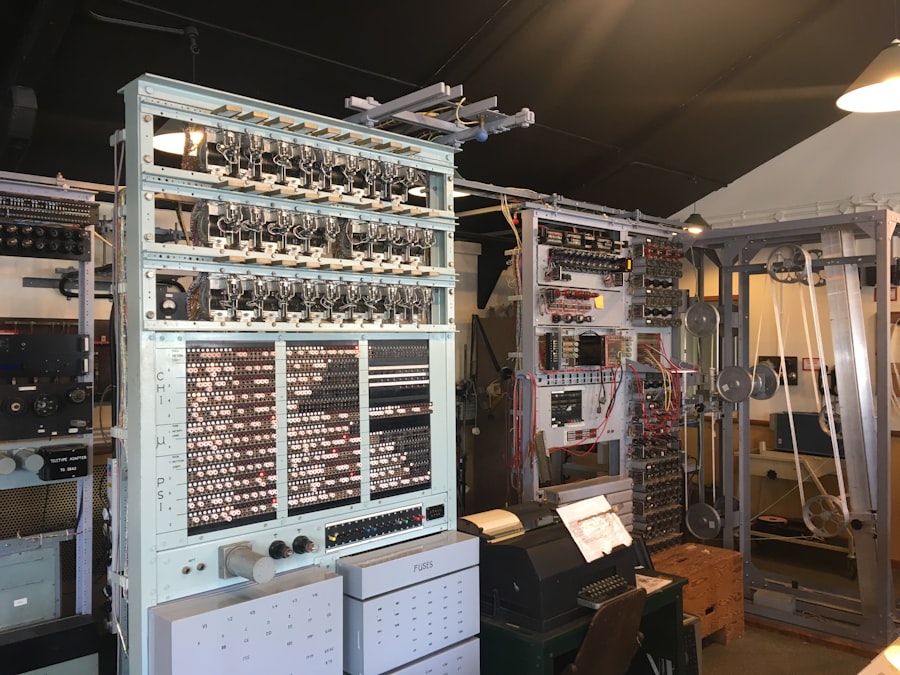
The cloud, as you know it, is a dynamic and ever-evolving ecosystem. Quantum computing will introduce a new layer of complexity and opportunity to this landscape, fundamentally changing how cloud services are delivered and consumed.
Quantum-Powered Cloud Services: A New Era of Computing
The integration of quantum computing into cloud platforms will usher in an era of quantum-as-a-service (QaaS). Businesses will be able to access quantum computing resources on demand, without the prohibitive cost and complexity of building and maintaining their own quantum hardware. This democratizes access to this revolutionary technology, allowing a wider range of organizations to explore its potential.
Hybrid Cloud Models with Quantum Integration
The most likely model will be a hybrid cloud, where classical cloud infrastructure seamlessly integrates with quantum processing units. You’ll interact with a familiar cloud interface, but behind the scenes, certain computationally intensive tasks will be offloaded to quantum co-processors. This offers the best of both worlds: the scalability and accessibility of the cloud combined with the unparalleled processing power of quantum for specific applications.
Vertical Integration and Specialized Quantum Clouds
As quantum technology matures, you may also see the emergence of specialized quantum clouds catering to specific industries or research areas. For example, a pharmaceutical company might opt for a quantum cloud optimized for molecular simulation, while a financial institution might choose one tailored for complex risk analysis.
Challenges in Cloud Orchestration and Management
Managing and orchestrating resources across both classical and quantum computing environments presents a new set of challenges. You’ll need sophisticated tools and platforms to allocate tasks, manage data flow, monitor performance, and ensure security across these disparate systems.
Resource Allocation and Scheduling Across Classical and Quantum
Efficiently scheduling and allocating tasks between classical and quantum processors will be a key challenge. Not all problems are suitable for quantum acceleration, and improper allocation could lead to inefficiencies and increased costs. Intelligent schedulers will be essential.
Interoperability and Standardization
A lack of standardization in quantum hardware and software could create interoperability issues. Hosting providers will need to work towards developing interoperable solutions to ensure that clients can easily transition between different quantum platforms and integrate them into their existing workflows.
As the landscape of technology continues to evolve, the integration of quantum computing into future hosting infrastructure is becoming increasingly significant. This shift not only promises enhanced processing power but also introduces new paradigms in data security and efficiency. For those interested in exploring related topics, the article on Linux hosting provides valuable insights into how traditional hosting methods are adapting to meet the demands of modern applications, potentially paving the way for quantum advancements in the industry.
The Economic and Societal Ramifications
| Metric | Current Status | Future Projection (5-10 years) | Impact on Hosting Infrastructure |
|---|---|---|---|
| Quantum Processing Speed | Measured in qubits, current quantum processors have 50-100 qubits | Expected to reach 1,000+ qubits with error correction | Enables faster data processing and complex computations in hosting environments |
| Data Encryption Strength | Classical encryption methods vulnerable to quantum attacks | Quantum-resistant encryption protocols widely adopted | Improves security of hosted data and communications |
| Energy Efficiency | Quantum computers currently consume significant cooling resources | Advancements expected to reduce energy consumption per computation | Potentially lowers operational costs and environmental impact of data centers |
| Integration with Classical Systems | Limited hybrid quantum-classical systems in experimental stages | Seamless integration enabling hybrid hosting solutions | Enhances computational capabilities without full quantum infrastructure |
| Latency in Data Processing | Quantum communication latency higher due to current technology limits | Optimized quantum networks reduce latency significantly | Improves real-time data handling and user experience in hosting |
| Cost of Quantum Hardware | Extremely high, limiting widespread adoption | Costs expected to decrease with technological maturity and scale | Enables broader deployment of quantum-enhanced hosting services |
The impact of quantum computing on hosting infrastructure extends beyond the technical realm; it will have significant economic and societal ramifications, reshaping industries and creating new opportunities and challenges.
The Quantum Economy: New Industries and Job Markets
The rise of quantum computing will undoubtedly spawn new industries and create new job markets. You’ll see a demand for quantum hardware engineers, quantum software developers, quantum algorithm designers, and experts in quantum security. This will require a significant investment in education and workforce development.
The Disruption of Existing Industries
Conversely, industries that rely heavily on computations that quantum computers can solve efficiently may face significant disruption. For instance, fields like drug discovery, materials science, and financial modeling could see rapid advancements driven by quantum capabilities, potentially displacing existing methods and business models.
Accessibility and the Digital Divide
As with any transformative technology, there’s a concern about accessibility and the potential widening of the digital divide. Early access to quantum computing resources will likely be concentrated in the hands of large corporations and well-funded research institutions. Ensuring equitable access and preventing a two-tiered system will be a critical societal challenge.
Government Investment and Public-Private Partnerships
Proactive government investment in quantum research, development, and infrastructure, coupled with strong public-private partnerships, will be crucial to fostering widespread adoption and mitigating potential inequalities.
The Long Road to Quantum Supremacy
It’s important to temper expectations. While the potential of quantum computing is immense, we are still in the early stages of its development. Building stable, scalable, and error-corrected quantum computers is an incredibly complex engineering feat. The transition will be gradual, not instantaneous.
The Timeline of Quantum Adoption
You should anticipate a phased adoption. Initially, quantum computers will be niche accelerators for specific problems. As the technology matures, they will become more integrated and accessible, gradually impacting a wider range of hosting infrastructure and applications. The obsolescence of current encryption is a more immediate concern, driving the need for PQC implementation even before widespread quantum computing deployment.
You are embarking on a new chapter in the history of computing. The implications for hosting infrastructure are profound and far-reaching. By understanding these shifts, preparing for the technical challenges, and proactively addressing the security and economic ramifications, you can ensure that your digital world not only survives but thrives in the quantum era.
FAQs
What is quantum computing?
Quantum computing is a type of computing that uses quantum bits, or qubits, which can represent and process information in ways that classical bits cannot. This allows quantum computers to perform certain complex calculations much faster than traditional computers.
How could quantum computing impact future hosting infrastructure?
Quantum computing has the potential to revolutionize hosting infrastructure by enabling faster data processing, enhanced security through quantum encryption, and more efficient resource management. This could lead to improved performance and scalability for cloud services and data centers.
What are the current limitations of quantum computing in hosting?
Currently, quantum computers are still in the experimental stage with limited qubit counts and stability issues. These limitations mean that widespread integration into hosting infrastructure is not yet feasible, and classical computing remains dominant for most hosting needs.
Will quantum computing replace classical servers in the future?
Quantum computing is unlikely to completely replace classical servers but will more likely complement them. Hybrid systems combining classical and quantum computing could optimize hosting infrastructure by leveraging the strengths of both technologies.
What industries could benefit most from quantum-enhanced hosting infrastructure?
Industries that require massive data processing and high security, such as finance, healthcare, and scientific research, stand to benefit significantly from quantum-enhanced hosting infrastructure. Quantum computing could accelerate simulations, improve encryption, and enable new types of data analysis.








Add comment