

You’re looking to make your WordPress website as fast as possible. You understand that a slow website can lead to higher bounce rates, lower conversion rates, and a generally poorer user experience. But where do you even start with optimizing speed, especially when it comes to choosing the right WordPress hosting? This guide will delve into the essential hosting features you should be prioritizing to ensure your site flies.
Before diving into specific hosting features, it’s crucial to grasp why speed matters and what factors influence it. Your hosting environment is one of the most significant determinants of your website’s performance, but it’s not the only one.
The User Experience Imperative
Think about your own online behavior. When a webpage takes too long to load, what do you typically do? You probably click away and try a competitor. This is a universal truth for website visitors. Studies consistently show that a delay of even a few seconds can drastically increase bounce rates. For your business, this translates directly to lost opportunities. A fast website not only keeps visitors engaged but also builds trust and credibility.
The Impact on Search Engine Optimization (SEO)
Search engines like Google consider page speed a ranking factor. While not the sole determinant of your SEO success, a faster website can provide a competitive edge. Google aims to deliver the best possible user experience to its users, and that includes prioritizing websites that load quickly. By optimizing your hosting, you’re directly contributing to a better SEO performance.
Core Web Vitals and Your Hosting
Google’s Core Web Vitals are a set of metrics that measure user experience for loading performance, interactivity, and visual stability. These metrics, including Largest Contentful Paint (LCP), First Input Delay (FID), and Cumulative Layout Shift (CLS), are heavily influenced by your hosting infrastructure. Choosing a host that optimizes for these will have a direct positive impact on your Core Web Vitals scores.
When considering the best WordPress hosting features for faster websites, it’s essential to also explore how domain strategies can impact online performance. A related article that delves into this topic is titled “The Power of PK and .COM: A 2025 Domain Strategy for Pakistani Businesses,” which discusses the significance of choosing the right domain for enhancing website visibility and speed. You can read more about it by following this link: The Power of PK and .COM.
Server-Level Optimizations: The Bedrock of Speed
The server infrastructure your website resides on is the absolute foundation of its speed. Without a robust and well-configured server, even the best WordPress optimization plugins will struggle to achieve optimal performance.
SSD Storage: The Revolving Door for Data
Traditional Hard Disk Drives (HDDs) rely on spinning platters to access data. This is a mechanical process that can be a bottleneck for fast data retrieval. Solid State Drives (SSDs), on the other hand, use flash memory, offering significantly faster read and write speeds. When your website needs to fetch files, images, or database information, SSDs make this process much quicker, leading to a tangible improvement in load times.
RAM: The Server’s Workspace
Random Access Memory (RAM) is where your server stores temporary data that it needs quick access to. Think of it as the server’s short-term memory. The more RAM your hosting plan provides, the more data the server can hold and access rapidly without needing to fetch it from slower storage. For WordPress, which relies heavily on database queries and PHP execution, ample RAM is crucial for handling traffic and complex operations efficiently.
CPU Power: The Engine of the Server
The Central Processing Unit (CPU) is the “brain” of the server, responsible for executing commands and performing computations. A more powerful CPU can process requests faster, making your website more responsive, especially during peak traffic periods. For busy websites or those with resource-intensive plugins, a host offering robust CPU allocation is essential.
LiteSpeed Web Server vs. Apache/Nginx
The web server software is what handles incoming requests and serves your website’s files. While Apache and Nginx are common choices, LiteSpeed Web Server is often lauded for its superior speed and efficiency. LiteSpeed is built with performance in mind and can handle more concurrent connections with fewer resources. Many premium WordPress hosts leverage LiteSpeed and offer specific optimizations for it.
Advanced Caching Mechanisms
Caching is the process of storing frequently accessed data in a temporary location so it can be served more quickly. Server-level caching bypasses much of the processing required for each request.
Object Caching
This type of caching stores the results of database queries. Instead of querying the database every time a specific piece of information is needed, the server can retrieve it directly from the object cache. Popular solutions include Redis and Memcached, which are often available on higher-tier hosting plans.
Page Caching
With page caching, the entire HTML output of a page is stored. When a visitor requests that page, the server can serve the cached version directly, skipping the need to dynamically generate it every time. This is one of the most effective ways to speed up repeatedly viewed content.
Content Delivery Network (CDN) Integration: Extending Your Reach Globally
A Content Delivery Network (CDN) is a distributed network of servers located in various geographical locations. When you enable a CDN, your website’s static assets (images, CSS, JavaScript) are copied and stored on these servers.
How CDNs Reduce Latency
When a visitor accesses your website, the CDN serves the content from the server geographically closest to them. This reduces the “latency” – the time it takes for data to travel from the server to the visitor’s browser. Imagine a visitor in Australia accessing a website hosted in the US. Without a CDN, the data has to travel across the globe. With a CDN, they might receive the content from a server in Singapore or Sydney, dramatically speeding up the load time.
Types of CDN Services
While many hosts offer built-in CDN solutions, you can also integrate with third-party CDN providers. Understanding the differences and choosing a robust CDN is key.
Global Distribution of Servers
A good CDN boasts a wide network of servers across major continents. This ensures that no matter where your users are located, they benefit from proximity to a CDN server.
Edge Caching Capabilities
Edge caching refers to the CDN’s ability to store content at the “edge” of its network, closest to the end-user. This is the core principle that makes CDNs so effective.
Dynamic Content Acceleration
Some advanced CDNs can even accelerate dynamic content, which is content that changes frequently. While primarily for static assets, this is a growing area of CDN development.
WordPress-Specific Optimizations: Fine-Tuning for Your CMS
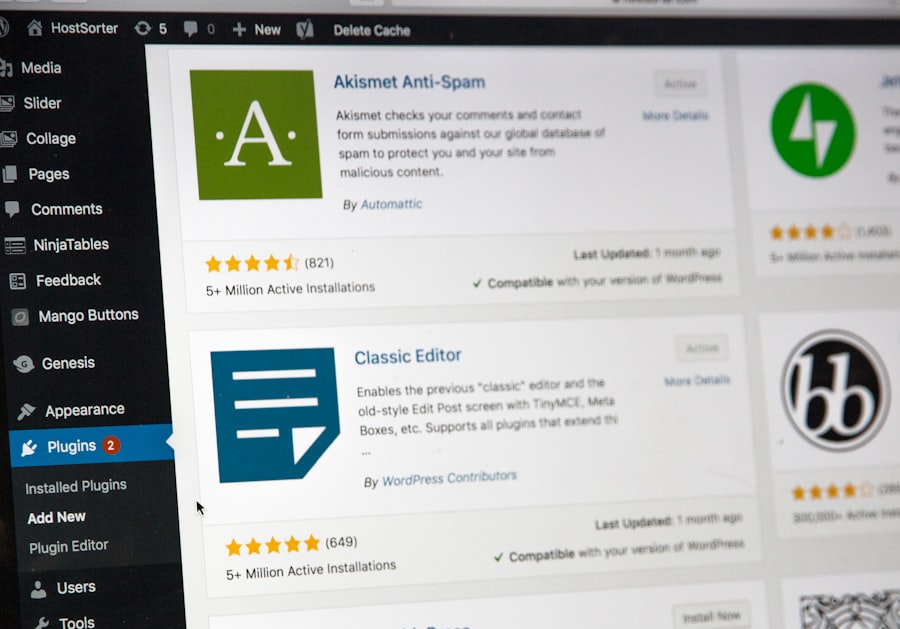
While server-level configurations are paramount, excellent WordPress hosting goes a step further by offering features specifically designed to enhance the performance of your WordPress installation.
Managed WordPress Hosting: The “Done For You” Approach
Managed WordPress hosting providers often take on much of the technical burden of optimizing your site. They typically have teams dedicated to server maintenance, security, and performance tuning, all tailored for WordPress.
Pre-installed Caching Plugins
Many managed hosts come with their own proprietary caching solutions or pre-configure popular caching plugins like W3 Total Cache or WP Super Cache for optimal performance out of the box.
Staging Environments
Staging environments allow you to create a copy of your website to test changes (plugins, themes, code modifications) without affecting your live site. This testing is crucial for identifying any performance regressions before they impact your users.
Free Migrations
For those moving from another host, managed providers often offer free site migrations, which can be a complex and time-consuming process for individuals.
PHP Version Management: The Engine of WordPress
PHP is the programming language WordPress is built on. Newer versions of PHP are almost always faster and more efficient than older ones.
Latest Stable PHP Versions
Your host should allow you to select and switch between different PHP versions easily. Always aim to use the latest stable version recommended for your WordPress installation. Developers are constantly optimizing PHP, and these improvements trickle down to your website’s performance.
PHP Configuration Tuning
Beyond just selecting a version, your host might offer options to fine-tune PHP settings, such as the memory_limit or max_execution_time. These settings can impact how your WordPress site handles complex processes.
Database Optimization Tools
The WordPress database stores all of your content, settings, and user data. A well-optimized database is crucial for fast data retrieval.
Database Cleaning and Optimization
Some hosting platforms provide tools that can clean up your database by removing unnecessary revisions, transients, or spam comments. Regular database optimization can prevent bloat and maintain speed.
Optimized Database Technologies
Certain hosts may utilize or recommend specific database technologies that offer performance advantages over standard MySQL, though this is less common at the entry-level.
When considering the best WordPress hosting features for faster websites, it’s also important to explore related topics that can enhance your understanding of web hosting. For instance, you might find it beneficial to read about reseller hosting and how it operates, as this can provide insights into different hosting options available for your needs. Understanding these various hosting types can help you make a more informed decision when selecting a service that optimizes your website’s performance.
Scalability and Resource Allocation: Growing with Your Traffic
| Hosting Provider | SSD Storage | CDN Integration | Caching Technology | PHP 7.x Support |
|---|---|---|---|---|
| HostGator | Yes | Yes | Yes | Yes |
| Bluehost | Yes | Yes | Yes | Yes |
| SiteGround | Yes | Yes | Yes | Yes |
Your website’s speed needs to remain consistent even as your traffic grows. Your hosting plan should offer the flexibility to scale your resources as demand increases.
Resource Limits and Burstable Allocations
Understand the CPU, RAM, and bandwidth limits of your hosting plan. Some hosts offer “burstable” allocations, meaning you can temporarily exceed your allocated resources during traffic spikes without immediate performance degradation or being shut down. This is far better than a hard limit that causes your site to crash.
Choosing Between Shared, VPS, and Dedicated Servers
The type of hosting you choose directly impacts scalability and resource availability.
Shared Hosting
You share server resources with many other websites. While cost-effective, performance can be unpredictable if other sites on the server experience high traffic.
Virtual Private Server (VPS) Hosting
This offers dedicated resources within a virtualized environment. You have more control and guaranteed resources, leading to better performance and scalability than shared hosting.
Dedicated Server Hosting
You have an entire physical server to yourself. This provides the ultimate in performance, control, and scalability, but at a significantly higher cost.
Easy Plan Upgrades
When your website outgrows its current plan, your host should make the upgrade process seamless. Downtime or complex migration procedures during an upgrade are unacceptable.
When considering the best WordPress hosting features for faster websites, it’s essential to understand how these elements can enhance your site’s performance and user experience. A related article discusses the importance of having a blog for your e-commerce website, which can significantly improve your SEO and engage customers more effectively. You can read more about this topic in the article Why Your E-Commerce Website Needs a Blog. By integrating a blog with your hosting features, you can create a more dynamic and responsive online presence.
Security Features: Protecting Your Site and Its Performance
Security is not just about protecting your data; it’s also about protecting your site’s performance. A compromised website can experience slowdowns due to malicious activity.
Free SSL Certificates
An SSL certificate encrypts the connection between your visitor’s browser and your server, marked by “https://” and a padlock icon. While primarily a security measure, modern browsers may slightly penalize non-HTTPS sites in rankings and user perception. Many hosts offer free Let’s Encrypt SSL certificates.
Regular Malware Scanning and Removal
Proactive malware scanning helps identify and remove malicious code that could be consuming your server’s resources and slowing down your site. Some hosts include this as part of their managed services.
Firewall Protection
A web application firewall (WAF) acts as a shield, filtering out malicious traffic and preventing attacks before they reach your website.
DDoS Mitigation
Distributed Denial of Service (DDoS) attacks aim to overwhelm your server with traffic, grinding your website to a halt. Robust hosting providers offer built-in DDoS mitigation to protect against these threats.
By carefully considering these hosting features, you can make an informed decision that will lay a strong foundation for a blazing-fast WordPress website. Remember, investing in quality hosting is an investment in your website’s success and your users’ satisfaction.
FAQs
1. What are the key features to look for in WordPress hosting for faster websites?
Some key features to look for in WordPress hosting for faster websites include SSD storage for faster data access, CDN integration for faster content delivery, caching options for quicker page loading, and optimized server configurations for improved website performance.
2. How does SSD storage contribute to faster website performance in WordPress hosting?
SSD storage contributes to faster website performance in WordPress hosting by providing quicker data access compared to traditional HDD storage. This results in faster loading times for website content and improved overall website performance.
3. What is CDN integration and how does it benefit WordPress hosting for faster websites?
CDN integration refers to the incorporation of a content delivery network into WordPress hosting, which helps to distribute website content across multiple servers geographically closer to the website visitors. This results in faster content delivery and reduced latency, leading to improved website performance.
4. How do caching options improve website speed in WordPress hosting?
Caching options in WordPress hosting store frequently accessed website data in a temporary storage area, allowing for quicker retrieval and delivery of content to website visitors. This results in faster page loading times and improved overall website speed.
5. What are optimized server configurations and how do they contribute to faster websites in WordPress hosting?
Optimized server configurations in WordPress hosting involve fine-tuning server settings and resources to maximize website performance. This can include optimizing server software, hardware, and network configurations to ensure faster website loading times and improved overall speed.









Add comment