

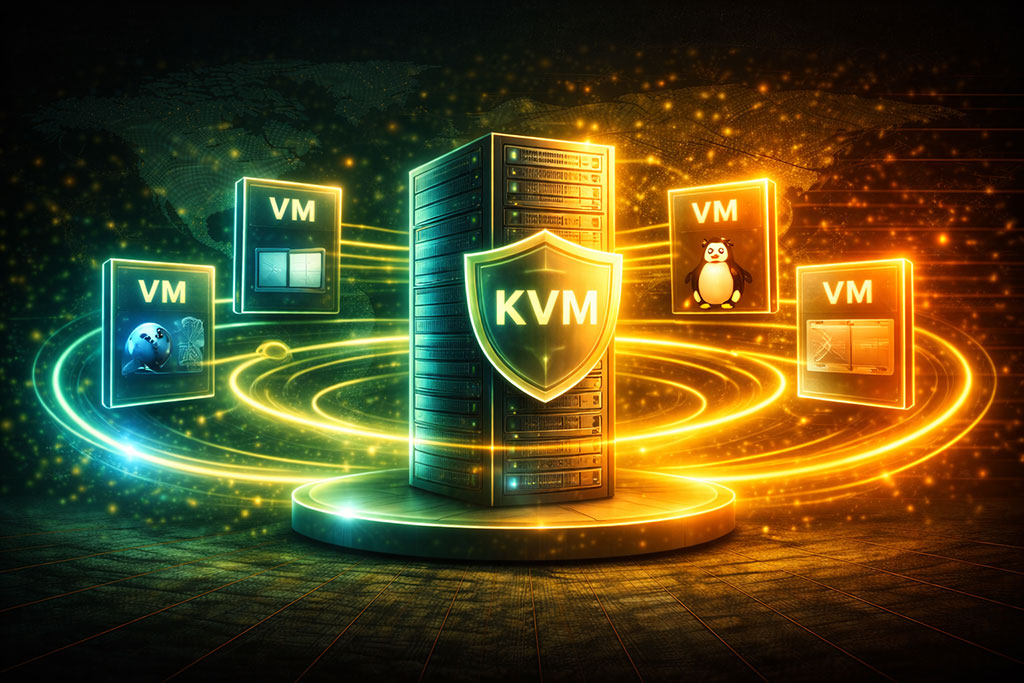
KVM, or Kernel-based Virtual Machine, is a virtualization technology that transforms the Linux kernel into a hypervisor. It enables running multiple virtual machines (VMs) on a single physical server, with each VM having its own operating system and allocated resources. KVM utilizes Linux kernel capabilities to provide efficient virtualization.
KVM functions by converting the Linux kernel into a type-1 hypervisor, operating directly on hardware rather than on an existing operating system. This direct hardware interaction delivers superior performance and resource management compared to other virtualization approaches. Each virtual machine operates as an independent process within the system, ensuring isolation between environments.
This architecture makes KVM suitable for diverse implementations including cloud infrastructure and enterprise server consolidation.
Key Takeaways
- KVM virtualization offers robust performance and security advantages for VPS hosting.
- It provides high flexibility and scalability, supporting various operating systems efficiently.
- KVM enables effective resource management, optimizing server utilization.
- Compared to other virtualization technologies, KVM is cost-effective and open-source.
- Implementing best practices ensures optimal use and prepares VPS hosting for future virtualization trends.
Advantages of KVM Virtualization for VPS Hosting
When it comes to VPS hosting, KVM virtualization offers numerous advantages that can significantly enhance your hosting experience. One of the primary benefits is the level of isolation it provides. Each virtual machine operates independently, meaning that issues in one VM do not affect others.
This isolation is crucial for maintaining stability and security in a multi-tenant environment, where multiple users share the same physical resources. You can rest assured that your applications will run smoothly without interference from other users. Another significant advantage of KVM virtualization is its ability to allocate resources dynamically.
With KVM, you can easily adjust CPU, memory, and storage allocations based on your needs. This flexibility allows you to scale your resources up or down as required, ensuring that you only pay for what you use. Whether you’re running a small website or a resource-intensive application, KVM enables you to optimize your VPS hosting environment effectively.
How KVM Virtualization Ensures Better Performance
Performance is a critical factor in any hosting solution, and KVM virtualization excels in this area. One of the reasons for its superior performance is its direct integration with the Linux kernel. Since KVM operates at the kernel level, it can take full advantage of the underlying hardware capabilities, such as CPU virtualization extensions and memory management features.
This results in lower overhead and faster execution times for your virtual machines. Additionally, KVM supports paravirtualization, which allows guest operating systems to communicate more efficiently with the hypervisor. This means that VMs can access hardware resources more quickly, leading to improved performance for applications running within those environments.
You will notice that tasks are completed faster and more efficiently, making KVM an excellent choice for high-performance applications and workloads.
Security Benefits of KVM Virtualization
Security is a paramount concern in today’s digital landscape, and KVM virtualization offers several features that enhance the security of your VPS hosting environment. One of the key security benefits is the strong isolation between virtual machines. Each VM operates in its own sandboxed environment, which means that even if one VM is compromised, the others remain unaffected.
This isolation helps protect sensitive data and applications from potential threats. Moreover, KVM leverages the security features inherent in the Linux kernel, such as SELinux (Security-Enhanced Linux) and AppArmor. These tools provide additional layers of security by enforcing strict access controls and policies within the virtual environment.
You can implement these security measures to safeguard your VMs against unauthorized access and vulnerabilities, ensuring that your hosting environment remains secure.
Flexibility and Scalability with KVM Virtualization
| Metric | KVM Virtualization | Other Virtualization Technologies | Benefit for VPS Hosting |
|---|---|---|---|
| Performance Overhead | Low (near-native performance) | Higher (due to additional abstraction layers) | Faster and more efficient VPS operation |
| Resource Isolation | Strong (dedicated CPU, RAM, I/O) | Moderate to strong | Improved security and stability |
| Scalability | Highly scalable | Varies, often less flexible | Easier to scale VPS resources on demand |
| Compatibility | Supports wide range of OS (Linux, Windows, BSD) | Limited OS support | Greater flexibility for users |
| Open Source | Yes (open source) | Often proprietary | Cost-effective and community-driven improvements |
| Security | Robust with kernel-level isolation | Varies, often less secure | Better protection against attacks and breaches |
| Management Tools | Rich ecosystem (libvirt, virt-manager) | Limited or proprietary tools | Simplifies VPS deployment and maintenance |
One of the standout features of KVM virtualization is its flexibility and scalability. As your business grows or your needs change, you can easily adjust your virtual infrastructure without significant downtime or disruption. KVM allows you to add or remove virtual machines as needed, enabling you to respond quickly to changing demands.
This adaptability is particularly beneficial for businesses that experience fluctuating workloads or seasonal spikes in traffic. In addition to adding or removing VMs, KVM also supports live migration, which allows you to move running virtual machines from one physical host to another without any downtime. This capability is invaluable for load balancing and maintenance tasks, as it enables you to optimize resource utilization across your infrastructure seamlessly.
With KVM, you have the tools at your disposal to create a dynamic and responsive hosting environment that can grow alongside your business.
Cost-Effectiveness of KVM Virtualization for VPS Hosting

Cost-effectiveness is a crucial consideration when choosing a VPS hosting solution, and KVM virtualization delivers on this front as well. By maximizing resource utilization through efficient virtualization techniques, KVM allows you to make the most of your hardware investments. Instead of running multiple physical servers, you can consolidate workloads onto fewer machines while still maintaining performance and reliability.
Furthermore, the ability to scale resources dynamically means that you only pay for what you need. You can start with a minimal configuration and expand as your requirements grow, avoiding unnecessary expenses associated with over-provisioning resources. This pay-as-you-go model makes KVM an attractive option for businesses of all sizes looking to optimize their hosting costs while still benefiting from high-performance virtualization.
KVM Virtualization vs Other Virtualization Technologies
When comparing KVM virtualization to other technologies like VMware or Hyper-V, several distinctions become apparent. One of the most significant differences is that KVM is open-source software, which means it is free to use and modify. This can lead to substantial cost savings compared to proprietary solutions that often come with licensing fees.
Additionally, being open-source fosters a community-driven approach to development, resulting in continuous improvements and innovations. Another notable difference lies in performance and resource management. While VMware and Hyper-V are robust solutions in their own right, KVM’s integration with the Linux kernel often results in lower overhead and better performance for Linux-based workloads.
If you’re primarily using Linux servers or applications, KVM may provide a more optimized environment compared to other virtualization technologies.
How KVM Virtualization Supports Different Operating Systems
KVM’s versatility extends beyond just Linux; it also supports a wide range of operating systems, including Windows and various Unix-like systems. This cross-platform compatibility makes it an excellent choice for businesses that require diverse environments for different applications or services. You can run multiple operating systems on a single physical server without compromising performance or stability.
The ability to support various operating systems also means that you can tailor your VPS hosting environment to meet specific application requirements. Whether you’re running a Windows-based application or a Linux server for web hosting, KVM provides the flexibility needed to accommodate different workloads seamlessly. This versatility ensures that you can deploy the right tools for your business without being limited by your virtualization technology.
Managing Resources with KVM Virtualization
Effective resource management is essential for optimizing performance in any virtualized environment, and KVM provides several tools to help you achieve this goal. With its built-in resource allocation features, you can easily assign CPU cores, memory, and storage to each virtual machine based on its specific needs. This granular control allows you to ensure that critical applications receive the resources they require while preventing less important VMs from consuming excessive resources.
Additionally, KVM supports advanced features like resource quotas and limits, enabling you to set boundaries on resource usage for each VM. This prevents any single VM from monopolizing resources and ensures fair distribution among all users in a multi-tenant environment. By effectively managing resources with KVM virtualization, you can maintain optimal performance levels while maximizing efficiency across your VPS hosting infrastructure.
Best Practices for Implementing KVM Virtualization in VPS Hosting
To get the most out of KVM virtualization in your VPS hosting environment, it’s essential to follow best practices during implementation. First and foremost, ensure that your hardware is compatible with virtualization technologies and has sufficient resources to support multiple VMs effectively. Investing in high-quality hardware will pay off in terms of performance and reliability.
Another best practice is to regularly monitor your virtual machines’ performance and resource usage. By keeping an eye on metrics such as CPU load, memory consumption, and disk I/O, you can identify potential bottlenecks or issues before they impact your applications. Additionally, consider implementing automated backup solutions for your VMs to safeguard against data loss and ensure business continuity.
Future Trends in KVM Virtualization for VPS Hosting
As technology continues to evolve, so too does the landscape of virtualization solutions like KVM. One trend gaining traction is the integration of artificial intelligence (AI) and machine learning (ML) into virtualization management tools. These technologies can help automate resource allocation decisions based on real-time usage patterns, further optimizing performance and efficiency in VPS hosting environments.
Another trend is the growing emphasis on containerization alongside traditional virtualization methods like KVM. While containers offer lightweight alternatives for deploying applications, many organizations are finding value in combining both approaches for maximum flexibility and scalability. As businesses increasingly adopt hybrid cloud strategies, KVM’s ability to support diverse workloads will position it well for future developments in VPS hosting.
In conclusion, KVM virtualization stands out as a powerful solution for VPS hosting due to its numerous advantages in performance, security, flexibility, cost-effectiveness, and support for various operating systems. By understanding its capabilities and implementing best practices, you can create an optimized hosting environment that meets your business needs now and into the future.
KVM virtualization has become the gold standard for VPS hosting due to its robust performance and security features. For those looking to enhance their website’s security alongside their hosting solutions, it’s essential to stay informed about the latest practices. You can read more about this in the article on 12 Latest Website Security Best Practices in 2023, which provides valuable insights into safeguarding your online presence.
FAQs
What is KVM virtualization?
KVM (Kernel-based Virtual Machine) is an open-source virtualization technology built into the Linux kernel. It allows a physical server to run multiple isolated virtual machines (VMs), each with its own operating system and resources.
Why is KVM considered the gold standard for VPS hosting?
KVM is considered the gold standard because it offers strong performance, full hardware virtualization, excellent security isolation, and flexibility. It supports a wide range of operating systems and provides near-native speed for virtual machines.
How does KVM differ from other virtualization technologies?
Unlike container-based virtualization, KVM provides full hardware virtualization, meaning each VM runs its own kernel and OS independently. This results in better isolation and compatibility. Compared to other hypervisors, KVM is open-source, integrated into Linux, and widely supported.
Is KVM suitable for all types of VPS hosting needs?
Yes, KVM is highly versatile and can support various workloads, from simple web hosting to complex enterprise applications. Its scalability and resource allocation features make it suitable for both small and large VPS deployments.
What operating systems can run on KVM virtual machines?
KVM supports a wide range of guest operating systems, including various Linux distributions, Windows, BSD, and others, making it highly flexible for different user requirements.
How does KVM ensure security in VPS hosting?
KVM provides strong isolation between virtual machines by leveraging hardware virtualization extensions and Linux security modules. This isolation helps prevent one VM from affecting others, enhancing overall security.
Can KVM virtualization improve VPS performance?
Yes, KVM offers near-native performance by utilizing hardware acceleration features like Intel VT-x and AMD-V. This results in efficient CPU and memory usage, leading to better VPS performance compared to some other virtualization methods.
Is KVM virtualization cost-effective for VPS providers?
Since KVM is open-source and integrated into Linux, it reduces licensing costs for VPS providers. Its efficient resource management also helps providers maximize hardware utilization, making it a cost-effective solution.
How easy is it to manage VPS hosting with KVM?
KVM is supported by many management tools and control panels, making it relatively easy to deploy, monitor, and manage virtual machines. Its integration with Linux also allows for extensive customization and automation.
Does KVM support live migration of virtual machines?
Yes, KVM supports live migration, allowing virtual machines to be moved between physical hosts without downtime. This feature is valuable for maintenance, load balancing, and minimizing service interruptions.








Add comment