

The Unyielding Demand for Performance and Reliability
When your web application scales to accommodate a substantial user base, processes a high volume of transactions, or handles complex data operations, the underlying infrastructure becomes paramount. You’ve likely experienced the frustrations of shared hosting – the unpredictable performance, the limitations on resources, and the lack of true autonomy. For large web applications, these frustrations aren’t just minor inconveniences; they can translate directly into lost revenue, diminished user trust, and a tarnished brand reputation. This is where the strategic shift to dedicated server control becomes not just an option, but a critical imperative. You move beyond merely renting a space on a shared machine to owning the entire machine, virtually or physically, dedicating its entire power to your application’s needs. This level of control empowers you to meticulously tune every aspect of your environment, ensuring your application performs optimally, remains secure, and can scale effectively to meet ever-growing demands.
You’ll discover that the investment in dedicated resources pays dividends in stability, speed, and peace of mind. No longer are you at the mercy of noisy neighbors consuming all available CPU cycles or saturating network bandwidth. Your application enjoys exclusive access to processing power, memory, and storage, leading to a consistently superior user experience. Furthermore, the ability to customize your server’s hardware and software stack means you can precisely match the environment to your application’s unique requirements, eliminating bottlenecks and optimizing workflows that would be impossible in a shared environment. This foundational shift in infrastructure management underpins everything from seamless user interactions to robust data processing, ultimately driving the success of your large web application.
Understanding the significance of dedicated server control is crucial for managing large web applications effectively. For those looking to enhance their website’s performance, it’s also important to consider optimization tools that can complement dedicated server management. A related article that delves into this topic is “7 Essential WordPress Optimization Plugins for 2025,” which provides insights into plugins that can significantly improve website speed and efficiency. You can read more about it here: 7 Essential WordPress Optimization Plugins for 2025.
Unlocking Unparalleled Performance and Resource Allocation

One of the most immediate and tangible benefits you’ll realize with dedicated server control is the dramatic improvement in performance. In a shared hosting environment, your application competes with countless others for CPU cycles, RAM, and network I/O. This competition inevitably leads to performance bottlenecks, slow loading times, and a general degradation of the user experience, especially during peak traffic. With a dedicated server, you eliminate this competition entirely.
Guaranteed Resource Availability
Imagine your application as a high-performance race car. In a shared environment, it’s forced to share a single lane with dozens of other vehicles, some slow, some fast, all vying for the same stretch of road. With a dedicated server, your race car gets its own private, multi-lane highway. Every core of the CPU, every gigabyte of RAM, and every megabit of network bandwidth is exclusively yours. This means your application can execute complex queries, render dynamic content, and process data-intensive tasks without contention. You’ll observe significantly faster page load times, smoother user interactions, and a more responsive application overall, directly impacting user satisfaction and engagement. This guaranteed availability is not just about raw power; it’s about the consistent application of that power, ensuring predictable performance even under heavy loads. You are no longer subject to the “noisy neighbor” effect, where another tenant’s resource-intensive operations can suddenly cripple your own application’s performance.
Tailored Hardware and Software Configuration
Another critical advantage lies in your ability to meticulously configure the hardware and software stack to perfectly align with your application’s specific demands. Generic shared hosting environments offer a one-size-fits-all approach that rarely, if ever, perfectly suits a large, complex web application. With dedicated control, you can choose the exact CPU architecture, the amount and type of RAM (e.g., ECC for critical applications), the storage solution (NVMe SSDs for extreme I/O, large HDDs for archival), and even the network interface cards. This level of granular control extends to the software layer as well. You can select your preferred operating system (Linux distribution, Windows Server), database management system (PostgreSQL, MySQL, MongoDB, SQL Server), web server (Nginx, Apache), caching layers (Redis, Memcached), and programming language runtimes (Node.js, PHP, Python, Ruby, Java) – all optimized for your application’s specific framework and dependencies. This bespoke environment eliminates unnecessary overhead, allows for specialized optimizations, and ensures maximum compatibility, ultimately leading to superior performance and reduced latency. You can install custom modules, fine-tune kernel parameters, and implement highly specific security policies that would be impossible in a shared setup.
Fortifying Security and Ensuring Data Integrity
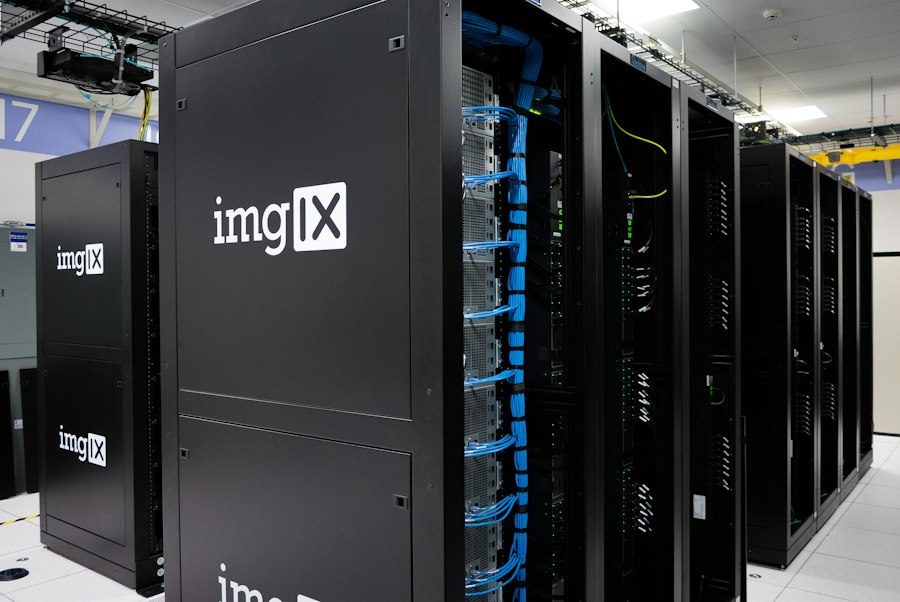
Security is not a luxury; it’s a fundamental requirement for any web application, and its importance amplifies exponentially for large-scale deployments handling sensitive user data or business-critical operations. Dedicated server control grants you an unparalleled degree of security and control over your environment, significantly mitigating risks that are inherent in shared hosting.
Isolated Environment and Reduced Attack Surface
In a shared hosting environment, a security vulnerability in one tenant’s application can potentially expose other tenants on the same server to risks. This shared attack surface means that even if your application is perfectly secure, you could still be compromised by a breach originating elsewhere on the server. With a dedicated server, this risk is virtually eliminated. Your application runs in a completely isolated environment, physically or virtually, from any other user or application. This isolation drastically reduces your attack surface. You are solely responsible for securing your server, and you benefit from not inheriting the security risks of others. This isolation extends beyond external threats; it also means that misconfigurations or malicious activity by other users cannot impact your infrastructure. This fundamental separation provides a robust first line of defense, allowing you to focus your security efforts solely on your own application and server.
Granular Security Policies and Custom Implementations
Dedicated server control empowers you to implement a comprehensive and highly customized security strategy. You are not limited by the default security policies of a shared host, which are often designed for broad applicability rather than specific hardening. You can configure firewalls (like iptables or UFW) with precise rules to permit only necessary traffic, restricting access to specific ports and IP addresses. You can implement advanced intrusion detection and prevention systems (IDS/IPS) tailored to your application’s traffic patterns. You have full control over user permissions, access control lists (ACLs), and can enforce strong password policies across all system users. Furthermore, you can deploy specialized security software, such as vulnerability scanners, rootkit detectors, and advanced malware protection, integrating them directly into your server’s operational framework. This level of granular control allows you to proactively identify and address potential vulnerabilities, ensuring a far more resilient security posture than any shared environment could offer. You can also implement robust backup and disaster recovery strategies, including off-site backups and point-in-time recovery, with full control over the process and destination of your critical data.
Empowering Scalability and Customization
As your web application grows, its infrastructure needs inevitably evolve. What works for 1,000 users might buckle under the weight of 100,000. Dedicated server control provides the essential flexibility and power to scale your application effectively and customize every aspect of its operating environment.
Flexible Scaling Strategies
Scalability in a shared environment is often a frustrating experience. You hit resource limits, experience performance degradation, and are forced into awkward “upgrade” paths that still offer limited control. With dedicated servers, you have a much broader and more effective array of scaling strategies at your disposal. You can scale vertically by upgrading individual server components – adding more RAM, faster CPUs, or additional storage – without the need to migrate your entire application to a new host or even a new server. When horizontal scaling becomes necessary, you can seamlessly add more dedicated servers to your infrastructure, distributing load across multiple machines using load balancers. This allows you to build a resilient, distributed architecture that can handle massive traffic spikes and maintain high availability. You have the freedom to design a multi-tier architecture, dedicating specific servers for web serving, database management, caching, and background processing, optimizing each component for its specialized role. This level of architectural freedom is crucial for large applications with diverse operational needs.
Complete Environmental Control and Customization
The true power of dedicated server control lies in your uninhibited ability to customize every layer of your application’s environment. Beyond just selecting hardware and operating systems, you gain full root or administrator access. This means you can install any software, libraries, or dependencies your application requires, even obscure or niche ones that shared hosts would never support. You can fine-tune operating system kernel parameters for specific workload characteristics, optimize database configurations to an extreme degree, and implement custom scripting for automated tasks, deployments, and monitoring. This complete control over the software stack allows you to create an environment that is perfectly optimized for your application’s unique code, frameworks, and resource demands. You can integrate advanced monitoring tools, configure complex networking setups, and even run containerization technologies like Docker or Kubernetes with full control over their underlying infrastructure. This level of customization ensures that there are no external limitations imposed on your application’s functionality or performance, enabling you to build truly bespoke and highly efficient systems.
Understanding the significance of dedicated server control is essential for managing large web applications effectively. A related article that delves into the importance of data protection in hosting environments can be found here, where it discusses the critical aspects of security measures that should be considered. By ensuring that your hosting plan is robust and secure, you can safeguard your application against potential threats and vulnerabilities. For more insights on this topic, check out the article on data protection in hosting.
Enhanced Reliability and Predictable Uptime
| Metric | Importance | Impact on Large Web Applications | Explanation |
|---|---|---|---|
| Server Uptime (%) | High | Ensures continuous availability | Dedicated control allows for optimized maintenance schedules and quick issue resolution, minimizing downtime. |
| Response Time (ms) | High | Improves user experience and SEO | Direct control over server resources reduces latency and speeds up content delivery. |
| Resource Allocation (CPU, RAM) | High | Supports scalability and performance | Dedicated servers allow precise resource management tailored to application demands. |
| Security Controls | Critical | Protects sensitive data and prevents breaches | Full control enables customized firewall rules, intrusion detection, and compliance adherence. |
| Traffic Handling Capacity | High | Manages high user loads effectively | Dedicated servers can be optimized to handle spikes without performance degradation. |
| Backup and Recovery Speed | Medium | Minimizes data loss and downtime | Control over backup schedules and methods ensures faster recovery in case of failure. |
| Customization Flexibility | High | Enables tailored application environments | Dedicated control allows installation of specific software and configurations needed by the application. |
For large web applications, downtime isn’t just an inconvenience; it can be catastrophic, leading to significant financial losses, damage to reputation, and erosion of user trust. Dedicated server control significantly enhances the reliability and predictability of your application’s uptime, offering a level of stability unparalleled in shared environments.
Elimination of “Noisy Neighbor” Issues
One of the most insidious threats to reliability in shared hosting is the “noisy neighbor” phenomenon. While your application might be well-optimized and efficient, other tenants on the same physical server can consume excessive resources – CPU, RAM, disk I/O, or network bandwidth – at unpredictable times. This can cause your application to slow down, become unresponsive, or even crash, through no fault of your own. With a dedicated server, this problem vanishes entirely. Your application has exclusive access to all server resources, eliminating contention and ensuring consistent performance. You are in complete control of the workload, ensuring that unexpected resource spikes from other users will never impact your application’s stability. This isolation leads directly to more predictable performance and a higher degree of uptime, as you are the sole determinant of resource utilization.
Robust Monitoring and Proactive Maintenance
With dedicated server control, you gain the power to implement comprehensive, granular monitoring solutions tailored to your specific application and infrastructure. You can track CPU utilization, memory consumption, disk I/O, network traffic, database performance, application-specific metrics, and much more, all in real-time. This deep visibility allows you to identify potential issues before they escalate into critical failures. You can set up custom alerts for any threshold breaches, enabling your team to react proactively rather than reactively. Furthermore, you have complete control over maintenance windows and patching schedules. You can apply security updates, software upgrades, and perform necessary reboots at times that minimize impact on your users, coordinating these activities with your specific operational needs. This level of control over maintenance, coupled with robust monitoring, allows you to maintain optimal server health, preemptively address potential bottlenecks, and ensure maximum uptime for your critical web application. You are no longer reliant on a hosting provider’s generic maintenance schedule, which might conflict with your application’s peak usage times.
Maximizing Control and Ownership of Your Infrastructure
Beyond performance, security, and scalability, a core appeal of dedicated server control for large web applications lies in the sheer level of autonomy and ownership it provides over your critical infrastructure. This control extends to every facet of your server environment, from operating system choices to network configurations.
Full Root/Administrator Access
This is perhaps the most fundamental aspect of dedicated server control. Unlike shared hosting, where your access is often limited to a control panel or a restricted SSH shell, a dedicated server grants you full root (Linux/Unix) or administrator (Windows) access. This level of privilege means you have complete command over the operating system. You can install any software, configure any service, modify any system file, and implement any security policy without restriction. Want to compile a custom kernel? No problem. Need to install a specific version of a library that isn’t commonly available? You can do it. This uninhibited access is crucial for complex applications that require unique configurations or rely on specialized software that shared environments simply cannot accommodate. It also means you have full diagnostic capabilities, allowing you to thoroughly investigate any issues directly on the server, rather than relying on a hosting provider’s support team to diagnose problems within their restrictive environment.
Compliance and Data Sovereignty
For many large web applications, especially those handling sensitive user data, financial transactions, or operating in regulated industries, compliance with various legal and industry standards (such as GDPR, HIPAA, PCI DSS) is non-negotiable. Dedicated server control significantly simplifies the path to compliance. You have complete control over where your data is physically located (data sovereignty), how it is stored, how it is encrypted, and who has access to it. You can implement specific audit trails, access logs, and security measures required by compliance mandates. In a shared environment, proving compliance can be extremely challenging, as you often lack visibility and control over the broader infrastructure. With a dedicated server, you are the sole controller of the environment, making it much easier to demonstrate adherence to regulatory requirements and pass audits. This direct control over data location and security implementation is a critical advantage for businesses operating in regulated sectors, providing peace of mind and reducing legal and financial risks associated with non-compliance. You can dictate the exact physical location of your servers, which is often a critical requirement for data sovereignty laws in various jurisdictions.
FAQs
What is a dedicated server?
A dedicated server is a type of web hosting where the client leases an entire server not shared with anyone else. This provides more control, security, and performance compared to shared hosting.
Why is dedicated server control important for large web applications?
Dedicated server control is crucial for large web applications because it allows for customization of server settings, resources allocation, and security configurations to meet the specific needs and demands of the application.
How does dedicated server control impact performance of large web applications?
With dedicated server control, administrators can optimize server resources, such as CPU, RAM, and storage, to ensure high performance and reliability for large web applications. This can lead to faster loading times, improved scalability, and better overall user experience.
What are some key features of dedicated server control for large web applications?
Key features of dedicated server control for large web applications include root access, ability to install custom software, firewall configuration, load balancing, monitoring tools, and the flexibility to adjust resources based on traffic fluctuations.
How can dedicated server control help with security of large web applications?
Dedicated server control allows for implementation of advanced security measures such as encryption, intrusion detection systems, regular security updates, and strict access controls. This helps protect large web applications from cyber threats and data breaches.









Add comment