
The Unseen Foundation: How Your Data Center Network Dictates Website Uptime
You’ve poured your heart and soul into building your website. It’s a digital storefront, a communication hub, a vital part of your operation. You’ve optimized every line of code, curated stunning visuals, and crafted compelling content. But have you truly considered the bedrock upon which all this digital architecture rests? We’re talking about the data center network, the invisible circulatory system that delivers your website to the world. Often overlooked, its quality is not merely a technical detail; it’s a direct determinant of your website’s uptime – that crucial metric representing the percentage of time your site is accessible to users. When this foundation is weak, your carefully constructed digital edifice is vulnerable to collapse, leaving your users frustrated and your business susceptible to significant losses.
Think of your website as a magnificent performance being staged. The data center network is the backstage infrastructure: the electrical grid powering the lights, the complex wiring for sound and special effects, the meticulously planned routes for performers and props to reach the stage. If any of these elements falter, the show grinds to a halt. Similarly, a compromised data center network can lead to slow loading times, intermittent access, and ultimately, complete outages, directly impacting your website’s availability. This article delves into the intricate relationship between data center network quality and website uptime, exploring the key components, common pitfalls, and strategies you can employ to ensure your digital presence remains consistently accessible. Understanding this relationship is paramount for any business that relies on its online presence, from the smallest startup to the largest enterprise.
Understanding how data center network quality affects website uptime is crucial for maintaining a reliable online presence. A related article that delves into the performance aspects of web hosting is titled “NVMe vs SSD: Speed Difference for Dynamic Websites.” This article explores the differences in speed and efficiency between NVMe and SSD storage solutions, which can significantly impact website performance and user experience. You can read more about it here: NVMe vs SSD: Speed Difference for Dynamic Websites.
The Pillars of a Resilient Network: What You Need to Know
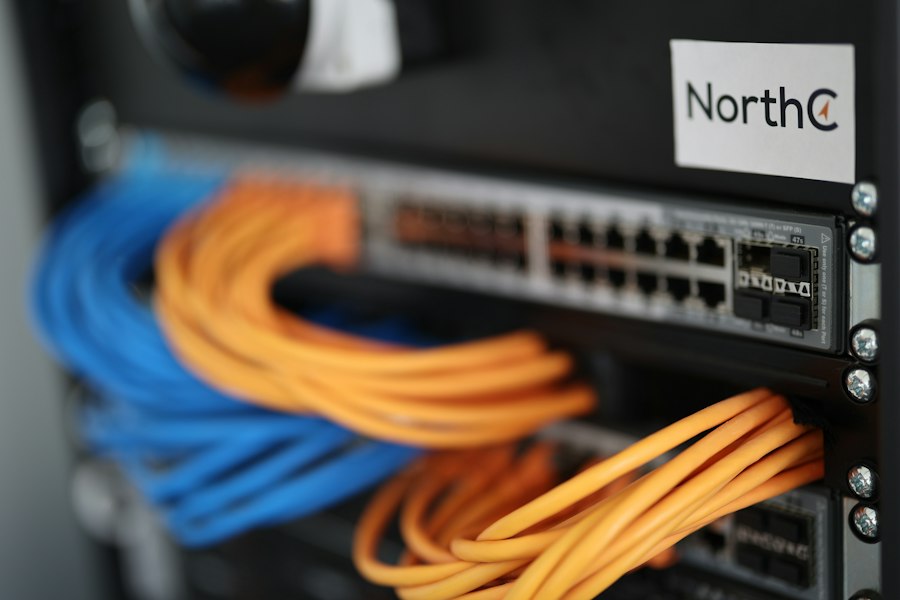
The network within a data center is a multifaceted ecosystem, far more complex than a simple router in your office. It’s a high-density, high-performance environment designed for speed, reliability, and scalability. To truly grasp its impact on your website’s uptime, you need to understand its fundamental building blocks and how they work in concert. Each of these components, when performing optimally, contributes to a robust and dependable service. Conversely, a weakness in any one of them can create a bottleneck or a point of failure that directly affects your website’s availability.
High-Speed Interconnects: The Arteries of Data Flow
At the heart of any modern data center network are high-speed interconnects. These are the physical and logical pathways through which data travels. Think of them as the superhighways of the digital world. We’re talking about fiber optic cables capable of transmitting vast amounts of data at the speed of light, high-performance switches and routers that intelligently direct traffic, and sophisticated network interface cards (NICs) within servers. The quality and redundancy of these interconnects are critical. Imagine a single lane road trying to handle rush hour traffic; it inevitably leads to congestion and delays. In a data center, this translates to slow page load times, increased latency, and a higher chance of dropped connections. You need multiple, redundant paths and robust hardware that can handle peak loads without breaking a sweat. The more redundant and higher capacity these connections are, the less likely a single point of failure will bring your website down. This includes everything from the sheer bandwidth available to the quality of the physical cabling and the sophistication of the network devices.
Network Redundancy: The Safety Net for Unforeseen Events
Redundancy is not a luxury in data center networking; it’s a necessity. It’s the design principle that ensures if one component fails, another can seamlessly take over. This applies to everything from power supplies and cooling systems to network links and servers. For your website’s uptime, this means having multiple internet service providers (ISPs) feeding into the data center, redundant network paths within the data center, and multiple switches and routers configured for high availability. If a primary network link experiences an issue, your traffic should be automatically rerouted through a secondary link without any noticeable interruption to your users. This requires careful planning and implementation, often involving complex routing protocols and failover mechanisms. Without robust redundancy, a simple hardware failure or a severed cable could render your website inaccessible for an extended period. You’re essentially building in backup systems that can spring into action the moment a primary system falters.
Load Balancing: Distributing the Burden Efficiently
Imagine a single server trying to handle thousands of simultaneous requests from your website visitors. It would quickly become overwhelmed, leading to slow performance and eventual crashes. Load balancers are sophisticated devices or software that distribute incoming network traffic across multiple servers. This ensures that no single server is overloaded, thereby improving overall performance and preventing outages. A well-configured load balancer can intelligently direct traffic based on server health, response times, and available capacity. It’s like having a traffic controller at a busy intersection, ensuring smooth and efficient flow. Without effective load balancing, even a highly redundant network infrastructure can buckle under pressure, leading to significant downtime. The ability to distribute traffic effectively is a cornerstone of maintaining consistent uptime, especially during periods of high demand or unexpected surges in user activity.
Network Security: The Shield Against Malicious Attacks
The network is also the primary entry point for cyber threats. Distributed Denial of Service (DDoS) attacks, for instance, aim to overwhelm your website with malicious traffic, rendering it unavailable. A robust data center network incorporates advanced security measures to protect against such attacks. This includes firewalls, intrusion detection and prevention systems (IDPS), and specialized DDoS mitigation services. These security layers act as a shield, filtering out malicious traffic before it can impact your legitimate users and bring your website down. A compromised network can not only lead to downtime but also expose sensitive data. Therefore, the security posture of your data center’s network is as crucial for uptime as its performance and redundancy. You are entrusting your digital presence to this infrastructure, and its ability to withstand and repel attacks is paramount.
The Tangible Consequences: When Network Quality Falters

When the quality of your data center network falters, the consequences are not abstract technical issues; they are very real and often costly. These impacts ripple outward, affecting user experience, brand reputation, and ultimately, your bottom line. You might not see the physical wires or the blinking lights, but you will undoubtedly feel the effects of a degraded network.
User Experience Degradation: The Silent Killer of Engagement
For your website visitors, a slow or unreliable network translates into a frustrating experience. Pages take too long to load, images appear pixelated, or the entire site becomes inaccessible. This isn’t just an inconvenience; it’s a direct assault on user engagement. Studies consistently show that users have very little patience for slow websites. If your site doesn’t load within a few seconds, a significant percentage of visitors will simply leave and go to a competitor. This loss of traffic directly translates to lost opportunities for sales, lead generation, or whatever your website’s primary purpose may be. A consistently poor user experience due to network issues can create a negative perception of your brand, making it difficult to regain lost ground. You might have the best content and products in the world, but if users can’t access them efficiently, they won’t stick around to find out.
Brand Reputation Damage: A Stain That’s Hard to Erase
In today’s hyper-connected world, word travels fast. A website that is frequently down or suffers from persistent performance issues quickly earns a reputation for unreliability. This can be detrimental to your brand, especially if you are a new or growing business. Potential customers may be hesitant to engage with a company whose online presence is perceived as unstable. Even established brands can suffer significant damage to their reputation if their website experiences prolonged outages. This can lead to negative reviews, social media backlash, and a general erosion of trust. Rebuilding a damaged reputation is a long and arduous process, and often, the initial damage is irreversible. You’re not just losing visitors; you’re losing the confidence and trust of your audience.
Revenue Loss: The Direct Financial Impact
For e-commerce businesses, website uptime is directly linked to revenue. Every minute your online store is down, you are losing potential sales. For lead generation websites, downtime means lost leads and missed opportunities to connect with potential customers. Even for content-driven sites, downtime can lead to a loss of advertising revenue or subscription income. The financial impact of outages can range from minor inconveniences to catastrophic losses, depending on the business model and the duration of the downtime. Quantifying this loss can be done by analyzing historical sales data during periods of uptime and extrapolating the potential revenue lost during downtime. The cost of a single prolonged outage can often outweigh the investment required for a high-quality data center network.
Operational Disruptions: Beyond the Website
The impact of poor network quality often extends beyond just the website itself. If your website is integrated with other business systems, such as customer relationship management (CRM) platforms, inventory management, or internal communication tools, network issues can disrupt these operations as well. This can lead to missed appointments, inaccurate inventory tracking, and communication breakdowns within your organization. For businesses that rely heavily on their online presence for day-to-day operations, network instability can bring the entire enterprise to a standstill, creating a cascade of problems that affect every facet of the business.
Proactive Measures: Fortifying Your Digital Fortress
Recognizing the critical role of data center network quality is the first step. The next, and arguably more important, step is to implement proactive measures to ensure its reliability and resilience. This involves careful selection of your hosting provider, diligent monitoring, and strategic infrastructure planning. You are not merely a passive observer; you are an active participant in ensuring your website’s uptime.
Choosing the Right Hosting Partner: A Foundation of Trust
Your choice of hosting provider is paramount. Not all data centers are created equal. You need to select a provider with a proven track record of reliability, robust infrastructure, and a commitment to high uptime SLAs (Service Level Agreements). When evaluating potential partners, look for:
- Redundancy: Do they have multiple power sources, redundant network connections from multiple ISPs, and backup systems for all critical infrastructure?
- Performance: What are their network speeds, latency, and capacity? Do they have a global network of Points of Presence (PoPs) if you need to serve an international audience?
- Security: What security measures do they have in place to protect against cyber threats?
- Support: Do they offer 24/7/365 technical support with quick response times?
- SLAs: What is their guaranteed uptime percentage? What are the penalties if they fail to meet it?
Thorough due diligence is essential. Don’t be afraid to ask detailed questions about their network architecture, disaster recovery plans, and security protocols. Your hosting partner is an extension of your own operational capabilities, and their network quality directly reflects on your business.
Continuous Monitoring and Performance Analysis: Eyes on the Prize
Once your website is live, the work isn’t over. Continuous monitoring of your website’s performance and the underlying network infrastructure is crucial. This involves using specialized tools to track key metrics such as:
- Uptime: Is your website accessible from various locations around the world?
- Latency: How long does it take for data to travel between your servers and users?
- Page Load Times: How quickly do your website pages load for end-users?
- Bandwidth Usage: Are you nearing your bandwidth limits?
- Server Health: Are your servers operating within normal parameters?
These monitoring tools can alert you to potential issues before they escalate into full-blown outages. Analyzing this data regularly allows you to identify trends, pinpoint bottlenecks, and make informed decisions about infrastructure upgrades or optimizations. Proactive identification and resolution of issues are far more effective and less costly than reacting to an outage.
Implementing Content Delivery Networks (CDNs): Global Reach and Speed
A Content Delivery Network (CDN) is a distributed network of servers that caches your website’s static content (images, CSS files, JavaScript) in various geographical locations. When a user visits your website, the CDN serves the content from the server closest to them. This significantly reduces latency and speeds up page load times, thereby improving the user experience and reducing the strain on your origin servers. CDNs also offer a layer of protection against DDoS attacks. By distributing your content across multiple servers, you make it harder for attackers to overwhelm a single point of failure. A well-implemented CDN is an essential component for any website aiming for high availability and optimal performance, especially for a global audience.
Disaster Recovery and Business Continuity Planning: Preparing for the Worst
Even with the best infrastructure, unforeseen events can occur. A comprehensive disaster recovery (DR) and business continuity (BC) plan is essential for minimizing the impact of such events. This plan should outline:
- Backup Strategies: How often are your website’s data and configurations backed up? Where are these backups stored, and how can they be restored quickly?
- Failover Procedures: What are the steps to switch to redundant systems or backup data centers in case of a primary site failure?
- Communication Protocols: How will you communicate with your users, stakeholders, and employees during an outage?
- Testing: How often are your DR and BC plans tested to ensure they are effective?
A well-rehearsed DR/BC plan ensures that you can recover your website and business operations quickly and efficiently, minimizing downtime and its associated costs.
Understanding how data center network quality affects website uptime is crucial for maintaining a reliable online presence. A related article discusses the importance of addressing common website issues, such as broken links, which can significantly impact user experience and site performance. You can read more about this in the article on how to find and fix 404 pages. By ensuring that your website is free from such errors, you can enhance its overall reliability and accessibility.
The Future of Data Center Networks and Website Uptime: Evolution and Innovation
| Metric | Description | Impact on Website Uptime | Typical Values |
|---|---|---|---|
| Network Latency | Time taken for data to travel from source to destination | High latency can delay data transmission, causing slow website response or timeouts | 1-10 ms (low latency), >100 ms (high latency) |
| Packet Loss | Percentage of data packets lost during transmission | Packet loss leads to retransmissions, increasing downtime and reducing reliability | 0-0.1% (optimal), >1% (problematic) |
| Network Jitter | Variation in packet arrival time | High jitter causes inconsistent data flow, affecting real-time applications and uptime | 30 ms (high jitter) |
| Bandwidth | Maximum data transfer rate of the network | Insufficient bandwidth can cause congestion and slow website loading times | 1 Gbps or higher recommended for data centers |
| Network Availability | Percentage of time the network is operational | Directly correlates with website uptime; higher availability means less downtime | 99.99% (four nines) or higher preferred |
| Mean Time to Repair (MTTR) | Average time to fix network issues | Lower MTTR reduces downtime and improves website uptime | Minutes to a few hours |
The landscape of data center networking is in constant evolution, driven by the ever-increasing demand for speed, reliability, and efficiency. As your website’s reliance on seamless online delivery grows, so too will the sophistication of the networks that power it. Understanding these future trends can help you make informed decisions about your infrastructure and ensure your website remains at the forefront of accessibility.
The Rise of Software-Defined Networking (SDN) and Network Function Virtualization (NFV): Agile Infrastructure
Software-Defined Networking (SDN) and Network Function Virtualization (NFV) are transforming data center networks from rigid, hardware-centric systems to agile, software-driven platforms. SDN decouples the network control plane from the data plane, allowing for centralized control and programmability of the network. NFV virtualizes network functions, such as firewalls and load balancers, allowing them to run as software on commodity hardware. This flexibility enables data centers to dynamically allocate resources, scale services up or down rapidly, and adapt to changing traffic patterns with unprecedented agility. For your website, this translates to faster deployment of new services, quicker resolution of network issues, and a more responsive infrastructure that can adapt to sudden spikes in demand, thereby contributing to improved uptime.
Edge Computing and Distributed Architectures: Bringing Data Closer to Users
Edge computing involves processing data closer to its source, rather than sending it all back to a centralized data center. This distributed architecture can significantly reduce latency and improve performance, especially for real-time applications and content delivery. By placing network infrastructure and computing resources at the “edge” of the network, closer to your end-users, you can deliver content and services with even greater speed and responsiveness. This is particularly beneficial for websites that serve a global audience or rely on interactive elements. This distributed approach also enhances resilience, as an issue at one edge location is less likely to affect the entire network.
Artificial Intelligence and Machine Learning (AI/ML) in Network Operations: Intelligent Automation
Artificial Intelligence (AI) and Machine Learning (ML) are increasingly being leveraged to optimize data center network operations. AI/ML algorithms can analyze vast amounts of network data to predict potential issues, identify anomalies, automate routine tasks, and even dynamically reconfigure network paths for optimal performance. This intelligent automation can significantly reduce human error, accelerate troubleshooting, and proactively prevent outages. For example, AI can predict impending hardware failures or detect subtle traffic patterns that might indicate an impending DDoS attack, allowing for preemptive action. This proactive, intelligence-driven approach is poised to play a crucial role in achieving near-perfect website uptime in the future.
The Quest for Zero Downtime: Continuous Innovation
The ultimate goal for many businesses is “zero downtime.” While achieving true zero downtime is an ambitious undertaking, continuous innovation in data center networking is steadily moving us closer to this ideal. Advances in network resilience, automated failover mechanisms, and sophisticated monitoring tools are all contributing to a landscape where website outages are becoming increasingly rare and significantly shorter when they do occur. As a website owner, staying informed about these advancements and partnering with providers who embrace them will be key to ensuring your digital presence remains consistently available and accessible to your audience, no matter what the future holds. You are building your digital presence on a foundation that is constantly being refined and strengthened.
FAQs
What is website uptime?
Website uptime refers to the amount of time that a website is operational and accessible to users. It is typically measured as a percentage of time that the website is available over a certain period.
How does data center network quality impact website uptime?
Data center network quality plays a crucial role in website uptime as it determines the reliability and speed of data transmission between servers and end-users. A high-quality network can help ensure minimal downtime and faster loading times for websites.
What are some common factors that can affect data center network quality?
Common factors that can affect data center network quality include network congestion, hardware failures, software issues, security breaches, and inadequate bandwidth. Addressing these factors is essential for maintaining optimal website uptime.
How can businesses improve data center network quality to enhance website uptime?
Businesses can improve data center network quality by investing in reliable network infrastructure, implementing redundancy measures, conducting regular maintenance and monitoring, optimizing network configurations, and utilizing load balancing techniques.
Why is website uptime important for businesses?
Website uptime is crucial for businesses as it directly impacts customer satisfaction, online reputation, search engine rankings, and ultimately, revenue generation. Downtime can lead to lost sales opportunities, decreased customer trust, and damage to brand credibility.









Add comment