

The digital landscape is a dynamic, ever-evolving ecosystem, and at its heart lies website hosting. As you navigate the complexities of online presence, you’re constantly seeking ways to optimize performance, enhance security, and reduce costs. The future of website hosting isn’t a nebulous concept; it’s a tangible progression driven by innovation and a relentless pursuit of efficiency. You’ll find yourself encountering advancements that redefine how you approach server management, content delivery, and global accessibility.
Imagine hosting your website without ever thinking about servers – no provisioning, no scaling, no patching. This isn’t a futuristic dream; it’s the reality of serverless computing, and it’s rapidly gaining traction. You’re no longer managing infrastructure; instead, you’re focusing solely on your code, and service providers handle the underlying resources. For many businesses, particularly those with fluctuating traffic or event-driven applications, serverless offers immense advantages.
Function-as-a-Service (FaaS) and its Impact
FaaS is the cornerstone of serverless, allowing you to deploy individual functions that execute only when triggered. Think of it like this: instead of your entire website running 24/7 on a server, specific pieces of code (functions) spring to life only when a user requests a particular action.
- Event-Driven Workloads: This model excels for applications like user authentication, image processing, or API endpoints, where the workload is sporadic but needs to be highly performant when active. You pay only for compute time used, making it incredibly cost-effective for these scenarios.
- Automatic Scaling: The beauty of FaaS lies in its inherent scalability. If your website experiences a sudden surge in traffic, the FaaS platform automatically scales up the necessary functions to handle the load, without any manual intervention from your end. You don’t have to worry about over-provisioning or under-provisioning.
- Reduced Operational Overhead: You are freed from the burdens of server maintenance, operating system updates, and patching. This dramatically reduces your operational overhead, allowing you to allocate your valuable development resources to building new features and improving your application’s core functionality.
Serverless for Static Site Generation (SSG)
While serverless might conjure images of complex backend logic, its integration with static site generators (SSGs) is revolutionizing how you serve content. SSGs allow you to pre-build your entire website as static files (HTML, CSS, JavaScript) that can be served directly from a Content Delivery Network (CDN).
- Unparalleled Speed and Security: Because there’s no server-side processing happening on each request, SSG sites are incredibly fast. They also inherently possess a higher degree of security as there’s no dynamic database or application code to exploit.
- Simplified Deployment: Deploying an SSG site to a serverless platform is remarkably straightforward. You simply push your compiled files to a service like AWS S3 or Netlify, and their global CDN infrastructure handles the rest. This drastically simplifies your deployment pipeline.
- Cost Efficiency for Content-Heavy Sites: If your website primarily delivers content that doesn’t change frequently, SSG with serverless hosting offers unparalleled cost efficiency. You’re effectively paying for storage and data transfer, which are generally very affordable.
As we explore the future developments in website hosting technologies, it’s essential to understand the common challenges that bloggers face in the digital landscape. A related article that provides valuable insights on this topic is available at 11 Common Blogging Mistakes and How to Navigate Them as Beginners. This resource highlights key pitfalls and offers guidance that can help new website owners optimize their hosting choices and enhance their online presence.
The Evolution of Cloud Infrastructure and Hybrid Solutions
Cloud computing isn’t new, but its evolution continues at a rapid pace, offering you more flexibility, control, and specialized services than ever before. You’re moving beyond rudimentary virtual machines to a sophisticated ecosystem of interconnected services. What’s also emerging is a thoughtful blend of on-premises and cloud resources – hybrid solutions.
Multi-Cloud Strategies for Resilience and Optimization
You’re increasingly looking beyond a single cloud provider. Adopting a multi-cloud strategy allows you to leverage the strengths of different platforms and mitigate potential vendor lock-in.
- Disaster Recovery and Business Continuity: By distributing your applications across multiple cloud providers, you significantly enhance your disaster recovery capabilities. If one cloud experiences an outage, your services can failover to another, ensuring continuous operation. This resilience is paramount for mission-critical applications.
- Geographic Redundancy and Low Latency: Housing your data and applications closer to your users across different cloud regions can dramatically reduce latency and improve user experience. You can choose the optimal region from each provider to best serve your global audience.
- Cost Optimization and Feature Specialization: Different cloud providers excel in different areas and offer varying pricing models. You can select the most cost-effective services for specific workloads or leverage specialized features that are unique to a particular platform. For example, one cloud might be better for AI/ML tasks, while another offers superior database performance.
Edge Computing: Bringing Processing Closer to the User
As the demand for real-time data processing and low-latency experiences grows, edge computing is becoming increasingly vital. You’re pushing compute resources away from centralized data centers and closer to the source of data generation and consumption.
- Reduced Latency for Critical Applications: For applications like IoT devices, autonomous vehicles, or real-time gaming, every millisecond counts. Edge computing eliminates the need to send data all the way back to a central cloud server for processing, drastically reducing latency and enabling instantaneous responses.
- Improved Security and Data Privacy: By processing data at the edge, you can minimize the amount of sensitive information that needs to be transmitted over networks, enhancing security and helping you comply with data privacy regulations.
- Bandwidth Optimization: When data is processed at the edge, only aggregated or essential information needs to be sent to the central cloud, significantly reducing bandwidth consumption and associated costs. This is particularly beneficial in areas with limited network infrastructure.
Enhanced Security Measures: A Non-Negotiable Imperative

In an era of escalating cyber threats, security isn’t an afterthought; it’s an intrinsic part of your hosting strategy. You’re facing increasingly sophisticated attacks, and your hosting solutions must evolve to provide robust, multi-layered protection.
AI and Machine Learning for Threat Detection
Artificial intelligence and machine learning are transforming how you detect and respond to security threats. These technologies can analyze vast amounts of data in real-time, identifying anomalous patterns and predicting potential attacks before they fully materialize.
- Proactive Threat Identification: AI algorithms can learn what “normal” network traffic and user behavior looks like. Any deviation from this baseline is flagged as suspicious, allowing you to identify zero-day exploits and sophisticated malware that might bypass traditional signature-based detection.
- Automated Incident Response: AI-powered security systems can not only detect threats but also initiate automated responses, such as blocking malicious IP addresses, isolating infected systems, or triggering alerts for human intervention. This dramatically reduces the time to respond to incidents.
- Behavioral Analytics for User and Entity Behavior Analytics (UEBA): By continuously monitoring user and entity behavior, AI can detect insider threats, compromised accounts, and other malicious activities that might not involve known malware. It learns individual baselines and flags any departures from routine.
Blockchain for Immutable Logging and Supply Chain Security
Beyond cryptocurrencies, blockchain technology offers unique advantages for enhancing the security and integrity of your hosting environment. Its distributed, immutable ledger can revolutionize how you manage logs and secure your software supply chain.
- Tamper-Proof Logs: Imagine a ledger where every server event, every configuration change, and every access attempt is recorded and cryptographically linked to the previous one. This makes audit logs virtually tamper-proof, providing undeniable evidence for compliance, forensics, and incident response.
- Software Supply Chain Integrity: You can use blockchain to verify the integrity of every component in your software supply chain, from the operating system to third-party libraries. Each step of the build and deployment process can be recorded on the blockchain, ensuring that no malicious code has been injected.
- Decentralized Identity and Access Management: While still in its nascent stages, blockchain-based decentralized identity systems could offer a more secure and privacy-preserving way to manage access to your hosting resources, reducing reliance on centralized identity providers.
Sustainable Hosting Practices: Green Initiatives and Energy Efficiency
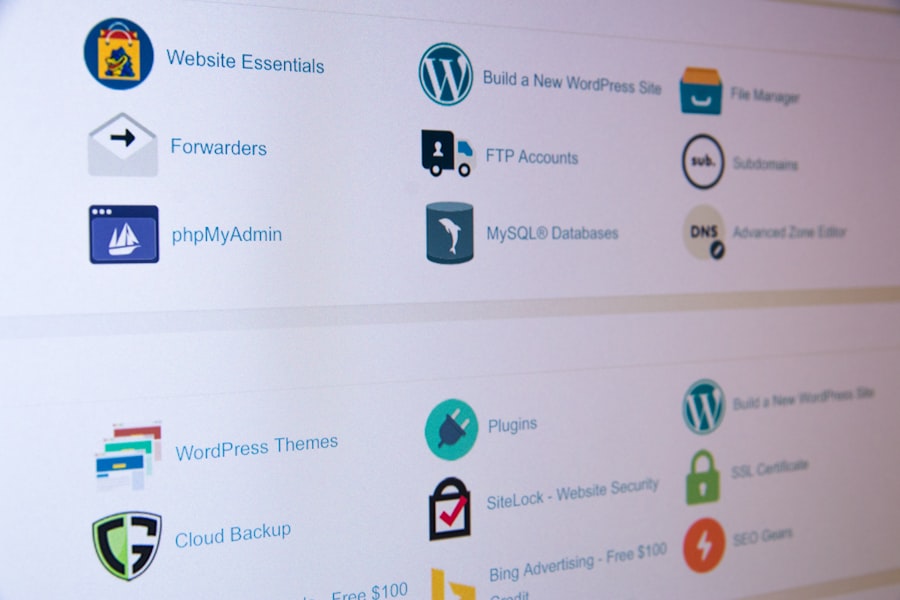
As a responsible technology consumer, you’re becoming increasingly aware of the environmental impact of data centers. The future of hosting demands a commitment to sustainability, with a focus on reducing carbon footprints and adopting energy-efficient solutions.
Renewable Energy Integration
The industry is rapidly shifting towards powering data centers with renewable energy sources. You’ll find more providers touting their green credentials, and it’s a factor you should consider when making hosting decisions.
- Carbon Neutrality Targets: Many major hosting providers are committing to achieving carbon neutrality or even becoming carbon negative. This involves sourcing electricity from wind, solar, and hydroelectric power, as well as investing in carbon offset programs.
- Location-Based Green Energy: Providers are strategically building data centers in regions with abundant access to renewable energy. This not only reduces their carbon footprint but can also lead to lower operating costs, which may ultimately benefit you.
- Transparency and Reporting: You should expect greater transparency from hosting providers regarding their energy consumption and renewable energy mix. Certifications and public reports will become more commonplace, allowing you to make informed decisions based on environmental impact.
Energy-Efficient Hardware and Cooling Technologies
Beyond the energy source, the hardware within data centers and the methods used to cool them are undergoing significant advancements to improve efficiency.
- Liquid Cooling Systems: Traditional air cooling is energy-intensive. You’ll see a broader adoption of liquid cooling systems, such as direct-to-chip or immersion cooling, which are far more efficient at dissipating heat from powerful servers, leading to substantial energy savings.
- Optimized Server Architectures: Hardware manufacturers are designing servers that are more energy-efficient without compromising performance. This includes advancements in CPU and GPU technology, as well as the use of solid-state drives (SSDs) which consume less power than traditional hard disk drives (HDDs).
- Intelligent Power Management: Data centers are implementing sophisticated power management systems that dynamically adjust power consumption based on workload. This means servers can be powered down or put into low-power states when demand is low, further reducing energy waste.
As we explore future developments in website hosting technologies, it’s essential to consider the foundational elements that support these advancements. One such element is the operating system used for hosting, which plays a crucial role in performance and security. For instance, understanding the benefits of Linux hosting can provide valuable insights into how it shapes the future landscape of web hosting. To learn more about this topic, you can read the article on Linux hosting and its implications for upcoming technologies.
The Immersive Web: Hosting for Metaverse and Web3
| Technology | Advantages | Challenges |
|---|---|---|
| Cloud Hosting | Scalability, flexibility, cost-effectiveness | Security concerns, potential downtime |
| Serverless Computing | Auto-scaling, reduced operational costs | Vendor lock-in, cold start latency |
| Edge Computing | Low latency, improved performance | Complexity in deployment, data privacy |
| Containerization | Portability, resource efficiency | Learning curve, security vulnerabilities |
The advent of the metaverse and Web3 technologies is ushering in a new era of digital interaction, and with it, unprecedented demands on hosting infrastructure. You’re not just hosting websites; you’re hosting entire virtual worlds and decentralized applications.
Decentralized Hosting and Storage for Web3 Applications
Web3 aims to decentralize the internet, moving away from centralized servers and towards peer-to-peer networks. This fundamentally changes how you approach hosting.
- InterPlanetary File System (IPFS) and Filecoin: Instead of storing files on a single server, IPFS distributes content across a global network of nodes. Filecoin incentivizes this storage with cryptocurrency, creating a robust, censorship-resistant, and immutable storage layer for Web3 applications. You’ll find yourself uploading content to these networks rather than traditional cloud buckets.
- Decentralized Autonomous Organizations (DAOs) and Smart Contracts: Web3 applications are often governed by DAOs and powered by smart contracts. The execution of these contracts and the storage of associated data require distributed and immutable infrastructure, further cementing the role of decentralized hosting.
- Reduced Single Points of Failure: By distributing your application’s data and logic across many nodes, you eliminate single points of failure, making your Web3 applications more resilient to outages and censorship.
High-Performance Hosting for Metaverse Experiences
The metaverse, with its real-time 3D environments, persistent virtual worlds, and massive multi-user interactions, will demand ultra-low latency, incredibly high bandwidth, and massive computational power from hosting infrastructure.
- Real-time Rendering and Graphics Processing: Delivering immersive metaverse experiences requires significant real-time rendering capabilities. You’ll see a greater reliance on GPU-accelerated hosting environments to handle the complex graphics and physics simulations that define these virtual worlds.
- Global Low-Latency Networks: To ensure a seamless experience for users across the globe, metaverse hosting will necessitate highly optimized global networks with edge computing playing a crucial role in bringing computation closer to the user. Milliseconds of latency can break immersion.
- Persistent World State Management: Unlike traditional websites, metaverse environments often maintain a persistent state. This means that changes made by one user are reflected for all others, requiring specialized database and synchronization technologies with incredibly high throughput and low latency. You’ll need to consider how your hosting solution can manage this continuous, dynamic data.
As you look ahead, the hosting landscape you encounter will be characterized by greater automation, increased intelligence, and an unwavering focus on performance, security, and sustainability. You’ll be presented with a more diverse array of options, from serverless functions that scale instantly to decentralized networks that offer unprecedented resilience. Your ability to navigate these advancements and choose the right hosting technologies will be paramount to your ongoing success in the digital realm.
FAQs
What are some future developments in website hosting technologies?
Some future developments in website hosting technologies include the use of edge computing, serverless architecture, and containerization. These technologies aim to improve website performance, scalability, and security.
How will edge computing impact website hosting technologies?
Edge computing will impact website hosting technologies by allowing data processing to occur closer to the end user, reducing latency and improving overall website performance. This technology will also enable hosting providers to offer more localized hosting solutions.
What is serverless architecture and how will it affect website hosting?
Serverless architecture is a cloud computing model where the cloud provider dynamically manages the allocation of machine resources. This will affect website hosting by allowing for more efficient resource utilization and cost savings for website owners.
How does containerization improve website hosting technologies?
Containerization improves website hosting technologies by providing a lightweight, portable, and scalable solution for deploying applications. This technology allows for easier management of website hosting environments and faster deployment of updates.
What are the potential benefits of these future developments in website hosting technologies?
The potential benefits of these future developments include improved website performance, scalability, security, and cost-effectiveness. Additionally, these technologies will enable website owners to better meet the demands of their users and stay competitive in the digital landscape.









Add comment