
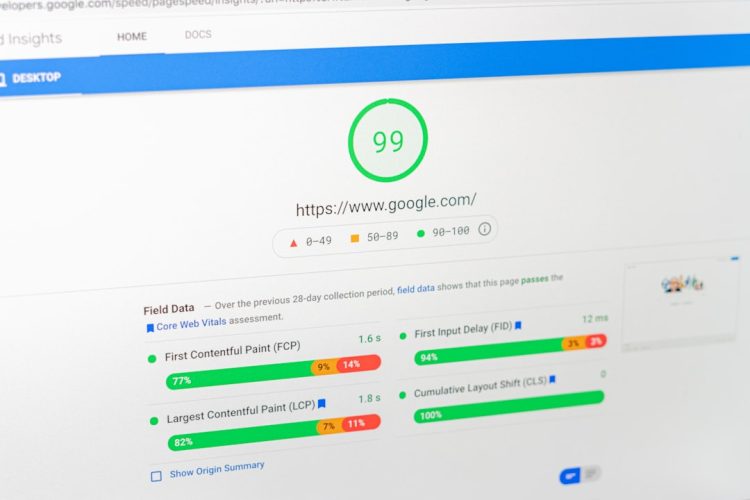
We’ve all been there – juggling multiple websites, each with its own domain, and feeling the strain of a scattered online presence. For businesses of all sizes, from nascent startups to expanding enterprises, achieving maximum efficiency is a perpetual goal. In today’s digital landscape, where our online footprint is often our first impression, effectively managing multiple domains isn’t merely a convenience; it’s a strategic imperative. We’re here to explore how we can leverage intelligent multiple domain management to streamline operations, enhance brand visibility, and ultimately drive greater success for our businesses.
We often wonder why a business would even consider managing more than one domain. Isn’t a single, cohesive website enough? The answer, we’ve found, is a resounding no, especially when we’re thinking about growth and specialized reach. Multiple domains offer us a plethora of strategic advantages that can significantly impact our bottom line.
Protecting Our Brand Identity
One of our primary concerns as business owners is safeguarding our brand. In a crowded digital space, we can’t afford to have imposters or competitors dilute our carefully crafted identity. Owning multiple domains allows us to proactively protect our brand from potential threats.
Preventing Cybersquatting
We’ve seen the horror stories – a competitor registers a slightly misspelled version of our domain name, or a malicious entity attempts to profit from our brand’s reputation. By acquiring variations of our primary domain, including common misspellings (e.g., ourwebsite.com, ourwebsit.com), we can prevent others from hijacking our traffic or confusing our customers. It’s a preemptive strike that saves us headaches and potential financial losses down the line.
Securing Related Keywords
Our marketing strategies often revolve around specific keywords. If our business is “Acme Chocolates,” we might also want to own “acmechocolatesonline.com” or “bestacmechocolates.com.” This allows us to control the narrative around key search terms related to our brand, further solidifying our online presence and ensuring that when customers search for products or services related to ours, they find us.
Geographical Expansion and Localization
As we expand our reach internationally, or even within different regions of a large country, we recognize the importance of localization. A .uk domain for our British customers, a .de for our German audience, or even a .nyc for our New York City clientele, makes our brand feel more local and accessible. This trust factor can significantly improve conversion rates as customers feel more understood and catered to.
Enhancing Our SEO Performance
Search Engine Optimization (SEO) is a relentless effort, but it’s one that multiple domains can significantly bolster. We’ve discovered that intelligent domain management can give us an edge in the competitive world of search rankings.
Targeting Specific Niches and Audiences
Imagine we run an online store selling athletic apparel. We might have a main domain like “athleticwearpro.com.” However, we could also create “runninggearhub.com” or “yogacloset.com” for very specific product lines. Each of these niche domains can be optimized for highly specific keywords and audiences, drawing in highly qualified traffic that might not otherwise find our main site. This targeted approach allows us to speak directly to specific customer segments, nurturing their interest and guiding them towards a purchase that perfectly matches their needs.
Building Authority Through Microsites
For certain campaigns or new product launches, we find that a dedicated microsite on its own domain can be incredibly effective. Instead of burying a new product page deep within our main site, we can give it its own stage. For instance, if we launch a revolutionary new smart home device, “smarthomeinnovation.com” can serve as a focused platform to showcase its features, collect leads, and generate buzz. This focused approach allows us to build specific authority around a particular offering, which Google’s algorithms tend to reward.
Local SEO Dominance
For businesses with physical locations, local SEO is paramount. Owning domains that incorporate city or regional names (e.g., “ourbusinesschicago.com”) can significantly improve our visibility in local search results. When customers search for “best coffee shop in Boston,” having a Boston-specific domain can give us a distinct advantage, making it easier for local customers to discover our business.
Managing multiple domains can significantly enhance business efficiency, but it’s also essential to ensure that your websites are optimized for performance. For insights on improving your website’s effectiveness, you might find this article helpful: 8 Best Website Optimization Tips for 2023. By combining effective domain management with optimization strategies, you can create a seamless online experience for your customers.
Types of Domain Strategies We Employ
When we talk about managing multiple domains, we’re not advocating for a chaotic collection of websites. Instead, we’re talking about deliberate strategies that serve specific business objectives. We’ve identified several key approaches that we find most effective.
Brand Protection and Defensive Registration
Our first line of defense is always brand protection. This involves acquiring domains that are variations of our core brand name to prevent others from using them.
Typo Squatting Prevention
We meticulously identify common misspellings or typographical errors that our customers might make when typing our domain. For example, if our primary domain is “innovatesolutions.com,” we might register “innovatesolution.com” or “innov8solutions.com.” Redirecting these typo domains to our main site ensures that confused users still land on our intended destination, preventing lost traffic and potential brand damage.
Competitor Dilution Mitigation
We also consider variations that competitors might use to siphon off our traffic. This could involve registering domains with slightly different keywords or prefixes/suffixes that are still very close to our brand. While we can’t prevent all competitor activities, having ownership of these close variations gives us more control over our brand’s online narrative.
Global Top-Level Domain (gTLD) and Country-Code Top-Level Domain (ccTLD) Acquisition
As our business grows internationally, we strategically acquire relevant gTLDs and ccTLDs. If our primary domain is .com, we might also secure .net, .org, and specific country codes like .co.uk, .ca, or .de. This not only protects our brand in those regions but also signals our commitment to those markets, building trust with local customers.
Product-Specific or Service-Specific Domains
To better segment our offerings and target specific customer needs, we often create domains dedicated to particular products or services.
Focused Marketing Campaigns
When we launch a new product or service, we might create a domain like “newgadgetlaunch.com” or “premiumconsultingservices.com.” These domains can be used for highly focused marketing campaigns, allowing us to deliver a message directly tailored to that specific offering without the distractions of our broader website. This often results in higher conversion rates due to the clear intent and direct path to information.
A/B Testing Landing Pages
We regularly use dedicated domains for A/B testing different landing page designs or messaging. Instead of changing our main site, we can direct specific traffic segments to a new domain with experimental content. This allows us to gather valuable data on what resonates best with our audience without impacting our primary brand experience.
Building Niche Authority
For highly specialized services, a dedicated domain helps us build niche authority. If our main business is general IT consulting, but we have a highly specialized cybersecurity division, “securenetworksolution.com” can establish us as a leading expert in that specific area, attracting clients specifically seeking cybersecurity expertise.
Geographic and Language-Specific Domains
Expanding our reach means understanding and catering to diverse customer segments, especially those in different geographical locations or speaking different languages.
Localized User Experience
Using domains like “ourbusinesslondon.com” or “ourbusinessfr.fr” allows us to create entirely localized experiences. This means not just translating content, but also tailoring pricing, product availability, customer support, and even imagery to resonate with the local culture. This deep personalization significantly enhances the user experience and builds stronger customer loyalty.
Improved Local Search Rankings
Search engines prioritize local relevance. By having domains dedicated to specific geographic locations, we signal our local presence to search engines, significantly improving our chances of appearing in local search results. This is crucial for brick-and-mortar businesses or service providers with a specific service area.
Compliance with Regional Regulations
Operating in different countries often means adhering to varying legal and regulatory frameworks. Having separate domains allows us to manage country-specific terms of service, privacy policies, and data handling practices more easily, ensuring we remain compliant across all our operational territories.
Streamlining Operations with Centralized Management
The thought of managing multiple domains can be daunting, leading to fears of increased workload and complexity. However, we’ve found that with the right tools and strategies, we can actually streamline operations by centralizing our domain management.
Consolidating Hosting and DNS
Spreading our domains across various hosting providers and DNS management platforms is a recipe for chaos. We strongly advocate for consolidating these services wherever possible.
Single Point of Control for DNS Records
By using a single, robust DNS management provider, we gain a unified interface to control all our domain’s records (A, CNAME, MX, TXT, etc.). This makes updates, troubleshooting, and configuration changes infinitely easier and less prone to errors. Instead of logging into multiple dashboards, we have one central hub for all our DNS needs.
Centralized Hosting Platform
While we might sometimes need specialized hosting for certain functionalities, aiming for a centralized hosting platform for the majority of our domains simplifies billing, server management, and technical support. Many modern hosting providers offer plans that allow us to host multiple domains under a single account, reducing administrative overhead.
Improved Security and Monitoring
A consolidated environment allows us to implement universal security protocols and monitoring tools across all our domains more effectively. We can apply consistent firewall rules, SSL certificate management, and malware scanning, ensuring a higher level of protection for our entire digital portfolio.
Utilizing a Robust Domain Management Platform
Manually tracking expiration dates, managing renewals, and updating contact information for dozens or even hundreds of domains is simply unsustainable. This is where a dedicated domain management platform becomes indispensable.
Automated Renewals and Alerts
The biggest benefit we’ve experienced from using a dedicated platform is automated renewals. We set it up once, and the system handles the rest, sending us alerts well in advance of expiration dates. This eliminates the risk of accidentally losing a valuable domain due to an oversight.
Centralized Billing and Reporting
Imagine a single invoice for all our domain registrations and renewals. This is the reality with a good domain management platform. It also provides comprehensive reporting on domain status, ownership, and expenses, giving us a clear overview of our entire domain portfolio.
Bulk Actions and Template Management
Need to update the WHOIS contact information for multiple domains? A robust platform allows for bulk actions, saving us countless hours. We can also create templates for common configurations, ensuring consistency across our domain registrations.
Implementing Efficient Redirect Strategies
Not all our domains need a full, independent website. Many serve their purpose by simply redirecting to another, more comprehensive site.
Permanent (301) Redirects for SEO Value
When we consolidate content or retire an old domain in favor of a new one, we always implement permanent (301) redirects. This ensures that the SEO value accumulated by the old domain is passed on to the new one, preventing a loss in search rankings. It also provides a seamless experience for users who might still access the old URL.
Temporary (302) Redirects for Campaigns
For short-term campaigns or testing scenarios, we use temporary (302) redirects. This tells search engines that the move is not permanent and that they should not transfer the SEO authority. Once the campaign is over, we simply remove the redirect, and the original domain retains its individual SEO standing.
Wildcard Redirects for Brand Consistency
Sometimes, we own various minor domains that are just variations of our main brand. Implementing a wildcard redirect (redirecting any request to *.olddomain.com to www.newdomain.com/) ensures that no matter what someone types in for our old variations, they always land on our primary site, reinforcing brand consistency.
Enhancing User Experience (UX) and Brand Consistency
While efficiency is key, we never compromise on the user experience. Multiple domains, when managed correctly, can actually enhance UX and strengthen our brand identity across our diverse online properties.
Consistent Branding Across All Properties
No matter which of our domains a user lands on, the experience should feel unmistakably “us.” This is where brand consistency plays a crucial role.
Unified Visual Language
We ensure that our brand’s visual identity – logos, color palettes, typography, and imagery – is consistent across all our domains. Even if a domain serves a niche purpose, it should visually align with our broader brand, creating a cohesive and professional impression.
Harmonized Messaging and Tone of Voice
Our brand’s voice and messaging should be consistent, regardless of the domain. Whether it’s a microsite for a specific product or a localized version of our main website, the tone should reflect our core values and personality. This builds trust and reinforces our brand identity.
Streamlined Navigation and User Flow
While content might differ, we strive for a consistent navigation structure and user flow where appropriate. If a user moves from a product-specific domain to our main corporate site, they should find familiar elements that make the transition smooth and intuitive, rather than feeling lost or disoriented.
Tailored Content for Targeted Audiences
One of the most powerful aspects of multiple domains is our ability to deliver highly relevant content to specific audiences. This significantly improves engagement and conversion rates.
Language and Cultural Adaptations
For our international domains, we go beyond simple translation. We adapt content to reflect local idioms, cultural nuances, and consumer preferences. This shows respect for the local audience and makes our content more resonant and impactful.
Product-Specific Information
On our product-specific domains, we provide in-depth information, specifications, and testimonials directly related to that particular offering. This allows customers to quickly find exactly what they’re looking for without sifting through unrelated content from our broader product catalog.
Dedicated Support Resources
For certain segments or regions, we might offer dedicated support resources on a particular domain. This could include localized FAQs, regional contact numbers, or even a dedicated customer service portal tailored to specific market needs.
Improving Website Performance and Load Times
A slow website is a conversion killer. We’ve discovered that strategic use of multiple domains can actually improve overall website performance.
Content Delivery Network (CDN) Integration
We utilize CDNs across all our domains, especially those serving diverse geographic locations. By caching content on servers closer to the user, CDNs dramatically reduce load times, providing a faster and more satisfying browsing experience.
Optimized Server Locations for Regional Domains
For our region-specific domains, we aim to host them on servers physically located within or near that region. This proximity minimizes latency and further improves load times for local users, which is a key factor in both user satisfaction and local SEO.
Reducing Clutter on Main Domains
By moving niche content, campaign-specific landing pages, or highly localized information to separate domains, we can keep our main website lean and focused. This reduces the amount of data that needs to be loaded on our primary site, contributing to faster overall performance.
Managing multiple domains can significantly enhance business efficiency, but it is equally important to have a strategic approach to domain selection and management. For instance, understanding the implications of different domain extensions can play a crucial role in your overall strategy. A related article discusses this in detail, highlighting the importance of choosing the right domain for your business’s future. You can read more about it in this insightful piece on the power of PK and COM domains for Pakistani businesses, which provides valuable tips for optimizing your online presence.
Best Practices for Effective Multiple Domain Management
| Domain | Management Strategy | Benefits |
|---|---|---|
| Centralized Management | Use a single platform to manage all domains | Streamlined control and easy updates |
| Consistent Branding | Ensure uniform branding across all domains | Builds brand recognition and trust |
| Security Measures | Implement security protocols for all domains | Protects sensitive data and customer information |
| SEO Optimization | Optimize each domain for search engines | Improves online visibility and traffic |
To truly maximize efficiency, we adhere to a set of best practices that guide our approach to multiple domain management.
Comprehensive Domain Portfolio Audits
We regularly conduct thorough audits of our entire domain portfolio. This is not a “set it and forget it” task; it’s an ongoing process.
Identifying Redundant or Underperforming Domains
We look for domains that are no longer serving a purpose, are receiving minimal traffic, or have become obsolete. These domains can be allowed to expire or be permanently redirected to more relevant active domains, reducing unnecessary costs and administrative burden.
Ensuring Accurate Ownership and Contact Information
Outdated WHOIS information is a security risk and an administrative nightmare. We meticulously ensure that all ownership and contact details are current, especially for critical domains.
Scrutinizing Renewal Cycles and Cost-Effectiveness
We review our domain renewal cycles to ensure they align with our business needs and budget. We occasionally consolidate renewals to take advantage of multi-year discounts offered by registrars.
Implementing Strong Security Measures
Our digital assets are invaluable, and security is paramount. We take a proactive approach to protecting our multiple domains.
Universal SSL Certificate Deployment
Every single domain we own, even those that simply redirect, is secured with an SSL certificate. This is non-negotiable. It protects user data, builds trust, and is a strong ranking signal for search engines.
Regular DNS Security Reviews
We regularly review our DNS records for any unauthorized changes or suspicious entries. DNS hijacking is a real threat, and proactive monitoring helps us detect and mitigate it quickly.
Multi-Factor Authentication (MFA) for All Domain Accounts
We enforce multi-factor authentication on all our domain registrar accounts, hosting panels, and any other systems associated with our domains. This adds a crucial layer of security, making it much harder for unauthorized parties to gain access.
Strategic Use of Domain Redirects
As mentioned earlier, redirects are a powerful tool, but we use them strategically and with careful consideration.
Maintaining Google Search Console and Analytics for Redirected Domains
Even if a domain is perpetually redirected, we maintain its presence in Google Search Console and ensure analytics tracking. This allows us to monitor for any crawl errors, identify potential SEO issues, and understand traffic patterns to the redirected domain.
Avoiding Redirect Chains and Loops
We painstakingly avoid redirect chains (where Domain A redirects to Domain B, which then redirects to Domain C). This not only slows down the user experience but can also dilute SEO value. We aim for direct redirects: Domain A directly to Domain B. We also guard against redirect loops, which can lead to endless loading and a frustrating user experience.
Clearly Communicating Redirect Strategies
Internally, we clearly document our redirect strategies. This ensures that anyone working on our websites understands why certain redirects are in place and how they should be managed, preventing accidental removal or misconfiguration.
Leveraging Analytics and Performance Monitoring
Data is our compass. We rely heavily on analytics to understand the performance of our multiple domains and make informed decisions.
Tracking Traffic and Conversion Rates for Each Domain
We implement separate analytics properties or views for each domain or logical group of domains. This allows us to track traffic, bounce rates, and conversion rates specific to each property, helping us understand which domains are performing well and which might need refinement.
Monitoring Keyword Rankings and SEO Performance
We use SEO tools to monitor keyword rankings for each of our domains. This helps us gauge the effectiveness of our niche optimization strategies and identify opportunities for improvement.
User Behavior Analysis Across Properties
By implementing cross-domain tracking in our analytics, we can gain insights into how users move between our different domains. This helps us understand the customer journey and identify potential friction points or opportunities for better integration.
Managing multiple domains can significantly enhance business efficiency, but it also comes with its own set of challenges. For those looking to optimize their online presence, understanding the benefits of different hosting solutions is crucial. A related article that provides valuable insights into one such solution is available here: what is cloud hosting. This resource can help you explore how cloud hosting can streamline your operations and improve your website’s performance across multiple domains.
Conclusion
We’ve learned that in the hyper-competitive digital arena, simply having an online presence isn’t enough. For businesses, scaling and specializing demand a sophisticated approach to our digital assets. By strategically managing multiple domains, we can protect our brand, supercharge our SEO, tailor user experiences, and ultimately achieve a level of efficiency that drives sustained growth. It’s not about complexity; it’s about intelligent architecture, centralized control, and a clear understanding of our business objectives. By adhering to these principles and best practices, we can transform the challenge of multiple domains into a powerful engine for maximizing our business efficiency and cementing our position in the marketplace. We see it not as a burden, but as a robust framework for our ongoing success.
FAQs
What are the benefits of managing multiple domains for business efficiency?
Managing multiple domains allows businesses to target different markets, improve search engine optimization, and protect their brand identity. It also provides flexibility for creating specific landing pages and email addresses for different products or services.
What are some best practices for managing multiple domains?
Some best practices for managing multiple domains include using a centralized domain management tool, keeping track of domain expiration dates, and implementing a consistent branding strategy across all domains. It’s also important to regularly monitor website performance and security for each domain.
How can businesses streamline the management of multiple domains?
Businesses can streamline domain management by using a single hosting provider for all domains, implementing domain forwarding and domain masking for specific purposes, and utilizing domain aliases to consolidate email management. Automation tools can also help simplify domain management tasks.
What are the potential challenges of managing multiple domains?
Some potential challenges of managing multiple domains include increased administrative overhead, potential for confusion among customers, and the risk of diluting brand identity. It’s important for businesses to carefully plan and organize their domain management strategy to mitigate these challenges.
How can businesses ensure security and compliance when managing multiple domains?
To ensure security and compliance when managing multiple domains, businesses should implement SSL certificates for each domain, regularly update and patch website software, and adhere to data protection regulations such as GDPR. It’s also important to monitor for any unauthorized domain changes or DNS hijacking attempts.









Add comment