

You’re launching a business or a startup, and the digital storefront is as crucial as the physical one. The domain name is more than just an address; it’s your brand’s identity, its first impression, and a significant factor in your online discoverability. As we look towards 2026, the digital landscape continues to evolve, and choosing the right domain extension (the part after the dot, like .com or .org) is more nuanced than ever. This guide will help you navigate the options, focusing on extensions that offer long-term value, credibility, and strategic advantage for your venture.
The sheer abundance of new domain extensions has both broadened your choices and complicated the decision-making process. While the classic .com remains a strong contender, its scarcity for desirable names means exploring alternatives is not just wise, but often necessary. The key is to find an extension that is relevant to your business, memorable for your audience, and conducive to building trust and authority.
Despite the proliferation of new options, the .com extension, for many, remains the undisputed king. Its universal recognition and inherent association with commercial enterprises make it a default choice that instills confidence and familiarity in users worldwide.
Why .com Continues to Dominate
The sheer ubiquity of .com has created a strong mental association for most internet users. When they think of a business, they often automatically append “.com” to its name. This ingrained habit significantly impacts direct traffic and recall. If your business name is available as a .com, it’s usually the most straightforward and safest bet for broad appeal.
- Global Recognition and Trust: In virtually every corner of the globe, .com signifies a commercial entity. This universal understanding translates into immediate credibility. Visitors are less likely to be confused or suspicious when encountering a .com domain, especially if it’s a less common business name.
- Memorability and Simplicity: The five letters are ingrained in the minds of internet users. For marketing purposes, a .com is generally easier to communicate verbally and in print. It avoids potential misspellings or confusion that can arise with less familiar extensions.
- SEO Advantages (Perceived and Actual): While Google states that domain extensions don’t directly impact search rankings, there’s an undeniable indirect SEO benefit. Users are more likely to click on a .com result that they instinctively trust. Higher click-through rates can, in turn, influence search engine performance. Furthermore, older, established .com domains often carry more authority due to their long history, which can be a significant advantage.
- Availability Challenges and Strategic Alternatives: The primary drawback of .com is the scarcity of desirable, short, and brandable names. This scarcity, paradoxically, fuels the exploration of alternatives. However, if a premium .com becomes available (perhaps through aftermarket purchase), it’s often worth the investment for its unparalleled strategic value.
- The .com Aftermarket: The .com aftermarket is a robust ecosystem where previously registered domain names are bought and sold. While prices can be exorbitant for premium names, it’s a viable avenue if you’re set on a .com and your ideal name isn’t currently available. Due diligence is crucial here; understand the domain’s history, traffic, and any potential trademark issues.
In the ever-evolving digital landscape, selecting the right domain extension is crucial for businesses and startups aiming to establish a strong online presence in 2026. For insights on how the right domain can enhance your brand’s visibility and credibility, you may find it beneficial to read the article on how business hosting can boost your online sales and revenue. This resource offers valuable information that complements the discussion on the best domain extensions for businesses. You can check it out here: how business hosting can boost your online sales and revenue.
Emerging Business-Oriented Extensions: Credibility and Specificity
Beyond .com, several newer domain extensions cater specifically to businesses, offering a degree of professionalism and relevance that can bolster your brand’s image. These extensions are often more accessible for desirable names and can signal a clear intent to operate as a professional entity.
Leveraging Industry-Specific Domains
For businesses in particular sectors, industry-specific Top-Level Domains (TLDs) can provide an immediate understanding of your core business. This can attract a more targeted audience and convey expertise.
- .tech for Technology Companies: If your startup is in the software, hardware, AI, or any innovation-driven technology sector, .tech is an explicit and unambiguous choice. It immediately tells potential customers, investors, and partners what you do. This can be far more effective than a generic .com that requires further explanation.
- Innovation Showcase: A .tech domain can position your brand as forward-thinking and at the cutting edge of your field, attracting talent and early adopters who are actively seeking out technological advancements.
- Targeted Marketing: When running campaigns, using a .tech domain can help segment your audience and ensure that your marketing efforts reach those most interested in technology-related solutions.
- .store for E-commerce Businesses: If your primary function is selling products online, .store is a direct and intuitive choice. It leaves no room for doubt about the purpose of your website.
- Consumer Clarity: For online shoppers, a .store domain signals a place to purchase goods. This can reduce friction in the buying process.
- Branding Opportunity: A memorable business name followed by .store can be a powerful and concise brand identity for your online retail presence.
- .shop for Retailers and Online Stores: Similar to .store, .shop is another excellent option for businesses focused on retail and online sales. It’s widely understood and conveys commercial intent.
- Simplicity and Directness: For consumers, it’s a clear indicator of a place to find products. This directness can improve user experience and conversion rates.
- Global Appeal: .shop is a universally understood term for retail, making it suitable for businesses with international aspirations.
Professional Services and Consulting Domains
Certain extensions are particularly well-suited for businesses offering professional services, from legal and financial advice to consulting and marketing.
- .services for Service Providers: This is a broad but highly relevant extension for any business that offers a service. It’s clear, concise, and immediately informs visitors about your offering.
- Broad Applicability: Whether you’re a freelance graphic designer, a cleaning company, or a management consultant, .services effectively communicates your core business.
- SEO for Niche Searches: People searching for “IT services” or “financial consulting services” are likely to recognize and trust a .services domain.
- .consulting for Expert Advice: For businesses that specialize in providing expert advice and strategic guidance, .consulting is a definitive choice. It directly communicates your role as a thought leader and problem-solver.
- Establishing Expertise: This TLD helps immediately establish your brand as an authority and go-to resource in your specific consulting niche.
- Targeting Decision Makers: Professionals seeking consulting services are often looking for specialized knowledge, and a .consulting domain can attract precisely this audience.
- .law for Legal Professionals: A domain like .law is an absolute must-have for any law firm or legal practice. It provides immediate credibility and clarity.
- Instilling Confidence: For clients seeking legal counsel, a .law domain suggests professionalism and a dedicated focus on legal matters.
- Regulatory Compliance: In some jurisdictions, using specific extensions might align with professional conduct regulations for legal practitioners.
Geographic and Community-Based Extensions: Local Relevance and Niche Appeal
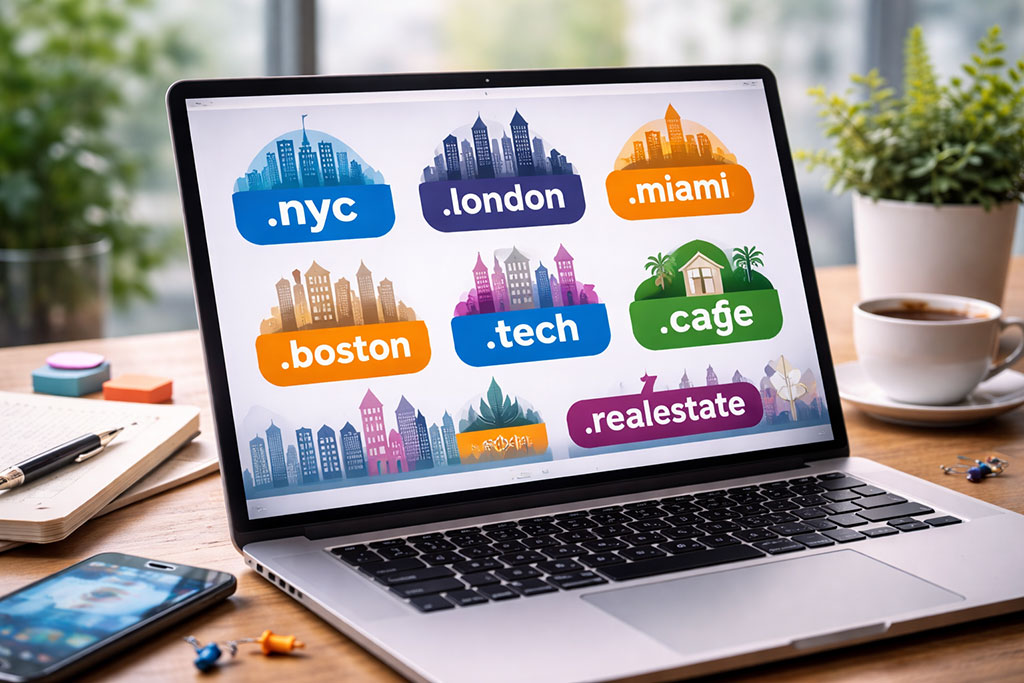
While global reach is often the goal, sometimes focusing on a specific geographic location or a defined community can be a potent strategy. Geographic TLDs can build trust and resonance with a local audience.
Tapping into Local Markets and Identity
Country-code Top-Level Domains (ccTLDs) and new generic TLDs with geographic connotations can be incredibly effective for businesses aiming to serve a specific region.
- Country-Code TLDs (e.g., .co.uk, .de, .ca): If your primary market is a specific country, using its ccTLD is often the most natural and trusted choice. It signals local presence and understanding.
- Building Local Trust: For consumers, a local ccTLD fosters a sense of familiarity and trust, implying that the business understands local customs, regulations, and consumer needs.
- Search Engine Signals: Search engines often prioritize local results, and a ccTLD can be a strong signal for these localized searches.
- Availability and Cost: In many countries, ccTLDs are more readily available and less expensive than comparable .com domains.
- New Geographic TLDs (e.g., .nyc, .london, .berlin): These newer extensions allow businesses to highlight their specific city or region with pride and precision.
- Hyper-Local Branding: If your business is deeply rooted in a particular city and that identity is part of your brand, an extension like .nyc can be a powerful statement.
- Targeting Urban Audiences: These TLDs are particularly effective for local service providers, retailers, and businesses aiming to attract customers within a specific metropolitan area.
- Community-Focused TLDs (e.g., .community, .family): While not strictly geographic, these TLDs can signal a focus on a particular group or shared interest, fostering a sense of belonging.
- Building a Tribe: If your business revolves around a specific community or serves a particular demographic, these TLDs can resonate deeply.
- Niche Marketing: They are excellent for platforms, organizations, or businesses that aim to cultivate a strong sense of shared identity and purpose.
Non-Profit and Organizational Extensions: Signaling Purpose and Mission

For organizations that are not primarily driven by profit, certain domain extensions clearly articulate their mission and purpose, fostering trust and support.
Communicating Your Non-Profit Status and Mission
Choosing the right extension can be crucial for fundraising, volunteer recruitment, and building credibility with donors and stakeholders.
- .org: The Classic Non-Profit Choice: The .org extension has been the long-standing standard for non-profit organizations, charities, and other non-commercial entities. Its recognition is almost as universal as .com for its intended purpose.
- Established Trust and Credibility: For decades, .org has been synonymous with non-profit work, making it the most trusted choice for these organizations.
- Donor Confidence: Donors are generally more comfortable contributing to organizations with a .org domain, as it signifies a charitable or public-benefit purpose.
- .ngo for Non-Governmental Organizations: This newer TLD is specifically designed for non-governmental organizations, offering a more precise identifier.
- Clear Identification: .ngo explicitly communicates that the organization is an NGO, which can be important for international recognition and partnerships.
- Distinguishing from For-Profits: It provides a clear distinction from for-profit entities, which can be beneficial in advocacy and fundraising efforts.
- .foundation for Charitable Foundations: For organizations established as charitable foundations, .foundation offers a direct and appropriate identifier.
- Focus on Philanthropy: This TLD clearly signals the organization’s commitment to philanthropy and its operational structure as a foundation.
- Targeting Grant Seekers and Donors: It can attract individuals and entities looking to support or receive support from charitable foundations.
When considering the best domain extensions for businesses and startups in 2026, it’s also important to understand the hosting environment that will support your online presence. A related article that delves into this topic is What is Linux Hosting, which explores the benefits of using Linux-based hosting solutions. This knowledge can help you make informed decisions about both your domain and hosting needs, ensuring a strong foundation for your digital strategy.
Brandable and Creative Extensions: Unique Identity and Memorability
<?xml encoding=”UTF-8″>
| Domain Extension | Usage | Pros | Cons |
|---|---|---|---|
| .com | Most common | Established, trustworthy | Availability |
| .io | Tech startups | Tech-savvy, innovative | Expensive |
| .co | Global businesses | Short, memorable | Confusion with .com |
| .ai | Tech, AI companies | Futuristic, cutting-edge | Specific to AI |
| .app | App developers | Clear purpose | Restricted use |
In a crowded digital space, some businesses opt for more creative or brandable domain extensions to stand out. The key is to ensure the extension aligns with your brand’s personality and remains memorable.
Standing Out with Distinctive Domains
While less common for broad commercial appeal, these extensions can be highly effective for specific brand strategies.
- .io for Tech Startups and Innovative Projects: Originally the ccTLD for the British Indian Ocean Territory, .io has become a popular choice within the tech and startup community. It’s often associated with input/output operations in computing.
- Tech Credibility: It’s widely adopted by tech companies, developers, and open-source projects, giving your brand an immediate association with innovation.
- Short and Punchy: .io domains are often short and memorable, fitting well with modern branding trends.
- .ai for Artificial Intelligence Companies: As AI continues to grow, .ai has become the de facto TLD for companies operating in this space.
- Industry Relevance: It instantly communicates your specialization in artificial intelligence, attracting relevant talent, customers, and investors.
- Future-Proofing: It positions your brand at the forefront of a rapidly developing and crucial technological field.
- Creative New TLDs (e.g., .xyz, .space, .online): The availability of hundreds of new TLDs offers endless possibilities for creative branding.
- Uniqueness and Memorability: A well-chosen creative TLD can make your brand highly distinctive and memorable, helping you cut through the noise.
- Brand Storytelling: The extension can even complement your brand’s narrative. For example, a creative agency might choose .space to represent their expansive ideas.
- Strategic Use Cases: While .com is often preferred for broad commercial appeal, .xyz or .online might be perfect for portfolios, experimental projects, or businesses with a minimalist or avant-garde brand identity.
Key Considerations for 2026:
- Mobile-First Access: Regardless of the extension, ensure your website is fully responsive and optimized for mobile devices. This is non-negotiable by 2026.
- Brand Consistency: Your domain extension should align with your overall brand messaging and visual identity. Avoid extensions that create dissonance.
- Audience Perception: Consider how your target audience will perceive each extension. What instills trust in them? What do they associate with professionalism?
- Future Growth: While immediate needs are important, think about where your business might be in five or ten years. Will your chosen extension still be appropriate?
- Trademark Protection: Always conduct thorough trademark searches to ensure your chosen domain name and extension do not infringe on existing trademarks.
The landscape of domain extensions is dynamic. While established players like .com retain their significance, the rise of industry-specific, geographic, and creative TLDs offers powerful opportunities for businesses and startups in 2026. By carefully considering your brand’s identity, target audience, and long-term goals, you can select a domain extension that not only serves as your digital address but also actively contributes to your online success and credibility.
FAQs
1. What are domain extensions?
Domain extensions, also known as top-level domains (TLDs), are the last part of a domain name, such as .com, .org, or .net. They are used to categorize websites and can have specific meanings or purposes.
2. What are the best domain extensions for businesses and startups in 2026?
In 2026, the best domain extensions for businesses and startups include .com, .net, .org, .co, and .io. These extensions are widely recognized, trusted, and can help establish a professional online presence.
3. How do domain extensions impact a business’s online presence?
Domain extensions can impact a business’s online presence by influencing how customers perceive the website. Certain extensions, such as .com, are more commonly associated with established businesses, while others, like .io, are often used by tech startups.
4. Are there any industry-specific domain extensions that are recommended for businesses?
Yes, there are industry-specific domain extensions that can be beneficial for businesses. For example, .tech is suitable for technology companies, .store for e-commerce businesses, and .law for law firms.
5. What factors should businesses consider when choosing a domain extension?
When choosing a domain extension, businesses should consider factors such as their target audience, branding strategy, and the availability of their desired domain name. It’s important to select an extension that aligns with the business’s identity and goals.









Add comment