

The Fundamental Difference: SSDs vs. HDDs
When discussing website loading speeds, the underlying storage technology plays a pivotal role, often more significant than many realize. For decades, Hard Disk Drives (HDDs) were the ubiquitous storage solution, relying on spinning platters and read/write heads to access data. This mechanical nature inherently introduces bottlenecks. Imagine a record player: to access a specific track, the needle must physically move to that location on the spinning vinyl. Similarly, an HDD’s read/write head must physically travel across the platters to locate and retrieve data. This physical movement, measured in milliseconds, accumulates rapidly when a website needs to fetch numerous small files, as is common for modern web pages. The latency associated with these mechanical operations directly impacts how quickly a server can respond to a user’s request.
Solid State Drives (SSDs), on the other hand, represent a paradigm shift in data storage. They utilize NAND-based flash memory, a non-volatile memory technology that stores data electronically. There are no moving parts whatsoever in an SSD. This fundamental difference is the bedrock of their superior performance. Data access on an SSD is an electronic process, akin to retrieving information from a computer’s RAM, albeit at a slower speed. This electronic access eliminates the mechanical delays inherent in HDDs, resulting in significantly lower latency and vastly improved input/output operations per second (IOPS). For a web server, where hundreds or thousands of simultaneous requests for various files are the norm, this reduction in latency translates directly into faster data retrieval and, consequently, quicker website loading times for end-users. The difference isn’t just incremental; it’s often a magnitude of improvement that reshapes user experience.
The Mechanism of Data Retrieval
Understanding how each drive retrieves data is crucial to appreciating the speed disparity. An HDD’s performance is heavily influenced by factors like rotational speed (RPM) and seek time. A higher RPM means the platters spin faster, allowing data to pass under the read/write head more frequently. Seek time refers to the time it takes for the read/write head to move to the correct track. Both of these contribute to the overall access time. When a web server processes a request, it often needs to access multiple files (HTML, CSS, JavaScript, images, etc.) that might be scattered across different sectors of the disk. Each file access incurs these mechanical delays, leading to cumulative waiting times.
SSDs bypass these mechanical limitations entirely. Data is stored in blocks of memory cells, and access is achieved by sending electrical signals to the appropriate location. This process is nearly instantaneous compared to mechanical movement. When a web server requests a file from an SSD, the drive controller can pinpoint the data’s location almost immediately, leading to significantly faster data transfer rates. This is particularly advantageous for websites with many small files, as the overhead of seeking and rotating is completely removed. The speed at which an SSD can retrieve a multitude of disparate data blocks is what fundamentally differentiates it from its spinning counterpart in a web serving context.
In addition to understanding how SSD storage enhances website loading speeds, it’s also beneficial to explore the broader context of web hosting solutions. A related article, “What is Business Hosting? A Beginner’s Guide,” provides valuable insights into the different types of hosting available and how they can impact your website’s performance. You can read more about it here: What is Business Hosting? A Beginner’s Guide. This information can help you make informed decisions when selecting a hosting service that complements your SSD storage for optimal website efficiency.
Enhanced I/O Performance and Latency Reduction
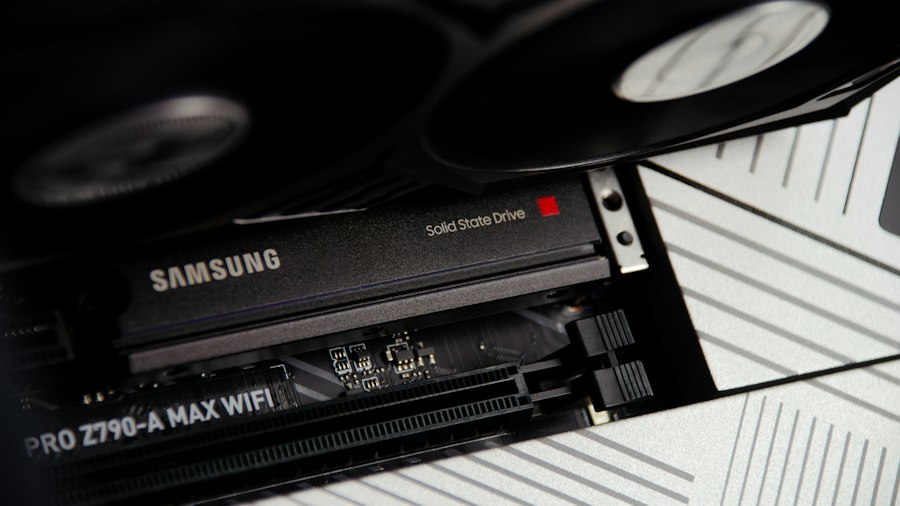
The core advantage of SSDs in the context of website performance lies in their ability to handle Input/Output (I/O) operations with unparalleled speed and efficiency. Every time a web server receives a request for a web page, it initiates a series of I/O operations. This includes reading the HTML document, fetching associated CSS stylesheets, JavaScript files, images, fonts, and potentially querying databases. For an HDD, each of these operations can involve distinct physical movements of the read/write head and waiting for platters to rotate, leading to considerable latency. This latency accumulates, especially when many users access the site simultaneously, causing the server to bottleneck at the storage level.
SSDs, due to their solid-state nature, eliminate these mechanical delays. They can perform a massive number of I/O operations per second (IOPS) compared to HDDs. Where a typical enterprise-grade HDD might achieve a few hundred IOPS, an SSD can easily reach tens of thousands, or even hundreds of thousands, of IOPS. This drastic increase in IOPS directly translates to a significant reduction in latency for individual data requests. When a server running on SSDs needs to fetch multiple files for a single web page, it can do so almost concurrently, without the sequential waiting times imposed by mechanical drives. This means the time between the user clicking a link and the server starting to send the webpage data is dramatically shortened.
Concurrency and Multitasking Efficiency
Modern websites are complex, often requiring the server to handle numerous concurrent requests from different users. Each request might involve fetching different sets of files and interacting with databases. HDDs struggle immensely with this kind of concurrent, random access. If multiple requests arrive simultaneously, the HDD’s read/write head has to constantly jump between different locations on the platters, a process known as “thrashing.” This dramatically slows down overall performance as the drive spends more time seeking than reading or writing data. The queue of pending I/O operations can quickly grow, leading to noticeable delays for users.
SSDs, on the other hand, excel at handling concurrent I/O operations. Because there are no moving parts, the drive controller can access data from multiple locations virtually simultaneously without any mechanical overhead. This makes SSDs exceptionally efficient in multitasking environments like web servers. When hundreds or thousands of users are accessing a website powered by SSDs, the server can fulfill their requests much more rapidly and consistently, leading to a smoother and more responsive experience for everyone. This ability to maintain high performance under heavy load is a critical factor for websites experiencing significant traffic.
Impact on Database Performance
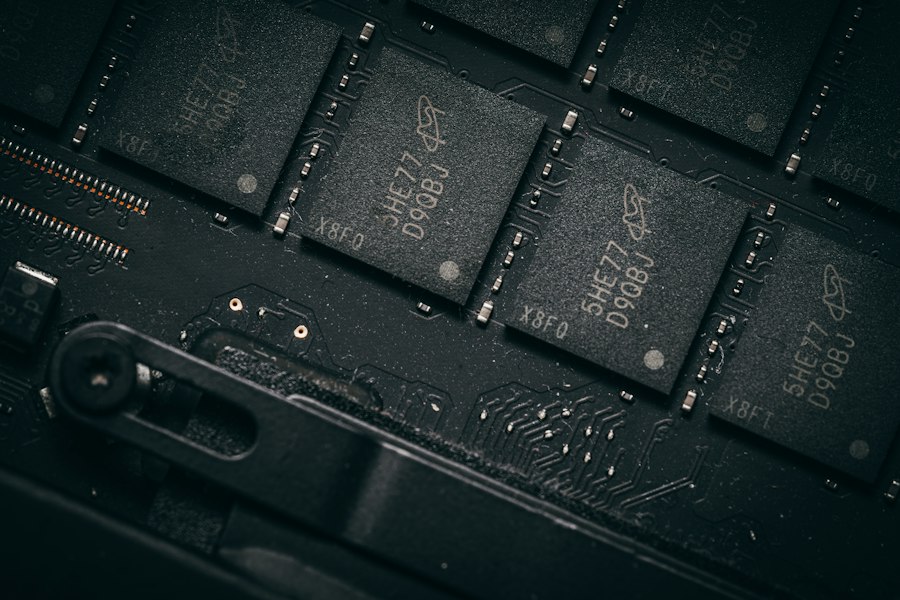
Many websites, especially dynamic ones, rely heavily on databases to store and retrieve content, user data, product information, and more. The speed at which a database can process queries is a direct determinant of overall website performance. Database operations – whether it’s reading a user profile, updating an order status, or searching for products – involve a constant stream of read and write requests to the underlying storage. This is where the superior I/O capabilities of SSDs become exceptionally valuable.
Traditional HDDs can become a significant bottleneck for database-intensive applications. Database files are often fragmented, and queries can require accessing disparate pieces of data. The mechanical nature of HDDs means that each data fragment retrieval incurs seek time and rotational latency. In high-traffic scenarios or for complex queries, these delays accumulate rapidly, leading to slow database responses, which in turn cause the entire website to load slowly. Users experience lag, timeouts, and a generally sluggish experience.
SSDs, with their ability to perform high volumes of random I/O operations with minimal latency, drastically improve database performance. Retrieving scattered data blocks becomes almost instantaneous. This means database queries execute much faster, whether it’s a simple lookup or a complex join operation across multiple tables. The reduced latency in data access translates directly into quicker execution times for server-side scripts that rely on database interactions, ultimately accelerating the delivery of dynamic content to the user’s browser.
Accelerated Query Execution
The speed at which a database can execute queries directly impacts website responsiveness. When a user requests a page that requires fetching information from a database, the server sends a query. The database then reads the necessary data from storage, processes it, and returns the result. If this read operation is slow due to an HDD, the entire process stalls. For example, an e-commerce site displaying product listings might need to query a database for product details, prices, and availability. With an HDD, each product’s data retrieval adds to the overall page load time.
SSDs dramatically reduce the time it takes for the database to retrieve the requested data. This translates to significantly faster query execution. Complex queries that involve scanning large tables or joining multiple tables benefit immensely, as the database can access widely dispersed data blocks much more quickly. This acceleration means that dynamic content, which is often generated on the fly by fetching data from a database, can be served to users almost instantaneously. The perceived speed of the website increases dramatically, leading to a much smoother user experience.
Improved Write Performance
Beyond read operations, write performance is also crucial for many web applications. This includes actions like submitting forms, posting comments, uploading files, or processing e-commerce transactions. Each of these actions involves writing new data or updating existing data in the database. HDDs can be particularly slow for random write operations, as the drive head must physically move to different locations to commit data. This can lead to delays in transaction processing and a general slowdown in interactive website features.
SSDs offer superior write performance compared to HDDs, particularly for random writes. While SSDs do have limitations regarding write endurance, modern SSDs are designed with sophisticated wear-leveling algorithms and over-provisioning to mitigate these concerns for most web server workloads. The ability of an SSD to quickly commit new data to the database means that user interactions that involve writing information are processed much faster. This leads to a more responsive and fluid experience when users are actively engaging with the website, such as completing checkout processes or submitting content.
Enhanced User Experience and SEO Benefits
The tangible improvements in website loading speed afforded by SSD storage have a direct and significant impact on user experience. In today’s fast-paced digital world, users have high expectations for website responsiveness. A few extra seconds of loading time can be the difference between a user staying on a site or abandoning it for a faster competitor. When a website loads quickly, users perceive it as more professional, reliable, and user-friendly. This positive perception encourages longer visits, increased engagement, and a higher likelihood of conversion for businesses. Conversely, a slow-loading website frustrates users, leading to higher bounce rates – the percentage of visitors who navigate away from the site after viewing only one page.
Beyond initial page loads, SSDs contribute to a consistently snappier browsing experience. Navigating between pages, searching for content, and interacting with dynamic elements all feel more instantaneous. This consistent performance builds user confidence and satisfaction. For e-commerce sites, a smooth and rapid checkout process facilitated by fast database operations (powered by SSDs) can significantly reduce cart abandonment rates, directly impacting revenue. Ultimately, investing in SSD storage is an investment in providing a superior user experience, which is a critical differentiator in a crowded online landscape.
Positive Impact on Search Engine Rankings
The benefits of SSD-powered speed extend beyond direct user satisfaction into the realm of Search Engine Optimization (SEO). Major search engines, most notably Google, have explicitly stated that page loading speed is a ranking factor. This means that faster websites are generally favored in search engine results pages (SERPs) over slower ones, all else being equal. Search engines aim to provide the best possible experience for their users, and a fast-loading website contributes significantly to that goal. Therefore, a website optimized with SSD storage gains a distinct advantage in organic search visibility.
When a website consistently loads quickly, it sends positive signals to search engine crawlers. Lower bounce rates, longer dwell times (how long users spend on a site), and increased page views – all outcomes of a faster website – are interpreted by search engines as indicators of a high-quality, relevant site. These positive signals can contribute to improved rankings, leading to more organic traffic. For businesses, higher search engine rankings translate directly into increased visibility, more potential customers, and ultimately, greater success. The symbiotic relationship between website speed, user experience, and SEO makes SSDs a strategic asset for any online presence.
Understanding the impact of storage technology on website performance is crucial for anyone looking to enhance their online presence. A related article that delves into the fundamentals of web hosting and its role in website speed can be found here. This resource provides valuable insights into how different hosting solutions can affect loading times, complementing the discussion on why SSD storage is a game-changer for faster website performance.
Scalability and Resource Efficiency
| Metric | HDD (Hard Disk Drive) | SSD (Solid State Drive) | Impact on Website Load Speed |
|---|---|---|---|
| Data Access Time | 5-10 ms | 0.1 ms | Faster data retrieval reduces server response time |
| Read/Write Speed | 80-160 MB/s | 500-3500 MB/s | Quicker loading of website files and assets |
| Input/Output Operations Per Second (IOPS) | 100-200 IOPS | 10,000-100,000 IOPS | Improves handling of multiple simultaneous requests |
| Latency | Higher latency | Lower latency | Reduces delay in serving web content |
| Reliability | Mechanical parts prone to failure | No moving parts, more durable | Ensures consistent website uptime and performance |
As a website grows in popularity and traffic, its demands on server resources, particularly storage I/O, increase exponentially. What might have been an adequate storage solution for a small website can quickly become a bottleneck for a rapidly expanding platform. SSDs offer significant advantages in terms of scalability and resource efficiency, allowing web servers to handle growing workloads more effectively without immediately requiring extensive hardware upgrades or complex load balancing solutions.
The high IOPS capability of SSDs means that a single server equipped with SSDs can handle a much larger volume of concurrent requests compared to a server using HDDs. This translates into greater capacity to serve more users and process more data without experiencing performance degradation. For web hosts and cloud providers, this means they can provision more websites or virtual machines on a single physical server, improving their infrastructure utilization and reducing operational costs. For individual website owners, it means their site is better equipped to handle unexpected traffic spikes or sustained growth without the immediate need for a costly server upgrade.
Reduced CPU and RAM Strain
It might seem counterintuitive, but slower storage can actually place a greater burden on a server’s CPU and RAM. When an HDD struggles to keep up with I/O requests, the CPU spends more time waiting for data to be retrieved from the disk. This “idle waiting” is inefficient and prevents the CPU from performing other crucial tasks. Similarly, slower storage can lead to more frequent disk paging (swapping data between RAM and disk), which places additional strain on both RAM and the CPU, further degrading overall system performance.
By providing data much faster, SSDs alleviate this pressure on the CPU and RAM. The CPU can spend more of its cycles processing application logic and serving web pages rather than waiting for storage. This more efficient utilization of CPU and RAM resources means a server can handle more requests and process more data with the same hardware specifications. In essence, SSDs enable the entire server infrastructure to operate more efficiently, extending the lifespan of existing hardware and delaying the need for costly upgrades. This efficiency is a critical factor for maintaining optimal performance as websites scale.
FAQs
1. How does SSD storage improve website loading speed?
SSD storage improves website loading speed by reducing the data access time. Unlike traditional HDDs, SSDs have no moving parts, allowing them to access data almost instantly, resulting in faster loading times for websites.
2. Can SSD storage benefit websites with high traffic?
Yes, SSD storage can greatly benefit websites with high traffic. The faster data access speeds of SSDs allow websites to handle a larger number of simultaneous requests, resulting in improved performance and faster loading times even during peak traffic periods.
3. Does using SSD storage impact website performance on mobile devices?
Yes, using SSD storage can positively impact website performance on mobile devices. The faster loading times provided by SSDs can enhance the user experience on mobile devices by reducing loading times and improving overall responsiveness.
4. Are there any other benefits of using SSD storage for websites?
Aside from faster loading times, using SSD storage for websites can also improve overall reliability and durability. SSDs are less prone to physical damage and data loss compared to HDDs, making them a more reliable storage option for websites.
5. Is it worth investing in SSD storage for a website?
Investing in SSD storage for a website is worth it for those looking to improve website performance, user experience, and overall reliability. The benefits of faster loading times, improved responsiveness, and enhanced durability make SSD storage a valuable investment for website owners.









Add comment