

You’ve got a brilliant idea, a fantastic product, or a service that will revolutionize the industry. You’re pouring your heart and soul into building your brand, but have you truly considered the cornerstone of your online presence: your domain name? It’s not just a web address; it’s your digital storefront, your first impression, and a critical component of your marketing strategy. Choosing the right domain name for your customers isn’t a task to be rushed; it’s an investment in your brand’s future.
Think about it from your customers’ perspective. How do they find you? How do they remember you? How easily can they share your name with others? A memorable domain name isn’t just a catchy phrase; it’s a strategic asset that can boost your visibility, enhance your credibility, and ultimately drive traffic and conversions. In this comprehensive guide, we’ll walk you through the essential steps to selecting a domain name that resonates with your target audience and helps your business thrive.
The Power of Recall: Why Memorability is Key
You live in a world saturated with information. Every day, countless businesses vie for your attention. What makes one stand out from the crowd? Often, it’s the simplest things. A memorable domain name is like a catchy jingle – it sticks in your mind, making it easier to recall when you need it most.
Easy to Remember, Easy to Return
Consider a customer who heard about your amazing product from a friend. If your domain name is long, complex, or filled with hyphens, the chances of them remembering it correctly are significantly reduced. They might try a few variations, get frustrated, and ultimately move on. A simple, memorable domain name encourages repeat visits and reduces the friction in their customer journey.
Word-of-Mouth Marketing Amplifier
When your customers are delighted with your offerings, they’re likely to tell their friends, family, and colleagues. A memorable domain name makes this organic marketing effortless. Imagine someone saying, “You have to check out [YourAwesomeDomain.com]!” vs. “Oh, it was… uh… [YourLongAndConfusingDomain-Official-Site.net] or something.” The former is a powerful endorsement; the latter is a stumbling block.
Brand Reinforcement and Recognition
Your domain name is an integral part of your brand identity. It appears on all your marketing materials, from business cards to social media profiles. A strong, memorable domain name reinforces your brand message and builds instant recognition, fostering trust and familiarity with your audience.
When selecting a domain name that customers can easily remember, it’s also important to consider the overall performance of your website, as this can significantly impact user experience. For insights on how website speed affects customer retention and engagement, you might find the article on NVMe vs. SSD speed differences for dynamic websites particularly useful. You can read it here: NVMe vs. SSD Speed Difference for Dynamic Websites. This resource will help you understand how choosing the right hosting technology can complement your memorable domain name.
Understanding Your Audience: The Foundation of a Great Domain
Before you even begin brainstorming names, you need to deeply understand the people you’re trying to reach. Your domain name should speak directly to them, reflecting their needs, interests, and even their language.
Who Are Your Customers? Delving into Demographics and Psychographics
You wouldn’t name a children’s toy company “SeriousBusinessSolutions.com,” would you? Your domain name needs to align with your target demographic. Are they young and tech-savvy, or more mature and traditional? Are they looking for practical solutions or creative inspiration?
Age and Location Considerations
If your audience is primarily Gen Z, you might consider something short, trendy, and perhaps even a bit quirky. If you’re targeting a local audience in, say, Chicago, incorporating “Chicago” into your domain name can be highly beneficial for local SEO and customer identification. For example, “ChicagoBakes.com” immediately tells customers where you are and what you do.
Interests and Pain Points
What problems do your customers face that your business solves? What are their passions? A domain name that subtly hints at these can be incredibly powerful. If you offer a service that simplifies financial planning, a domain like “SmartMoneyPath.com” or “EasyFinanceSolutions.com” could resonate well.
Language and Cultural Nuances
If your business operates internationally or targets specific linguistic groups, ensure your domain name is easily pronounceable and has no unintended negative connotations in different languages. A quick check with native speakers can save you a lot of embarrassment down the line.
What Are They Searching For? Keyword Research Basics
While exact match domains are less critical for SEO than they once were, incorporating relevant keywords can still be beneficial. More importantly, understanding what terms your customers use to find businesses like yours will inform your brainstorming process.
Identifying Core Keywords
What words and phrases do your ideal customers type into search engines when looking for your products or services? Use tools like Google Keyword Planner, Ahrefs, or SEMrush to identify high-volume, relevant keywords.
Considering Synonyms and Variations
Don’t limit yourself to just one keyword. Explore synonyms and variations that your customers might use. If you sell handmade jewelry, consider “CraftedGems.com,” “ArtisanJewelry.com,” or “UniqueAdornments.com.”
Balancing Keywords with Brandability
The goal isn’t to stuff your domain name with keywords; it’s to find a harmonious blend of relevant terms and a unique, brandable name. A keyword-rich domain that’s impossible to remember or pronounce won’t serve you well.
The Art of Brainstorming: Generating Winning Domain Ideas
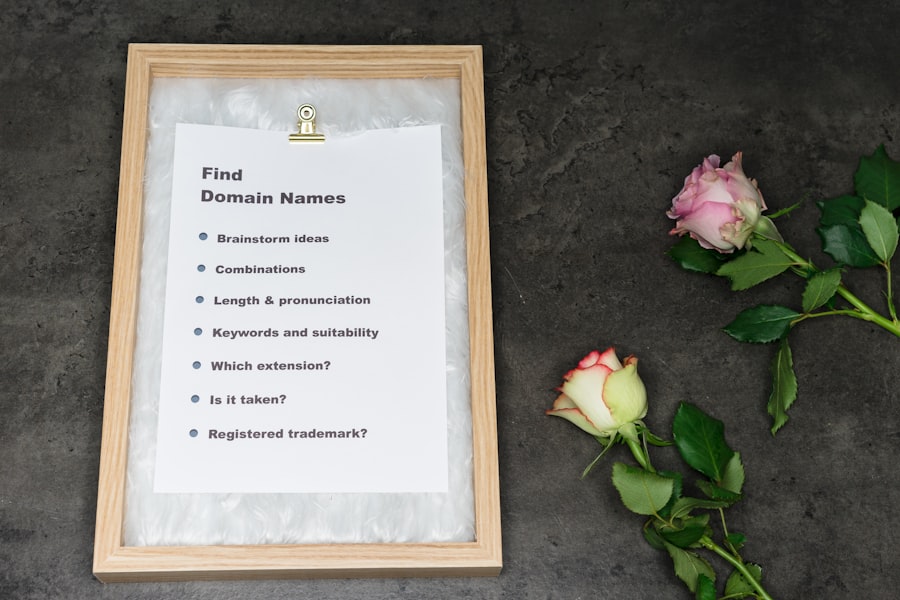
Now that you understand your audience and have a grasp of relevant keywords, it’s time to unleash your creativity. This is where you generate a multitude of ideas, knowing that many will be discarded.
Short and Sweet: The Power of Conciseness
In the digital age, brevity is often king. Shorter domain names are easier to type, easier to remember, and less prone to typos.
Aim for Fewer Characters
Ideally, your domain name should be under 15 characters. The shorter, the better. Think about successful brands like “Google,” “Apple,” “Amazon” – all concise and impactful.
Avoid Hyphens and Numbers
Hyphens and numbers complicate your domain name. They make it harder to communicate verbally (“Is that a hyphen or a dash? Is that the number two or ‘to’?”) and increase the likelihood of errors. Stick to letters whenever possible.
Focus on Simple Spelling and Pronunciation
If your customers have to wonder how to spell your domain name, you’ve already lost. Choose words that are commonly understood and pronounced. Avoid jargon, unusual spellings, or words that are easily mispronounced.
Brandability and Uniqueness: Standing Out from the Crowd
Your domain name should be more than just descriptive; it should be distinctive. It needs to reflect your brand’s personality and help you stand apart from competitors.
Invented Words and Creative Combinations
Sometimes, the most memorable domain names are invented words (think “Spotify” or “Kodak”) or creative combinations of existing words. This allows for ultimate uniqueness and helps you establish a completely new brand identity. Just ensure they are easy to pronounce and remember.
Reflecting Your Brand’s Personality
Is your brand playful and whimsical? Serious and professional? Innovative and cutting-edge? Your domain name should echo these characteristics. “PawsitivelyPurrfect.com” conveys a different vibe than “ElitePetCare.com.”
Checking for Availability Across Platforms
Once you have a strong contender, check its availability not just as a domain name, but also as a social media handle and business name. Consistency across platforms strengthens your brand and makes it easier for customers to find you wherever they are.
Leveraging Different Domain Extensions (TLDs)
While .com remains the gold standard, other domain extensions (Top-Level Domains or TLDs) are becoming increasingly popular and can be a strategic choice for your business.
The Enduring Appeal of .com
You know it, your customers know it, and it’s generally the first extension people try when searching for a website. If you can secure a great .com domain, it’s often the best choice for broad appeal and immediate credibility.
Exploring Niche and Geographic TLDs
For specific industries or locations, niche TLDs can be incredibly effective. If you run a tech startup, .tech could be a perfect fit. A restaurant in New York might benefit from a .nyc domain. These extensions can immediately convey your focus and attract the right audience.
New and Creative TLDs (.store, .online, .app, etc.)
A plethora of new TLDs has emerged, offering exciting opportunities for branding. A retail business might choose .store, a software company might opt for .app, and a general business could use .online. These can be more affordable and open up new possibilities if your ideal .com is taken. Just ensure your target audience is familiar enough with these newer extensions to recognize them as legitimate.
The Vetting Process: Ensuring Your Domain Name is a Winner

You’ve got a shortlist of promising domain names. Now it’s time to put them through their paces to ensure they’re not just good, but great.
Avoiding Common Pitfalls: What Not to Do
Just as important as knowing what to do is knowing what to avoid. Steer clear of these common mistakes that can hinder your domain name’s effectiveness.
Steer Clear of Trademark Infringement
This is critical. Before you register any domain, conduct a thorough trademark search to ensure you’re not infringing on an existing business’s intellectual property. A simple Google search is a start, but consulting a legal professional for a comprehensive search is highly recommended. The legal repercussions of trademark infringement can be severe and costly.
Don’t Use Numbers or Hyphens
As mentioned earlier, these elements introduce confusion and typing errors. While you might see them in some established domains, it’s best practice to avoid them for new businesses aiming for maximum clarity and ease of use. Your customers shouldn’t have to guess if it’s “4” or “four” or if there’s a dash in the middle.
Avoid Misspellings or Slang (Unless it’s Your Brand)
Intentionally misspelling words (e.g., “Kool” instead of “Cool”) might seem clever, but it often leads to confusion and makes your domain harder to remember and search for. Similarly, unless slang is a core part of your brand identity and resonates directly with your target audience, avoid it. Slang can quickly become outdated and alienate broader customer segments.
Keep It Future-Proof
Try to choose a domain name that won’t become irrelevant as your business grows or pivots. If you only sell “blue widgets” now, but plan to expand into “red gadgets” later, a domain like “BlueWidgetsOnly.com” will limit your future flexibility. Opt for something broader and more adaptable.
Checking Availability: The Reality Check
This is often where dreams meet reality. Many of your best ideas will likely already be taken. Be prepared for this and have a list of alternatives.
Domain Registrars and Availability Tools
Use reliable domain registrars like GoDaddy, Namecheap, Google Domains, or Hover to check the availability of your desired names. Many of these tools also suggest variations or alternative TLDs if your first choice is unavailable.
Social Media Handles and Business Names
Once you find an available domain, immediately check for its availability as a social media handle on platforms relevant to your business (Facebook, Instagram, Twitter, LinkedIn, etc.). Also, ensure the name isn’t already taken as a business name in your jurisdiction. Consistency across all these touchpoints is crucial for building a strong brand.
What to Do if Your Perfect .com is Taken
Don’t despair! If your ideal .com is unavailable, you have several options:
- Explore alternative TLDs: As discussed, a niche or new TLD might be a great fit.
- Add a descriptive word: “Get[YourBrandName].com” or “[YourBrandName]App.com.”
- Use a prefix or suffix: “[TheYourBrandName].com” or “[YourBrandName]Hub.com.”
- Consider minor variations: If “BestCoffee.com” is taken, “OurBestCoffee.com” or “TheBestCoffeeShop.com” might work.
- Negotiate to buy it: If the domain is parked or in use by a non-competing entity, you might be able to negotiate a purchase. Be prepared to pay a premium.
Getting Feedback: An Unbiased Perspective
You’ve spent hours brainstorming, researching, and narrowing down your choices. At this point, you’re likely too close to the process to be objective. This is where external feedback becomes invaluable.
Ask Your Target Audience
Present your top 3-5 domain name options to a small group of your ideal customers. Ask them:
- Which one is easiest to remember?
- Which one is easiest to pronounce and spell?
- Which one best describes what my business does?
- Does any of them have a negative connotation?
- Which one are you most likely to type into a browser?
Consult Friends and Colleagues
While they might not be your direct target audience, friends and colleagues can offer fresh perspectives. They can spot issues you might have overlooked, such as awkward pronunciations or hidden meanings. Just ensure they understand your target audience and brand identity so their feedback is relevant.
Listen Actively and Be Open to Change
The purpose of feedback is to refine your choice, not to validate your existing preferences. Be open to criticism and willing to adjust your course if strong feedback suggests a particular name isn’t resonating. The goal is to choose the best domain name for your customers, not just for yourself.
When selecting a domain name that customers can easily remember, it’s also essential to consider the hosting options available to ensure your website runs smoothly. A related article that provides valuable insights into this topic is WordPress Hosting Types and Features of a Quality WordPress Host, which discusses the various hosting types and their features that can complement your chosen domain name. By understanding both aspects, you can create a strong online presence that attracts and retains customers effectively.
Finalizing Your Decision and Beyond
| Factors to Consider | Importance |
|---|---|
| Relevance to Business | High |
| Length | Shorter is better |
| Memorability | High |
| Spelling and Pronunciation | Easy to spell and pronounce |
| Avoiding Numbers and Hyphens | Recommended |
| Trademark Considerations | Important |
You’ve done the hard work, gathered feedback, and now you’re ready to make the final choice. This isn’t the end of your domain name journey, but the beginning.
Registering Your Domain Name
Once you’ve made your final decision, don’t delay! Domain names can be snapped up quickly.
Choose a Reputable Registrar
Select a registrar known for good customer service, transparent pricing, and robust security features. While price is a factor, don’t compromise on reliability.
Purchase for Multiple Years
Registering your domain name for several years demonstrates commitment and can sometimes offer a slight discount. It also prevents accidental expiration and gives you peace of mind.
Consider Privacy Protection
Many registrars offer domain privacy protection, which shields your personal information (name, address, email) from being publicly visible in the WHOIS database. This is often a worthwhile investment.
Integrating Your Domain Name into Your Brand
Your domain name is now official. It’s time to weave it into every aspect of your brand.
Website, Email, and Marketing Materials
Ensure your website is built on your new domain. Create professional email addresses using your domain (e.g., info@[YourDomain.com]). Update all your marketing materials – business cards, social media profiles, brochures, email signatures, and advertising – with your new, memorable domain name.
Consistent Branding Across All Channels
Strive for consistency. Your domain name should be a natural extension of your brand’s voice, visuals, and overall message. This holistic approach will reinforce your memorability and strengthen your customer’s connection with your business.
Choosing a memorable domain name is one of the most critical foundational decisions you’ll make for your online business. It’s not just about finding an available string of characters; it’s about crafting a digital identity that your customers will effortlessly recall, confidently share, and readily associate with the value you provide. By understanding your audience, brainstorming creatively, and rigorously vetting your options, you’ll equip your business with a powerful asset that drives recognition, trust, and long-term success.
FAQs
What is a domain name?
A domain name is the address of a website that people type in the browser’s URL bar to visit a specific website.
Why is it important to choose a memorable domain name?
A memorable domain name can help customers easily remember and find your website, leading to increased traffic and potential sales.
What are some tips for choosing a memorable domain name?
Some tips for choosing a memorable domain name include keeping it short and easy to spell, avoiding numbers and hyphens, and making it relevant to your brand or business.
What are some common mistakes to avoid when choosing a domain name?
Common mistakes to avoid when choosing a domain name include using trademarked terms, choosing a name that is too similar to an existing website, and using obscure or hard-to-spell words.
How can I check if a domain name is available?
You can check the availability of a domain name by using a domain registrar’s search tool, which allows you to search for and register available domain names.









Add comment