

You stand at the precipice of a new era in IT. The hum of your servers, once a reassuring constant, now whispers secrets of future failures. Gone are the days of reactive firefighting, of waiting for a critical system to crash before you spring into action. You’re entering a world where you can anticipate, prevent, and proactively optimize your entire infrastructure, all thanks to the power of predictive analytics. This isn’t just about spotting trends; it’s about understanding the subtle language of your machines and acting before they even speak of trouble.
For decades, your approach to server management was dictated by necessity. A server goes down, you fix it. A bottleneck appears, you expand. This “break-fix” model was ingrained, a seemingly unavoidable cost of doing business. But as your infrastructure grew in complexity and criticality, the limitations of this approach became painfully clear. Downtime meant lost revenue, damaged reputation, and stressed teams. You knew there had to be a better way, and now, you’re finding it.
The Pain Points of Traditional Management
You’ve lived through these scenarios countless times.
- Unexpected Outages: One moment, all systems go. The next, a deafening silence. Your entire operation grinds to a halt, and you’re scrambling to diagnose the issue amidst a flurry of urgent calls.
- Resource Wastage: Are you over-provisioning out of fear, leading to underutilized hardware and electricity bills that balloon? Or are you under-provisioning, constantly battling performance degradation? It’s a delicate balance you’ve struggled to maintain.
- Heroic Efforts: Your team is constantly stressed, pulling all-nighters to recover from failures, rather than focusing on strategic initiatives that could propel your business forward. This isn’t sustainable, and you know it.
- Limited Visibility: You might have monitoring tools, but they often tell you what happened, not what will happen. You’re constantly playing catch-up, reacting to events rather than shaping them.
The Promise of Predictive Analytics
Imagine a world where you receive an alert not when a disk fails, but when its wear patterns indicate a high probability of failure next month. Or where you’re advised to rebalance your VM distribution before a peak traffic surge causes latency issues. This is the promise predictive analytics delivers directly to your server management strategy. You’re moving from guesswork to informed decision-making, from frantic reactions to calm, calculated prevention.
In the realm of server management, understanding the nuances of dedicated servers can significantly enhance the effectiveness of predictive analytics. For those looking to delve deeper into this topic, the article titled “Dedicated Server: What Is It and When to Use It” provides valuable insights into the advantages and applications of dedicated servers in various scenarios. You can read more about it here: Dedicated Server: What Is It and When to Use It. This knowledge complements the discussion on how predictive analytics is revolutionizing server management by optimizing resource allocation and improving performance.
The Mechanics of Prediction: How It Works
So, how does this magic happen? It’s not magic at all, but rather a sophisticated blend of data science, machine learning, and unwavering focus on your infrastructure’s health. You’re essentially teaching your systems to learn from their own past and project their future.
Data Collection: The Foundation of Foresight
Before anything else, you need data. Lots of it. And not just any data, but a comprehensive, well-structured stream of information from every corner of your server environment.
- Server Metrics: CPU utilization, memory consumption, disk I/O, network traffic, temperature sensors, power consumption – you’re gathering every possible data point that defines the operational health of your hardware.
- Application Logs: Error messages, access patterns, transaction times, resource requests – your applications are a rich source of insights into their own performance and any underlying infrastructure strain.
- Historical Performance Data: This is crucial. You need historical trends to establish baselines, identify recurring patterns, and understand what “normal” looks like for your specific environment. The longer the history, the more accurate your predictions.
- Configuration Changes: Even minor changes to your operating system, application settings, or network configurations can significantly impact performance. Tracking these changes helps correlate anomalies with their root causes.
Machine Learning Algorithms: The Predictive Engine
Once you have the data, you unleash the power of machine learning. These algorithms are the brains behind your predictive capabilities, meticulously sifting through vast datasets to identify subtle relationships and emerging patterns that would be invisible to the human eye.
- Anomaly Detection: Machine learning excels at identifying deviations from the norm. An unusual spike in CPU usage on a server typically quiescent, or a gradual increase in disk access times – these are the early warning signs it quickly flags.
- Regression Analysis: You’ll use this to predict future values based on past trends. For instance, predicting when a storage array will reach capacity based on its current growth rate, or when a server’s memory utilization will hit a critical threshold.
- Classification: Algorithms can classify system states as “healthy,” “at risk,” or “failed,” allowing you to prioritize interventions based on the severity of the predicted issue.
- Clustering: Identifying groups of servers or applications that behave similarly can help you understand systemic issues or optimize resource allocation across similar workloads.
Pattern Recognition and Anomaly Detection
This is where the rubber meets the road. Your systems are constantly learning what constitutes “normal” behavior for each server, application, and network component. When a deviation occurs – something that falls outside the established baseline or trend – it’s flagged as an anomaly. But it’s not just about isolated spikes; it’s about recognizing subtle, continuous changes that indicate an impending problem. You’re looking for the slow degradation before the sudden crash.
Key Benefits You’ll Experience
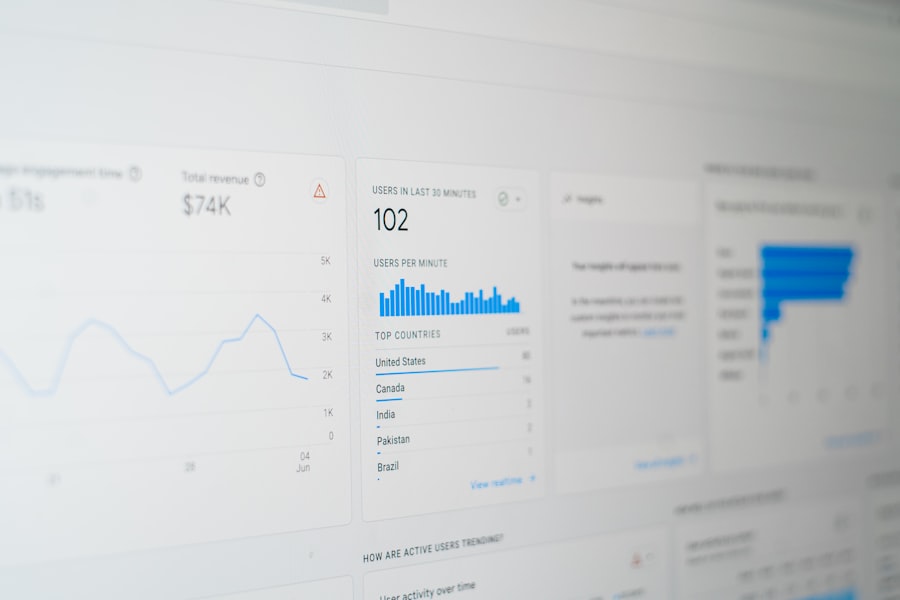
The shift to predictive analytics isn’t just about preventing outages; it’s about fundamentally transforming how you manage your entire IT infrastructure. The benefits permeate every layer of your operations, touching everything from your budget to your team’s morale.
Reduced Downtime and Improved Availability
This is arguably the most impactful benefit you’ll realize. By predicting failures before they occur, you can schedule maintenance, replace faulty components, or rebalance workloads proactively.
- Proactive Maintenance: Instead of waiting for a disk to crash, you replace it during a planned maintenance window, minimizing disruption and avoiding emergency scenarios.
- Optimized Resource Allocation: You can anticipate peak loads and automatically scale resources up or down, ensuring consistent performance without over-provisioning.
- Enhanced Service Level Agreements (SLAs): By consistently meeting and exceeding your availability targets, you build trust with your users and customers, reinforcing your reliability.
Cost Savings and Operational Efficiency
Predictive analytics doesn’t just save you from crises; it also saves you money and streamlines your operations.
- Extended Hardware Lifespan: By identifying components under undue stress or nearing end-of-life, you can optimize their usage and maximize your return on hardware investment.
- Reduced Over-provisioning: You’re no longer guessing at your capacity needs. With accurate predictions of future demand, you can procure exactly what you need, when you need it, cutting down on unnecessary hardware purchases and energy consumption.
- Automated Remediation: For certain predicted issues, you can configure automated responses, such as restarting a service, increasing memory allocation, or spinning up a new virtual machine, reducing manual intervention.
Enhanced Security Posture
While not its primary focus, predictive analytics also plays a crucial role in bolstering your security defenses.
- Early Threat Detection: Unusual network traffic patterns, anomalous login attempts, or sudden changes in system configurations that deviate from the norm can be flagged as potential security threats long before they escalate into full-blown breaches.
- Identifying Vulnerabilities: By analyzing system behavior, you can identify configurations or application interactions that create security weaknesses, allowing you to patch them proactively.
Empowered IT Teams and Strategic Focus
Imagine a world where your IT team isn’t constantly putting out fires. This is the reality predictive analytics ushers in.
- Shift from Reactive to Strategic: Your engineers can transition from being crisis managers to innovators, focusing on continuous improvement, architectural enhancements, and developing new services.
- Reduced Burnout: The constant pressure of unexpected outages takes a toll. With fewer emergencies, your team’s stress levels decrease, leading to higher morale and better retention.
- Data-Driven Decision Making: You’re no longer relying on intuition. Every decision related to scaling, maintenance, or infrastructure upgrades is backed by solid data and clear predictions.
Implementing Predictive Analytics in Your Environment
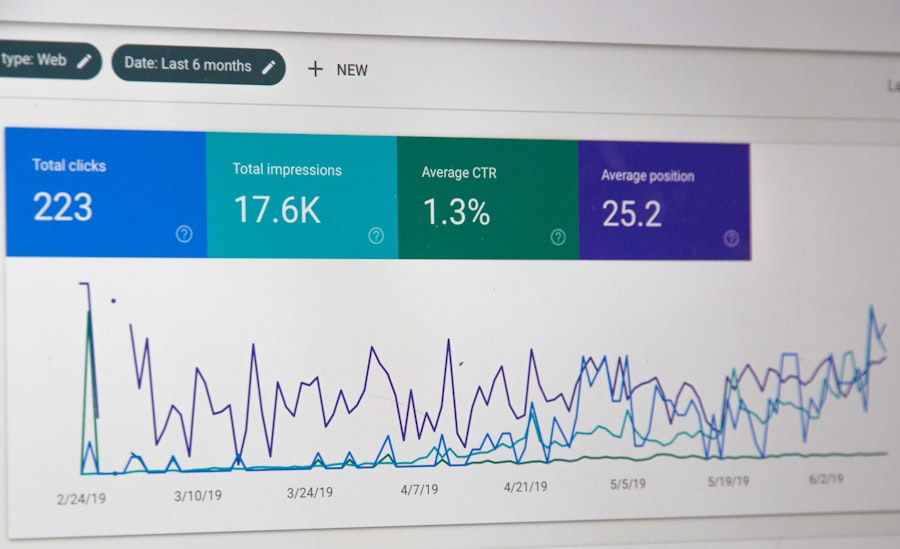
Embarking on the journey of predictive analytics requires a thoughtful, structured approach. You can’t simply flip a switch; it’s a process of integration, learning, and continuous refinement.
Choosing the Right Tools and Platforms
The market is awash with predictive analytics solutions, ranging from embedded features in existing monitoring tools to dedicated AI-powered platforms. Your choice will depend on your specific needs, budget, and existing infrastructure.
- Integrated APM/Observability Platforms: Many modern Application Performance Monitoring (APM) and observability tools now incorporate predictive capabilities, leveraging the vast amount of data they already collect.
- Dedicated Predictive Analytics Software: These specialized solutions often offer deeper analytical capabilities, more customizable models, and a broader range of predictive use cases.
- Cloud Provider Services: If you’re heavily invested in a public cloud, your provider likely offers native services for anomaly detection, machine learning, and predictive insights into your cloud resources.
Data Preparation and Integration
This is a critical, often underestimated, phase. The quality of your predictions is directly proportional to the quality of your data.
- Data Cleansing: You need to ensure your data is accurate, consistent, and free from errors or redundancies. “Garbage in, garbage out” applies here more than anywhere else.
- Data Normalization: Different sources might report metrics in different units or formats. You’ll need to standardize this data for effective comparison and analysis.
- Establishing Baselines: For each metric, you must define what “normal” looks like. This involves analyzing historical data to understand typical operating ranges, seasonal variations, and expected trends.
Defining Use Cases and KPIs
Don’t try to predict everything at once. Start with your most critical systems and the issues that cause you the most pain.
- Identify High-Impact Failures: Which outages cost you the most? Which components are most prone to failure? Prioritize these for your initial predictive models.
- Establish Key Performance Indicators (KPIs): How will you measure the success of your predictive analytics efforts? Reduced downtime, improved MTTR (Mean Time To Resolution), cost savings, or changes in resource utilization are common metrics.
- Iterative Approach: Begin with a small, manageable project, demonstrate its value, and then expand to more complex use cases. This allows you to learn and refine your approach.
Training and Fine-tuning Your Models
Machine learning models aren’t “set it and forget it.” They require continuous training and refinement to remain accurate and relevant.
- Historical Data Ingestion: Feed your models with years of historical data to help them learn patterns and relationships.
- Feedback Loops: When a prediction is made, track whether it was accurate. Use both successes and failures to retrain and improve your models over time.
- Responding to Environmental Changes: Your infrastructure is dynamic. New applications, hardware upgrades, changes in user behavior – all these require your models to adapt and learn new patterns. Regularly review and update your models to maintain their effectiveness.
As businesses increasingly rely on data-driven decisions, the role of predictive analytics in server management has become crucial for optimizing performance and resource allocation. For those interested in understanding how dedicated hosting can further enhance these analytics capabilities, a related article explores the benefits of dedicated servers in depth. You can read more about it in this insightful piece on why dedicated hosting is the perfect solution for your website. This connection highlights the synergy between advanced analytics and robust hosting solutions, paving the way for more efficient server management strategies.
The Road Ahead: Challenges and Future Outlook
| Metrics | Impact |
|---|---|
| Improved Performance | Server management can be optimized based on predictive analytics, leading to improved performance and efficiency. |
| Proactive Issue Resolution | Predictive analytics can identify potential issues before they occur, allowing for proactive resolution and minimizing downtime. |
| Resource Allocation | Analytics can help in better allocation of resources, ensuring that servers are utilized optimally without overloading or underutilization. |
| Cost Savings | By predicting maintenance needs and optimizing resource usage, predictive analytics can lead to cost savings in server management. |
| Security Enhancement | Predictive analytics can identify potential security threats and vulnerabilities, allowing for proactive security measures to be implemented. |
The journey into predictive analytics isn’t without its speed bumps. You’ll encounter challenges, but the rewards far outweigh them.
Data Volume and Complexity
As your infrastructure grows, so does the sheer volume and complexity of the data you’re collecting. Storing, processing, and analyzing petabytes of data can be a significant undertaking, requiring robust data management strategies and scalable analytics platforms. You’ll need to invest in infrastructure that can handle this deluge.
False Positives and Alert Fatigue
In the early stages, your models might generate a higher number of false positives – alerts for issues that aren’t actually critical. This can lead to alert fatigue, where your team starts to ignore warnings. You must actively work to refine your models, adjust thresholds, and implement smarter correlation techniques to reduce noise and ensure that only actionable insights are presented.
Integration with Existing Systems
Integrating a new predictive analytics solution with your existing monitoring tools, IT Service Management (ITSM) platforms, and automation frameworks can be complex. You’ll need to ensure seamless data flow and trigger appropriate actions based on predictive insights. This often requires custom connectors or API integrations.
The Human Element: Trust and Adoption
Getting your team to trust and effectively utilize predictive insights is crucial. There might be initial skepticism about relying on “machines” to tell them what’s going to happen. You need to provide thorough training, demonstrate the value, and involve your team in the process of defining and refining the predictive models. Their expertise is invaluable in validating and interpreting the insights.
The Future is Autonomous
Looking ahead, you’re not just predicting; you’re automating. The ultimate goal is self-healing infrastructure. Predictive analytics will feed directly into intelligent automation systems that can not only alert you to a problem but also take corrective action without human intervention. Imagine a system that detects an impending disk failure, automatically provisions a new one, migrates data, and brings the replacement online, all before you even realize there was an issue. This future is no longer a distant dream, but an achievable reality for which you are now laying the groundwork.
You are no longer a mere custodian of servers; you are becoming a data-driven architect of digital resilience. By embracing predictive analytics, you are transforming your IT operations from a reactive cost center into a proactive, strategic enabler, building an infrastructure that is not just robust, but intelligent, adaptive, and prepared for whatever the future holds. This is the evolution of server management, and you are at its forefront.
FAQs
What is predictive analytics in server management?
Predictive analytics in server management involves using historical data, statistical algorithms, and machine learning techniques to identify patterns and predict future server performance and potential issues.
How does predictive analytics benefit server management?
Predictive analytics helps server management by allowing IT teams to proactively identify and address potential server issues before they occur, leading to improved uptime, better resource allocation, and cost savings.
What types of data are used in predictive analytics for server management?
Data used in predictive analytics for server management includes server performance metrics, system logs, network traffic data, and other relevant operational data that can be used to train predictive models.
What are some common predictive analytics techniques used in server management?
Common predictive analytics techniques used in server management include regression analysis, time series forecasting, anomaly detection, and machine learning algorithms such as decision trees and neural networks.
How is predictive analytics changing server management practices?
Predictive analytics is changing server management practices by shifting the focus from reactive to proactive maintenance, enabling better capacity planning, and improving overall server performance and reliability.









Add comment