

You’re sitting in your data center, the hum of servers a familiar symphony. But lately, that symphony feels a little… sluggish. Applications are taking longer to respond, data transfers are taking an eternity, and your users are starting to notice. You’ve optimized your servers, upgraded your storage, and meticulously managed your cooling systems. Yet, you’re hitting a bottleneck. The culprit, you suspect, is your network. Specifically, your ability to move data quickly and efficiently between your critical infrastructure. It’s time to talk about how high-speed fiber optic networks can revolutionize your data center’s performance, transforming that sluggish symphony into a blazing-fast, powerhouse performance. This isn’t just about incremental gains; it’s about unlocking a new level of operational agility and competitive advantage.
You can have the most powerful processors and the most expansive storage, but if your data can’t get where it needs to go at the speed of thought, those investments are fundamentally capped. For too long, network infrastructure has been treated as a secondary concern, an afterthought to the “sexier” hardware. But in today’s data-driven world, your network is the circulatory system of your entire operation. It dictates how quickly you can analyze information, how responsive your applications are, and ultimately, how well you can serve your customers or internal stakeholders.
The Ever-Increasing Data Deluge
Your data center isn’t just managing data; it’s swimming in it. The explosion of data generated by IoT devices, AI workloads, video streaming, and the increasingly sophisticated nature of business applications means your data inflows and outflows are growing exponentially. You’re not just processing transactions; you’re processing vast datasets for analytics, machine learning model training, and real-time insights. If your network can’t keep pace with this deluge, you’ll find yourself drowning in latency and lost opportunities. Think about it: every extra second a complex query takes to execute, or a large dataset takes to transfer, translates to lost productivity, frustrated users, and potentially missed business critical moments.
The Rise of Latency-Sensitive Applications
Modern applications are no longer designed with patience. High-frequency trading platforms, real-time analytics dashboards, virtualized desktops, and collaborative online environments all demand near-instantaneous response times. Even milliseconds of delay can have a significant impact on user experience and the effectiveness of these applications. If your network is the bottleneck, you’re essentially putting a governor on the performance of these high-value systems. You’ve invested in cutting-edge software, but your network is holding it back from reaching its full potential.
The Shifting Landscape of IT Architectures
Your data center architecture isn’t static. You’re likely embracing trends like cloud bursting, hybrid cloud strategies, edge computing, and the increasing adoption of containerization and microservices. These architectures inherently involve more frequent and intense data movement between different environments and services. Whether it’s shuttling data between your on-premises data center and a public cloud provider, connecting distributed edge nodes, or facilitating communication between numerous microservices, high-speed, low-latency connectivity is paramount. A sluggish network can turn these agile architectures into sluggish behemoths.
In addition to exploring how high-speed fiber networks enhance data center performance, it’s essential to consider the security aspects that accompany these advancements. A related article discusses the top five security features your web host should offer in 2023, which can further protect the data transmitted over these high-speed connections. For more insights on securing your web hosting environment, you can read the article here: Top 5 Security Features Your Web Host Should Offer in 2023.
The Fiber Optic Advantage: A Quantum Leap in Speed
When you talk about high-speed networking, fiber optics aren’t just an upgrade; they represent a fundamental paradigm shift from traditional copper cabling. The physics of transmitting data through light pulses over thin strands of glass or plastic is inherently faster and more efficient than sending electrical signals over wires. This isn’t about marginal improvements; it’s about opening up entire new possibilities for network performance.
Unmatched Bandwidth: The Highway for Data
The most immediate and significant advantage of fiber optics is its vastly superior bandwidth capacity. Unlike copper, which is limited by electrical resistance and interference, fiber can transmit enormous amounts of data simultaneously. Think of it like this: if your copper network is a narrow country road, your fiber optic network is a multi-lane superhighway capable of handling an unprecedented volume of traffic. This means you can move massive datasets for analytics, run multiple high-definition video streams without degradation, and support an ever-increasing number of connected devices without approaching network saturation. This sheer capacity is crucial for your data center’s ability to scale and adapt to future demands.
Minimal Latency: The Near-Instantaneous Connection
Latency, the delay between sending and receiving data, is the enemy of responsiveness. Fiber optics excel at minimizing latency due to the speed of light and the inherent integrity of the signal. Electrical signals in copper can degrade over distance and are more susceptible to interference, which adds to latency. Light pulses in fiber, on the other hand, travel with minimal loss and interference, resulting in significantly lower end-to-end latency. For your data center, this translates to faster application response times, smoother video conferencing, and a more seamless experience for your users, regardless of where they are geographically located relative to your data center.
Immunity to Electromagnetic Interference (EMI)
Your data center is a symphony of electronic equipment, each emitting electromagnetic fields. This can cause significant interference for copper cabling, leading to data corruption and slower transmission speeds. Fiber optics, being made of glass or plastic and transmitting light, are completely immune to EMI. This inherent resilience means you can deploy fiber optic cabling in physically dense environments, close to other electrical equipment, without worrying about signal degradation. This simplifies your cable management and ensures consistent, reliable performance even in the most challenging data center layouts.
Scalability for the Future: Future-Proofing Your Network
Investing in fiber optics is an investment in the future. The infrastructure you deploy today will be capable of handling the ever-increasing bandwidth demands of tomorrow. Unlike copper, which often requires complete replacement to achieve significant speed upgrades, fiber optic cables can often be upgraded by simply changing the transceivers at either end. This means your initial investment in fiber optic cabling provides a flexible and scalable foundation that can adapt to evolving technological requirements without requiring a costly overhaul of your entire network infrastructure. You’re setting yourself up not just for today’s needs, but for the data challenges of the next decade and beyond.
Implementing High-Speed Fiber: A Strategic Approach
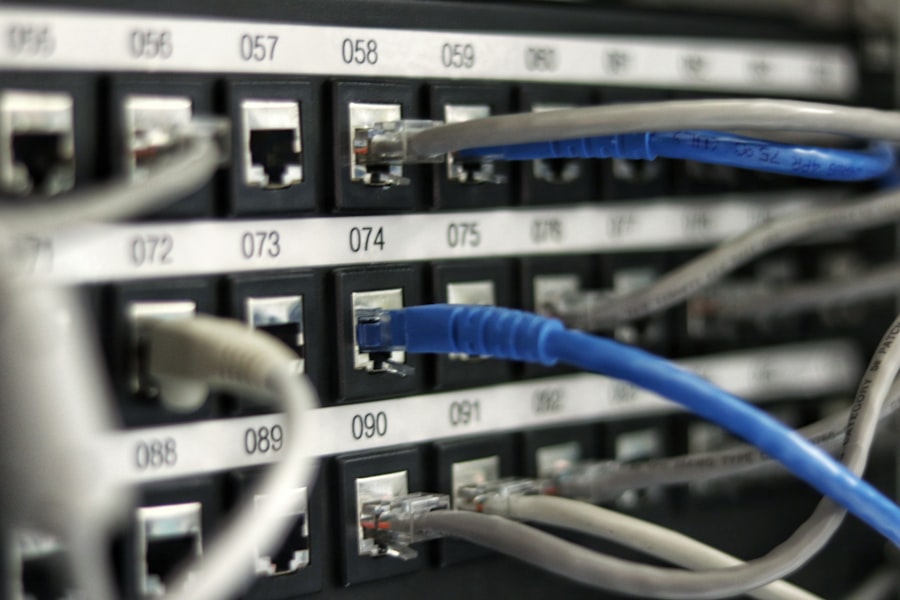
Switching to or upgrading your data center’s fiber optic network isn’t a DIY project. It requires careful planning, expert execution, and a strategic understanding of your specific needs. You don’t want to just buy cable; you want to architect a solution that aligns with your business objectives and technical requirements.
Assessing Your Current Network Infrastructure
Before you start ripping out old cables, you need a comprehensive understanding of your current network. This involves auditing your existing cabling plant, identifying bottlenecks, and understanding the capacity of your current switches and routers. You’ll want to map out your data flows, understand application dependencies, and conduct thorough performance testing to establish a baseline. This assessment will inform your upgrade strategy and ensure you invest in the right types of fiber and equipment.
- Cable Audit: Document all existing cabling types, lengths, and conditions. Identify areas where copper is insufficient for current or projected needs.
- Equipment Assessment: Evaluate the capabilities of your current network switches, routers, and network interface cards (NICs). Determine if they support higher fiber optic speeds and protocols.
- Traffic Analysis: Monitor network traffic patterns to identify peak usage times, bandwidth-intensive applications, and areas of congestion.
- Application Dependency Mapping: Understand how different applications rely on network performance and identify critical systems that would benefit most from a fiber upgrade.
Choosing the Right Fiber Optic Technology
The world of fiber optics isn’t monolithic. You have different types of fiber and different transmission standards, each with its own strengths and applications. Making the right choice here is crucial for optimal performance and cost-effectiveness.
Single-Mode vs. Multi-Mode Fiber
- Single-Mode Fiber (SMF): Designed for very long distances (kilometers), it has a smaller core and is ideal for high-bandwidth, long-haul connections within and between data centers, as well as for connecting to the wider internet infrastructure. For very demanding, long-reach applications, SMF is your go-to.
- Multi-Mode Fiber (MMF): Designed for shorter distances (hundreds of meters), it has a larger core and is more cost-effective for within-data-center connections, such as connecting racks, servers, and top-of-rack switches. It’s typically sufficient for most intra-data center needs.
Speed Standards and Transceivers
You’ll encounter various Ethernet standards for fiber optic connectivity, each offering different speeds:
- 10 Gigabit Ethernet (10GbE): A significant upgrade from older copper standards, offering ample bandwidth for many applications.
- 40 Gigabit Ethernet (40GbE) and 100 Gigabit Ethernet (100GbE): These are becoming increasingly standard for high-performance data centers, providing massive bandwidth for demanding workloads and large-scale data transfers.
- 200GbE and 400GbE: As data demands continue to skyrocket, these ultra-high-speed standards are becoming more prevalent, enabling unprecedented levels of data throughput. You’ll need to select the appropriate transceivers (e.g., SFP+, QSFP+, QSFP28, QSFP-DD) that are compatible with your chosen fiber type and speed standard.
Planning Your Deployment and Cabling Architecture
A well-designed cabling architecture is the backbone of a high-performing fiber network. This involves more than just running cables; it’s about creating an organized, scalable, and maintainable infrastructure.
Structured Cabling Design
- Cable Pathways: Plan for efficient and accessible cable pathways that minimize bending and stress on the fiber. This includes conduits, trays, and ladders.
- Fiber Termination Points: Strategically place patch panels and distribution frames to facilitate easy connections, testing, and management.
- Cable Management: Implement robust cable management practices to prevent tangles, ensure airflow, and facilitate future changes.
Network Topology Considerations
- Spine-Leaf Architecture: This modern network design is highly scalable and offers low latency. Fiber optics are essential for connecting the high-speed links between the spine and leaf switches.
- Rack-Level Connectivity: Ensure your fiber deployment supports high-density connectivity within racks, connecting servers to top-of-rack switches efficiently.
- Inter-Data Center Connectivity: If you have multiple data center locations, high-speed fiber is crucial for low-latency, high-bandwidth links between them.
The Impact on Data Center Operations and Performance
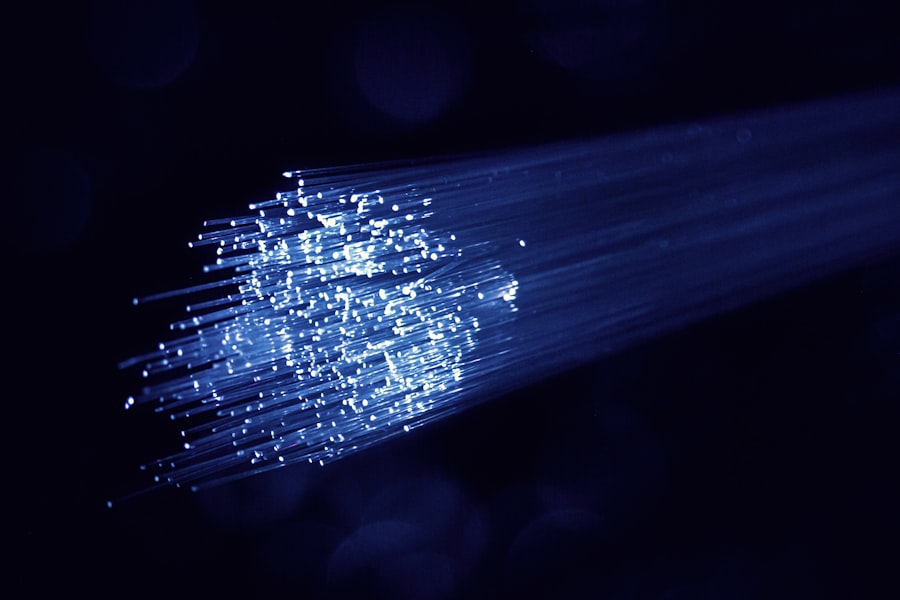
The benefits of a high-speed fiber network extend far beyond simply faster downloads. They permeate every aspect of your data center’s operation, leading to tangible improvements in efficiency, responsiveness, and overall business value.
Accelerated Application Performance
When your applications can access data and communicate with each other at lightning speeds, their performance dramatically improves. You’ll see faster load times, quicker transaction processing, and a more fluid user experience. This isn’t just a cosmetic improvement; it directly translates to increased productivity for your users and a better experience for your customers.
- Reduced Load Times: Applications that previously took seconds to load will now open almost instantaneously, especially those that rely on accessing large datasets.
- Faster Transaction Processing: Whether it’s financial transactions, database queries, or order fulfillment, high-speed fiber significantly reduces the time it takes to complete these critical operations.
- Real-time Data Access: Applications that require immediate access to up-to-the-minute information, such as analytics dashboards or trading platforms, will perform optimally.
Enhanced Virtualization and Cloud Integration
Your virtualization infrastructure and cloud connectivity are directly tied to network performance. High-speed fiber is instrumental in enabling efficient live migrations, rapid VM provisioning, and seamless data replication between your on-premises environment and the cloud.
- Seamless Live Migrations: Moving virtual machines between hosts or to different physical locations becomes nearly instantaneous with high-bandwidth fiber, minimizing downtime and disruption.
- Efficient Data Replication and Backup: Replicating large datasets to cloud storage or backup sites is dramatically faster, improving your disaster recovery posture and reducing RTO (Recovery Time Objective).
- Improved Hybrid Cloud Performance: When your data center is connected to the cloud via high-speed fiber, the experience is much closer to having all resources in a single location, reducing application latency and improving overall hybrid cloud agility.
Empowering Advanced Technologies
Emerging technologies like AI, machine learning, and big data analytics are inherently data-intensive. They require rapidly moving and processing massive datasets. High-speed fiber is not just an enabler; it’s a prerequisite for maximizing the potential of these powerful tools.
- Faster AI Model Training: Training complex AI and machine learning models often involves processing terabytes or even petabytes of data. High-speed fiber dramatically accelerates this process, allowing you to iterate and refine models much quicker.
- Accelerated Big Data Analytics: Running complex analytical queries on massive datasets will take significantly less time, enabling faster insights and data-driven decision-making.
- High-Performance Computing (HPC) Clusters: For HPC environments, where every millisecond counts for complex simulations and calculations, high-speed, low-latency fiber interconnects are absolutely essential for linking compute nodes efficiently.
High-speed fiber networks play a crucial role in enhancing data center performance by providing faster data transfer rates and improved reliability. For those interested in understanding how technology can streamline business operations, a related article discusses essential tools for solo entrepreneurs, highlighting the importance of a robust tech stack. You can read more about it in this informative piece on essential business tools that can help optimize efficiency and productivity.
Overcoming Challenges and Ensuring Long-Term Success
| Metrics | Improvement |
|---|---|
| Latency | Reduced latency for faster data transfer |
| Bandwidth | Increased bandwidth for higher data throughput |
| Reliability | Enhanced reliability for consistent data access |
| Scalability | Improved scalability for growing data demands |
| Security | Enhanced security for data protection |
While the benefits of high-speed fiber are clear, the transition and ongoing management require careful consideration to avoid pitfalls and ensure sustained performance. You’re not just installing hardware; you’re transforming your data center’s networking capabilities.
Installation and Termination Expertise
Fiber optic cabling requires specialized tools, techniques, and expertise for proper installation and termination. Poorly terminated fibers can lead to significant signal loss and performance degradation, negating the benefits of the upgrade.
- Certified Technicians: Ensure your installation team comprises certified and experienced fiber optic technicians.
- Proper Tools: Invest in or ensure your contractors use high-quality fiber optic splicing and termination equipment.
- Cleanliness: Fiber optic connectors are extremely sensitive to dust and debris. Strict cleanliness protocols during installation and maintenance are critical.
Ongoing Maintenance and Monitoring
A high-speed fiber network is not a “set it and forget it” solution. Regular monitoring and proactive maintenance are essential to ensure its continued optimal performance.
- Regular Testing: Periodically test fiber optic links for signal strength loss and continuity.
- Visual Inspection: Inspect connectors and cables for any signs of physical damage.
- Environmental Monitoring: While fiber is immune to EMI, be mindful of physical factors like temperature, humidity, and potential rodent damage to cable jacketing.
- Performance Monitoring Tools: Utilize network monitoring software that can track fiber optic link performance, identify anomalies, and alert you to potential issues before they impact operations.
Cost Considerations and ROI
While the initial investment in fiber optics can be higher than for traditional copper, the long-term return on investment (ROI) is often substantial when you consider the performance gains, scalability, and reduced future upgrade costs.
- Total Cost of Ownership (TCO): Evaluate the TCO over several years, factoring in installation, maintenance, power consumption, and upgradeability.
- Performance Gains Translate to Business Value: Quantify the financial impact of faster applications, improved user productivity, and enhanced business agility that a fiber network enables.
- Future-Proofing ROI: The ability of fiber to support higher speeds without complete cable replacement offers a significant long-term cost advantage.
Security Considerations
While fiber itself is impervious to wiretapping via electromagnetic means, the physical security of your fiber installation remains crucial.
- Physical Access Control: Secure your data center and cable pathways to prevent unauthorized physical access to fiber optic cables.
- Tamper Detection: Consider implementing tamper-evident seals or monitoring systems for critical fiber runs.
Ultimately, your journey to a high-speed fiber network is about more than just upgrading cabling. It’s about strategically investing in the central nervous system of your data center, empowering your applications, enabling future technologies, and ensuring your organization remains agile and competitive in an increasingly data-centric world. The symphony of your data center is about to get a whole lot faster, clearer, and more powerful.
FAQs
What are high speed fiber networks?
High speed fiber networks are communication networks that use fiber optic cables to transmit data at extremely high speeds. These networks are capable of transmitting large amounts of data over long distances with minimal signal loss.
How do high speed fiber networks improve data center performance?
High speed fiber networks improve data center performance by providing faster and more reliable data transmission. This allows data centers to handle larger workloads, reduce latency, and improve overall efficiency.
What are the benefits of using high speed fiber networks in data centers?
Some benefits of using high speed fiber networks in data centers include increased data transfer speeds, lower latency, improved reliability, and the ability to handle larger volumes of data. These networks also offer scalability and flexibility for future growth.
What are some examples of high speed fiber network technologies used in data centers?
Some examples of high speed fiber network technologies used in data centers include Ethernet, Fibre Channel, and InfiniBand. These technologies provide high bandwidth and low latency for data center applications.
Are there any challenges associated with implementing high speed fiber networks in data centers?
While high speed fiber networks offer numerous benefits, there are some challenges associated with their implementation in data centers. These may include the cost of infrastructure upgrades, the need for specialized equipment, and the complexity of managing fiber optic connections.





Add comment