
- Embracing a Greener Grid: The Impetus for Sustainable Hosting
You stand at the precipice of a digital revolution, a paradox where infinite data meets finite resources. The relentless growth of online services, cloud computing, and artificial intelligence has pushed traditional data centers to their energy limits. Their insatiable hunger for electricity, often sourced from fossil fuels, not only contributes significantly to carbon emissions but also strains existing power grids. This isn’t just an environmental concern; it’s an economic and reputational imperative. You, as a savvy business leader or conscious consumer, understand that the future isn’t just about faster and cheaper – it’s about smarter and cleaner.
1.1. The Carbon Footprint Crisis: Why Change is Non-Negotiable
Consider this stark reality: data centers currently account for approximately 1-2% of global electricity consumption, a figure projected to climb as our digital lives intertwine ever more deeply with technology. Each click, each stream, each transaction leaves an invisible but impactful footprint. This isn’t sustainable. Governments are increasingly legislating stricter carbon reduction targets, and consumers are demanding transparency and accountability from the companies they patronize. Your customers, partners, and even your investors are looking for proof that you’re part of the solution, not contributing to the problem. The pressure isn’t just external; it’s a moral and operational necessity.
1.2. Escalating Energy Costs: A Bottom-Line Imperative
Beyond the environmental impact, the fluctuating and often rising costs of conventional energy sources pose a significant threat to your operational budget. Data centers require consistent, high-volume power, making them exceptionally vulnerable to market volatility. Investing in green energy isn’t merely an ethical choice; it’s a strategic financial decision. Locking in diversified, often more stable, renewable energy sources can mitigate these risks, providing long-term cost predictability and insulating you from the whims of the traditional energy market. You’re not just saving the planet; you’re safeguarding your profits.
1.3. Building Brand Resonance: Sustainability as a Competitive Edge
In a crowded marketplace, differentiation is key. When you align your business with sustainable practices, you resonate with a growing demographic of environmentally conscious consumers and businesses. Think about the positive press, the enhanced brand image, and the appeal to top talent who are increasingly seeking employers with strong ethical foundations. “Green hosting” isn’t a niche offering anymore; it’s becoming a standard expectation. By proactively embracing green energy, you position yourself as a forward-thinking leader, attracting clients who value corporate responsibility as much as they value performance. This is how you future-proof your reputation.
- Solar Innovations: Harnessing the Sun’s Limitless Potential
Imagine a data center that practically powers itself, bathed in the clean, silent energy of the sun. This isn’t science fiction; it’s the rapidly evolving present of solar-powered hosting. You’re no longer limited to sourcing your energy from a distant power plant; you can generate it right at your facility, creating incredible efficiencies and reducing reliance on the grid.
2.1. Photovoltaic Panels on the Roof and Beyond: Distributed Generation
The most common and visually iconic manifestation of solar power in data center architecture is the integration of photovoltaic (PV) panels directly onto the facility’s roof. This isn’t just about reducing a power bill; it’s about creating an on-site, distributed energy source. You’re leveraging otherwise unused space to directly offset your energy consumption, reducing transmission losses and boosting energy independence. Furthermore, consider ground-mounted solar farms adjacent to your data center, designed explicitly to feed directly into your operations. This approach turns vast tracts of land into productive power generators, a smart move for large-scale operations.
2.2. Concentrated Solar Power (CSP): A High-Temperature Future
While PV panels directly convert sunlight into electricity, Concentrated Solar Power (CSP) takes a different approach. You use mirrors to focus sunlight onto a receiver, generating intense heat. This heat can then drive a steam turbine to produce electricity, much like a traditional power plant, but without the emissions. The key advantage of CSP, which you should consider, is its potential for thermal energy storage. This means you can store the heat and generate electricity even when the sun isn’t shining, providing a more consistent and reliable power supply – a critical factor for any data center aiming for 24/7 uptime.
2.3. Perovskite and Organic Photovoltaics: The Next Generation
The solar industry isn’t static. You should be aware of emerging technologies like perovskite solar cells and organic photovoltaics. Perovskites offer the promise of higher efficiencies at lower costs, as well as greater flexibility and transparency, potentially allowing for integration into windows or other building materials. Organic PV, though currently less efficient, provides benefits of lightweightness and adaptability, opening doors for innovative data center designs that blend seamlessly with their environment. Keeping an eye on these advancements ensures you’re ready for the next leap in solar efficiency.
- Wind Power: Tapping into Nature’s Unseen Force
Beyond the gentle hum of solar panels, imagine harnessing the invisible power of the wind to drive your servers. Wind energy, with its proven track record and decreasing costs, is a cornerstone of the green hosting revolution. You’re not just relying on a single energy source; you’re diversifying your portfolio with consistent, clean power.
3.1. On-Site Wind Turbines: Direct Power Generation
You might envision towering turbines dominating skylines, but on-site wind power for data centers isn’t always about colossal structures. While larger facilities in windy regions might indeed opt for multi-megawatt turbines to directly feed their operations, smaller, more localized vertical-axis wind turbines (VAWTs) can be integrated into a facility’s design. These can be particularly effective in urban or suburban environments where space is limited, providing a supplemental power source that reduces reliance on the grid. This direct generation model gives you greater control and reduces transmission losses.
3.2. Power Purchase Agreements (PPAs) for Off-Site Wind Farms: Scalable Solutions
For many data center operators, the most pragmatic approach to integrating wind power is through Power Purchase Agreements (PPAs) with large, off-site wind farms. You enter into a long-term contract to buy electricity directly from a specific wind project, guaranteeing its renewable origin. This allows you to claim the environmental benefits and often secure more stable, predictable energy costs without the capital expenditure and logistical complexities of building and maintaining your own wind infrastructure. This model enables you to scale your green energy commitment rapidly and efficiently.
3.3. Offshore Wind: The Untapped Giant
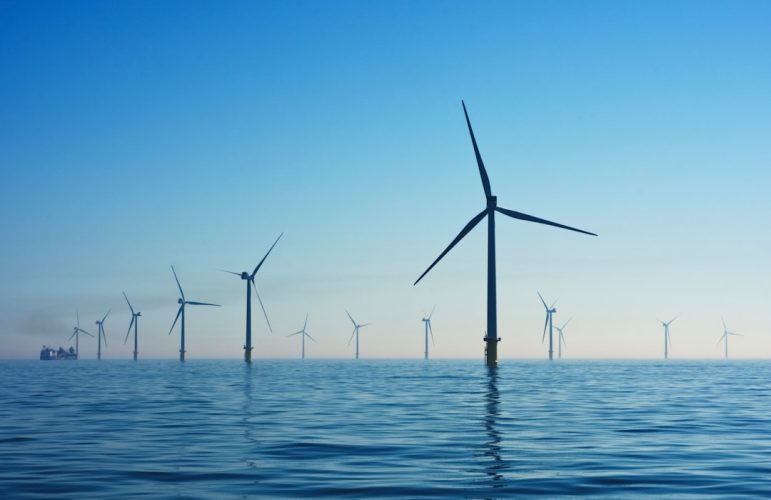
You should also be aware of the immense potential of offshore wind. Although more complex and costly to implement, offshore wind farms consistently deliver higher capacity factors (meaning they generate power for a greater percentage of time) due to stronger and more consistent winds over open water. As technology advances and costs decrease, offshore wind will become an increasingly attractive option for data centers located near coastal regions, offering a powerful, reliable, and scalable renewable energy source that can fuel even the largest of facilities.
- Beyond Sun and Wind: Hydro, Geothermal, and Emerging Solutions
While solar and wind dominate the conversation, the landscape of green energy for data centers is far richer and more diverse. You have a spectrum of options, each tailored to different geographical and operational contexts, allowing for a truly resilient and diversified green energy strategy.
4.1. Hydroelectric Power: The Reliable Workhorse
When you think of hydroelectric power, think stability and predictability. Unlike solar or wind, which are intermittent, hydro power (from dams or run-of-river systems) offers a consistent, on-demand energy supply. For data centers located near established hydroelectric infrastructure, or those with the opportunity to develop smaller-scale hydro projects, this represents a highly reliable and low-carbon energy source. You’re tapping into the water cycle itself, a constant wellspring of clean power, reducing any reliance on fossil fuels for your base load. It’s a proven and sturdy foundation for your green energy ambitions.
4.2. Geothermal Energy: Tapping into Earth’s Inner Heat
Imagine a data center drawing power directly from the molten core of the Earth. Geothermal energy harnesses the heat from within the planet, offering a continuous, baseload power supply that is immune to weather fluctuations. For data centers situated in geothermally active regions (like Iceland, parts of the US, or New Zealand), this is an incredibly attractive option. You can use this heat directly for power generation, or even for innovative cooling solutions, creating a virtuous cycle of energy efficiency. This is a 24/7, year-round energy source that provides unparalleled reliability for your critical infrastructure.
4.3. Biomass and Waste-to-Energy: Circular Economy Approaches
While often viewed with more scrutiny due to emission concerns, modern biomass and waste-to-energy facilities are evolving to be significantly cleaner. For data centers, especially those located near agricultural or municipal waste streams, these can offer localized, dispatchable power. You’re not just generating electricity; you’re also addressing waste management challenges, contributing to a more circular economy. The key is to ensure the feedstock is sustainably sourced and emissions are rigorously controlled, turning what would otherwise be waste into a valuable power asset for your operations.
4.4. Oceanic Energy (Tidal and Wave): The Frontier of Renewable Power
Looking ahead, you should keep an eye on the emerging potential of oceanic energy. Tidal power, which harnesses the predictable ebb and flow of tides, offers an extremely consistent energy source, while wave power captures the kinetic energy of ocean waves. While still in earlier stages of commercialization compared to other renewables, these technologies represent a massive, untapped resource, especially for coastal data centers. As innovations progress, ocean-based renewables could offer a powerful, future-proof solution for hosting facilities situated strategically to leverage these immense forces of nature.
- Achieving True Green Hosting: Beyond Energy Sourcing
Integrating green energy sources is a monumental step, but it’s only one piece of the sustainability puzzle. For you to truly achieve “green hosting,” you must adopt a holistic approach that permeates every facet of your data center’s design and operation. It’s about optimizing, minimizing, and innovating at every turn.
5.1. Energy Efficiency at the Core: Optimizing PUE
Before you even think about where your energy comes from, you must minimize how much you actually need. Power Usage Effectiveness (PUE) is your critical metric here, aiming for values as close to 1.0 as possible. This means meticulously optimizing every component: highly efficient servers, smart power distribution, and advanced cooling systems. You’re implementing fluid dynamics modeling to ensure optimal airflow, deploying hot and cold aisle containment, and investing in server virtualization to reduce the number of physical machines. Every watt saved is a watt that doesn’t need to be generated, irrespective of its source. This foundational efficiency is non-negotiable for true green credentials.
5.2. Advanced Cooling Technologies: The Unsung Hero
Cooling facilities often account for a significant portion of a data center’s energy consumption. You should be actively exploring and implementing innovative cooling strategies. Think beyond traditional CRAC units. Direct-to-chip liquid cooling or immersion cooling, where servers are submerged in non-conductive dielectric fluid, can be dramatically more efficient than air cooling. You’re also looking at free cooling opportunities, using outside air or water (when ambient temperatures allow) to cool your systems, significantly reducing chiller use. Consider evaporative cooling in drier climates or even strategic placement of facilities in naturally cold regions. These advanced methods drastically reduce your cooling overhead.
5.3. Circular Economy Principles: From Build to Decommission
A truly green data center considers its entire lifecycle. This means you’re thinking about the embodied energy and materials in your building infrastructure, opting for sustainable building materials where possible. During operation, you are implementing robust recycling programs for IT equipment and focusing on prolonging the life of hardware through refurbishment and reuse. When components reach end-of-life, you ensure they are responsibly decommissioned and recycled, minimizing e-waste. This commitment to a circular economy minimizes your environmental footprint beyond just ongoing energy consumption, demonstrating a comprehensive dedication to sustainability.
5.4. Smart Grid Integration and Energy Storage: The Resilient Future
Finally, you’re not just consuming energy; you’re becoming an active participant in the energy ecosystem. Smart grid integration allows your data center to communicate with the power grid, optimizing energy consumption based on grid availability and renewable energy output. Energy storage solutions, such as large-scale battery banks (Li-ion, flow batteries, or even alternative chemistries), are crucial for managing the intermittency of renewables. You can store excess solar or wind power and dispatch it when needed, providing grid stability and ensuring uninterrupted service for your clients, even when the sun isn’t shining or the wind isn’t blowing. This level of sophistication transforms your facility into a self-reliant and grid-supportive entity, solidifying your position at the forefront of green hosting.
FAQs
What is green energy?
Green energy, also known as renewable energy, is energy that is generated from natural resources such as sunlight, wind, rain, tides, waves, and geothermal heat. These sources are considered to be environmentally friendly and sustainable.
How is green energy used in hosting facilities?
Green energy is used in hosting facilities to power the servers, cooling systems, and other equipment required to run and maintain the facility. Hosting facilities can utilize green energy sources such as solar panels, wind turbines, and hydroelectric power to reduce their carbon footprint and environmental impact.
What are the benefits of using green energy in hosting facilities?
Using green energy in hosting facilities can help reduce greenhouse gas emissions, decrease reliance on fossil fuels, and contribute to a more sustainable and environmentally friendly operation. It can also lead to cost savings in the long run and improve the facility’s reputation as a responsible and eco-conscious business.
Are there any challenges associated with using green energy in hosting facilities?
While green energy offers numerous benefits, there are also challenges associated with its implementation in hosting facilities. These may include higher initial investment costs, intermittent energy production from renewable sources, and the need for efficient energy storage and distribution systems.
What are some examples of hosting facilities powered by green energy?
There are many hosting facilities around the world that have embraced green energy to power their operations. Examples include data centers powered by solar panels in California, wind-powered server farms in Scandinavia, and hydroelectric-powered hosting facilities in Canada. These examples demonstrate the diverse ways in which green energy can be harnessed to support modern hosting facilities.




Add comment