

You’ve been relying on Virtual Private Servers (VPS) for years, and for good reason. They offer a compelling blend of dedicated resources and cost-effectiveness, striking a sweet spot between shared hosting’s limitations and dedicated servers’ expense. But as the digital landscape evolves at a breathtaking pace, so too does the technology underpinning VPS. You’re not just looking at incremental improvements; you’re on the cusp of revolutionary shifts that will redefine what you expect from your hosting infrastructure.
Your current VPS management often involves manual interventions, resource allocation tweaks, and performance monitoring that demands your constant attention. Imagine a future where your VPS actively anticipates your needs, optimizes its own resources, and even predicts potential issues before they impact your operations. This isn’t science fiction; it’s the imminent reality of AI-driven management.
Proactive Resource Scaling and Allocation
You no longer have to manually adjust CPU cores or RAM when a traffic spike hits your site. AI-powered algorithms will learn your usage patterns, predict peak loads, and automatically scale your resources up or down, ensuring optimal performance without overprovisioning. This means you only pay for what you truly need, when you need it. You gain the agility of the cloud with the control of a VPS. Think about how much time and effort this frees up for you, allowing you to focus on your core business instead of managing server resources.
Predictive Maintenance and Anomaly Detection
Downtime is your enemy. Currently, you might rely on monitoring tools to alert you to problems after they occur. With AI and machine learning, your VPS will be constantly analyzed for subtle anomalies that indicate impending hardware failure, software conflicts, or security vulnerabilities. You’ll receive proactive alerts, allowing you to address issues before they escalate into service disruptions. This translates directly to increased uptime and a more stable, reliable environment for your applications. Imagine getting an alert that a specific disk drive is showing early signs of failure, giving you ample time to migrate data and replace hardware without any noticeable impact on your users.
Intelligent Security Posture Management
Staying ahead of cyber threats is a relentless battle. AI will become your crucial ally. Your VPS will leverage AI to continuously learn and adapt its security protocols, identifying and neutralizing new threats in real-time. This includes predictive threat intelligence, automated patch management recommendations, and even intelligent firewall rule adjustments based on evolving attack vectors. You’ll have a more robust and resilient security posture, reducing your risk of data breaches and service interruptions. This proactive approach will move you away from reactive security measures to a truly predictive and preventive one.
For those interested in the latest advancements in VPS hosting, a related article that delves into emerging technologies in this field can be found at this link. This article explores how innovations such as containerization, automation, and enhanced security measures are shaping the future of virtual private servers, providing insights that can help businesses make informed decisions about their hosting solutions.
The Rise of Edge Computing and Geographically Distributed VPS
Centralized data centers, while efficient, inherently introduce latency for users geographically distant from them. But what if your VPS could be closer to your users, no matter where they are in the world? Edge computing is poised to revolutionize this, bringing computation and data storage closer to the source of data generation or consumption.
Micro-VPS and Hyper-Local Deployments
Imagine deploying a “micro-VPS” in a small, localized data center, or even directly within a corporate network. This significantly reduces latency for specific user groups, enabling lightning-fast responses for applications like IoT devices, autonomous vehicles, and AR/VR experiences. These smaller, more numerous VPS instances will be orchestrated as a single, distributed system, offering you unparalleled control over data sovereignty and performance in specific regions. You’ll have the flexibility to place your compute resources precisely where they are needed most.
Content Delivery Network (CDN) Integration at the Core
While CDNs already cache static content, the future of VPS will see dynamic content generation and even entire application components distributed closer to the edge. Your VPS will seamlessly integrate with and even host elements of a global CDN, delivering a truly personalized and low-latency experience for every user, regardless of their location. This means not just content, but interactive applications and API endpoints, are served with minimal delay. Your users will experience a fluid and responsive interaction, boosting engagement and satisfaction.
Enhanced Data Sovereignty and Compliance
For businesses operating in multiple jurisdictions, data sovereignty and compliance are paramount. Edge computing allows you to deploy VPS instances in specific geographic locations, ensuring that data processing and storage adhere to local regulations. This can be crucial for industries like finance, healthcare, and government, where data residency laws are strict. You’ll have greater control over where your data resides, simplifying your compliance burden and bolstering trust with your customers.
Serverless Integration and Function-as-a-Service (FaaS) Hybrid Models
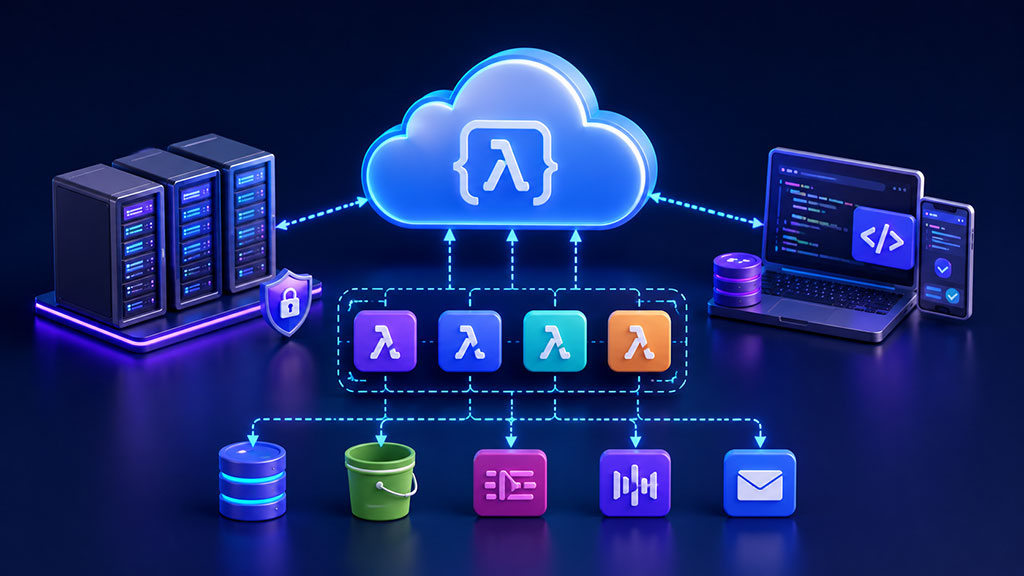
While traditional VPS offers you complete control over your server environment, serverless computing (FaaS) provides unparalleled scalability and a pay-per-execution model. The future of VPS isn’t about one replacing the other; it’s about intelligent integration, allowing you to leverage the strengths of both.
Event-Driven Architecture on Your VPS
You can augment your traditional VPS applications with serverless functions. Imagine a scenario where a user uploads a new image to your website hosted on a VPS. This upload triggers a serverless function that automatically resizes the image, creates thumbnails, and optimizes it for different devices, all without impacting your primary VPS resources. This event-driven approach allows you to offload bursty or asynchronous tasks to cost-effective serverless functions, leaving your VPS to handle the core application logic.
Hybrid Deployments for Optimal Performance and Cost
This hybrid model allows you to deploy stable, long-running services on your VPS, where you value consistent performance and control, while utilizing serverless for ephemeral or highly scalable tasks. You’ll achieve the best of both worlds: the reliability and customization of a VPS combined with the elasticity and cost-efficiency of serverless. This gives you unparalleled flexibility in architecting your applications, allowing you to choose the right tool for each specific job.
Simplified Development and Deployment Workflows
Integrations between VPS and serverless platforms will become increasingly seamless. You’ll be able to deploy serverless functions directly from your VPS environment, using familiar tools and workflows. This reduces the complexity of managing disparate hosting models and empowers your development teams to build more agile and scalable applications. The burden of infrastructure management is significantly reduced, freeing up your developers to innovate.
The Evolution of Virtualization Technologies
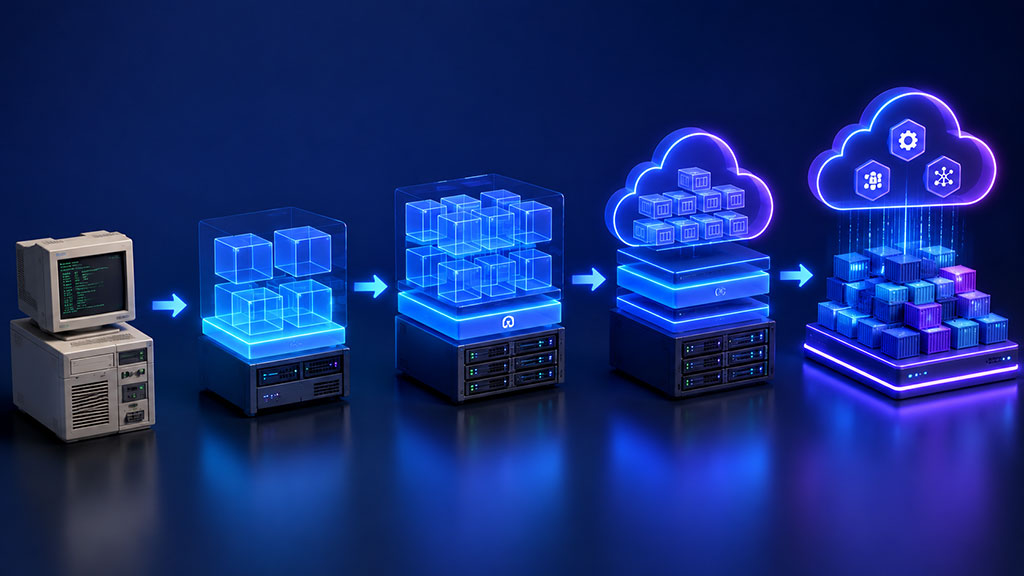
The underlying technology that powers your VPS is constantly being refined. While traditional hypervisors like KVM have served you well, new approaches are emerging that offer even greater performance, security, and resource efficiency.
Lightweight Containerized Virtualization (e.g., Kata Containers, Firecracker)
Beyond traditional hypervisors and even standard Docker containers, you’ll see a surge in lightweight containerized virtualization. Technologies like Kata Containers and Amazon’s Firecracker provide the isolation and security benefits of virtual machines with the speed and efficiency of containers. This means faster boot times for your VPS instances, reduced overhead, and even better resource utilization, allowing you to pack more power into each server. You’ll experience near-native performance for your applications, leading to a snappier user experience.
Unikernels and Specialized OS Images
Imagine an operating system tailored precisely to your application’s needs, with all unnecessary components stripped away. This is the promise of unikernels. In the future, you’ll be able to deploy your applications on highly specialized OS images optimized for specific workloads, reducing attack surface, boot times, and resource consumption. This extreme level of optimization will unlock unprecedented performance and security benefits for your VPS. This move towards minimalist operating systems significantly reduces the potential for vulnerabilities and improves the overall resilience of your VPS.
Hardware-Assisted Virtualization Enhancements
As hardware continues to evolve, so too will its support for virtualization. You can expect even more sophisticated hardware-assisted virtualization features in future CPU architectures. This will translate to improved I/O performance, better memory management, and reduced overhead for your VPS, allowing your applications to run closer to bare-metal speeds. These hardware-level improvements will provide a foundational boost to the performance and efficiency of all VPS deployments.
As businesses increasingly turn to virtual private servers (VPS) for their hosting needs, the emergence of innovative technologies is reshaping the landscape of VPS hosting. One fascinating aspect is the integration of hybrid hosting solutions, which combine the power of US infrastructure with local support, enhancing performance and reliability. For a deeper understanding of how these advancements are influencing the industry, you can read more in this insightful article about hybrid hosting. This evolution not only optimizes resource management but also provides tailored solutions for diverse business requirements.
Enhanced Security and Privacy by Design
Traditional IAM models often rely on centralized authorities, which can be single points of failure or compromise. You’ll see the adoption of decentralized identity solutions, leveraging blockchain or distributed ledger technologies, to manage access to your VPS resources. This will enhance security, improve auditability, and give you greater control over who can access your infrastructure. This shift to decentralized IAM will strengthen your overall security posture and provide a more resilient access control system.
Advanced Threat Intelligence Sharing and Collaboration
The fight against cyber threats is a collective effort. Future VPS providers will actively participate in and leverage advanced threat intelligence sharing platforms. This means your VPS will benefit from real-time insights into emerging threats, attack patterns, and vulnerabilities, allowing providers to proactively harden their infrastructure and protect your instances. You’ll be part of a larger security ecosystem, benefiting from shared knowledge and collective defense against evolving cyber threats. This collaborative approach will significantly enhance the overall security of the VPS ecosystem.
In conclusion, you’re not just looking at a few tweaks to the current VPS model. You’re witnessing a fundamental transformation driven by artificial intelligence, distributed computing, advanced virtualization, and a relentless focus on security. The future of VPS hosting promises a landscape where your infrastructure is more intelligent, agile, secure, and seamlessly integrated with emerging technologies. You’ll have more power, more control, and more peace of mind, allowing you to build and grow your digital presence with unprecedented confidence. Get ready to embrace this exciting future; your digital world is about to get a significant upgrade.
FAQs
What is VPS hosting?
VPS hosting stands for Virtual Private Server hosting. It is a type of web hosting that uses virtualization technology to create isolated virtual servers on a single physical server. Each virtual server has its own dedicated resources and operates independently, providing a more stable and secure hosting environment compared to shared hosting.
What are the emerging technologies in VPS hosting?
Emerging technologies in VPS hosting include containerization, software-defined networking (SDN), and serverless computing. These technologies are revolutionizing the way VPS hosting is provisioned, managed, and scaled, offering greater flexibility, efficiency, and performance for hosting providers and their customers.
How does containerization impact VPS hosting?
Containerization allows VPS hosting providers to encapsulate applications and their dependencies into lightweight, portable containers that can be easily deployed and managed across different VPS instances. This technology enables greater resource utilization, faster deployment times, and improved scalability for VPS hosting environments.
What is software-defined networking (SDN) in the context of VPS hosting?
SDN in VPS hosting refers to the use of software-based network management and control to dynamically allocate and optimize network resources within a VPS environment. This technology enables VPS hosting providers to offer more flexible and customizable networking solutions, improving performance, security, and scalability for their customers.
How does serverless computing impact VPS hosting?
Serverless computing, also known as Function as a Service (FaaS), allows VPS hosting customers to run application code without provisioning or managing servers. This technology enables VPS hosting providers to offer more cost-effective and scalable hosting solutions, as customers only pay for the actual compute resources used by their applications.









Add comment