
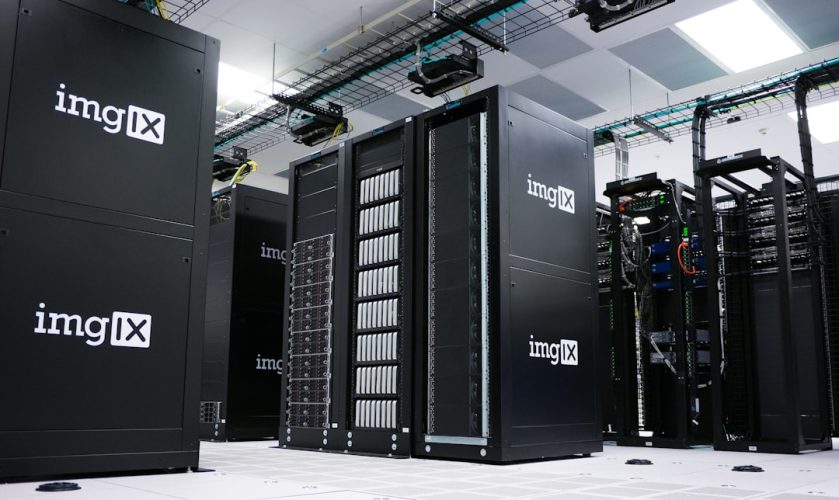
You are looking to understand the evolving landscape of dedicated server hosting, recognizing that your infrastructure choices directly impact your operational efficiency and competitive edge. The dedicated server market, traditionally a cornerstone of robust IT environments, is undergoing a transformative period, driven by innovations that push the boundaries of what these powerful machines can achieve. Your exploration of emerging technologies will reveal opportunities to enhance performance, bolster security, and optimize resource utilization.
Your journey into emerging technologies begins with the fundamental hardware and software improvements that underpin modern dedicated server offerings. These are not merely iterative upgrades; they represent significant shifts in how servers are designed, operated, and integrated into broader IT ecosystems.
Advancements in Processor Technology
You will observe a consistent drive towards greater core density and improved instructional throughput in contemporary CPUs. Processors from Intel and AMD are now incorporating specialized cores for different workloads, for example, efficiency cores for background tasks and performance cores for demanding applications. This heterogeneous architecture allows your server to intelligently allocate resources, ensuring optimal performance for critical operations without over-provisioning for less intensive processes. Furthermore, chip-level security features, such as Intel SGX (Software Guard Extensions) and AMD SEV (Secure Encrypted Virtualization), are becoming standard. These technologies allow you to create isolated enclaves within the CPU, protecting sensitive data and code from unauthorized access, even from the operating system or hypervisor. This hardware-assisted encryption and isolation offer a new layer of security for your most critical applications and data.
Evolution of Memory and Storage Solutions
The persistent pursuit of speed and capacity is evident in memory and storage advancements. DDR5 RAM, with its increased bandwidth and lower power consumption, is becoming the new standard. This improved memory performance directly translates to faster application response times and greater data throughput for your server. Beyond just speed, you should consider the advent of Compute Express Link (CXL) technology. CXL acts as a high-speed interconnect that allows your server to seamlessly attach memory and storage devices, creating a more flexible and expansive memory fabric. This means you can dynamically scale memory resources independently of CPU upgrades, leading to more efficient resource utilization.
For storage, NVMe (Non-Volatile Memory Express) SSDs have become the default for high-performance applications. However, the emerging trend involves NVMe over Fabrics (NVMe-oF), which allows you to extend the performance benefits of NVMe storage across a network. This disaggregates storage from compute, enabling you to pool storage resources and present them to your dedicated servers as if they were local, thereby improving scalability and flexibility. You can also explore Object Storage on dedicated infrastructure, which provides virtually limitless scalability for unstructured data at a lower cost per gigabyte, without compromising on direct access speeds.
Network Infrastructure Upgrades
The network backbone of your dedicated server is just as critical as its internal components. 100GbE and even 400GbE networking are becoming more prevalent, providing the necessary bandwidth for data-intensive applications and high-traffic websites. Beyond raw speed, you will encounter technologies like Data Processing Units (DPUs), also known as SmartNICs. These intelligent network interface cards offload network processing tasks from the main CPU, such as firewalling, encryption, and virtualization overlay processing. By doing this, DPUs free up valuable CPU cycles for your applications, improving overall server performance and efficiency. Your network, with these enhancements, becomes more than just a conduit; it becomes an active participant in your server’s operational capabilities.
As businesses increasingly turn to dedicated server hosting to meet their growing demands, understanding the implications of emerging technologies becomes crucial. For insights on how shared hosting plans may impact data security and what to consider for future-proofing your hosting strategy, check out this informative article on the 2025 security checklist. You can read it here: Is Your Shared Hosting Plan Protecting Your Data? The 2025 Security Checklist.
Enhancing Management and Automation in Dedicated Server Environments
Your perception of dedicated server management is likely evolving from manual configurations and reactive troubleshooting to proactive, automated orchestration. Emerging technologies are largely focused on reducing operational overhead and increasing the agility of your infrastructure.
Infra-as-Code (IaC) for Dedicated Servers
The principles of Infrastructure as Code, long established in virtualized and cloud environments, are now extending robustly to dedicated server provisioning and management. You can define your server configurations, network settings, and application deployments using declarative code, rather than manual steps. Tools like Ansible, Puppet, and Chef, familiar in other contexts, are being adapted for bare-metal automation. This allows you to apply consistent configurations across multiple dedicated servers, ensuring uniformity and reducing the potential for human error. You will find that IaC facilitates rapid deployment of new servers, simplifies scaling operations, and enables effortless configuration drift detection and remediation. This approach transforms your server setup into a repeatable and version-controlled process.
Advanced Monitoring and Observability Solutions
Simply knowing if your server is up or down is no longer sufficient. Your need extends to deep insights into performance metrics, resource utilization, and application behavior. Emerging observability platforms integrate metrics, logs, and traces from your dedicated servers, offering a comprehensive view of your infrastructure’s health. Tools like Prometheus for metrics collection, Grafana for visualization, and ELK Stack (Elasticsearch, Logstash, Kibana) for log analysis are standard. Furthermore, you can explore agent-based monitoring solutions that provide granular data on CPU temperature, power consumption, and disk I/O, allowing you to optimize hardware utilization and predict potential failures. AI-driven anomaly detection is also becoming more sophisticated, proactively alerting you to unusual patterns that might indicate impending issues, allowing for preventative action rather than reactive fixes.
Bare-Metal Orchestration Tools
While IaC handles configuration, bare-metal orchestration tools are designed to manage the lifecycle of your dedicated servers from provisioning to decommissioning. Solutions like OpenStack Ironic allow you to treat physical servers as disposable resources, provisioning them with operating systems and configured applications on demand. This brings a cloud-like agility to your dedicated infrastructure. You can automate the imaging of servers, network configuration, and even BIOS settings, significantly reducing the time it takes to deploy new hardware. This level of automation is particularly valuable for environments requiring frequent server re-provisioning or large-scale deployments.
Security Innovations for Dedicated Server Deployments
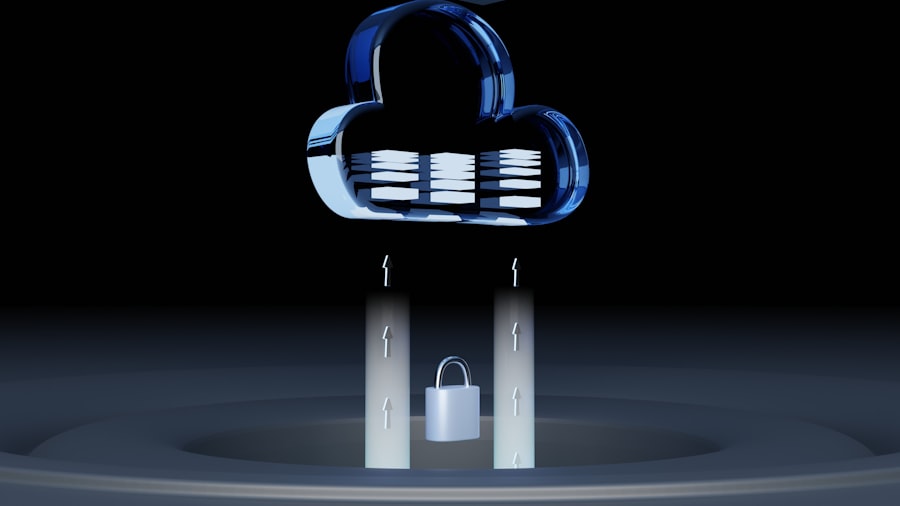
Your responsibility for security in a dedicated server environment is paramount. Emerging security technologies focus on proactive defense, layered protection, and intelligent threat detection to safeguard your critical data and applications.
Hardware-Assisted Security Features
As previously mentioned, features like Intel SGX and AMD SEV offer a fundamental layer of security at the processor level. You can use these technologies to create isolated execution environments, protecting sensitive data and code from compromised operating systems or hypervisors. Beyond the CPU, server-level security chips, such as Trusted Platform Modules (TPM), are becoming ubiquitous. TPMs provide hardware-based cryptographic capabilities and secure boot functionality, ensuring the integrity of your server’s boot process and protecting against firmware-level attacks. These hardware-centric approaches elevate the baseline security posture of your dedicated infrastructure.
Advanced Intrusion Detection and Prevention Systems (IDS/IPS)
Your traditional network firewalls are being augmented by more sophisticated IDS/IPS solutions. These systems incorporate machine learning to analyze network traffic patterns and detect anomalies that may indicate a cyberattack. They can identify zero-day exploits and polymorphic malware that signature-based systems might miss. You should consider host-based IDS solutions that monitor internal server activities, including file system changes and process execution, providing an additional layer of defense against insider threats or successful external breaches. The integration of threat intelligence feeds into these systems further enhances their ability to identify and block known malicious activities.
Zero Trust Architecture Principles
The concept of “never trust, always verify” is becoming central to securing dedicated server environments. You are moving away from perimeter-based security models where internal networks are implicitly trusted. Instead, every access request, whether from inside or outside your server, is authenticated and authorized. This involves implementing strong multi-factor authentication (MFA) for all administrative access, micro-segmentation of your network to isolate workloads, and continuous monitoring of user behavior and resource access. Your dedicated servers, even if housed within your own data center, are treated as untrusted assets that require rigorous validation for every interaction.
Integrating Dedicated Servers with Hybrid and Multi-Cloud Strategies

Your IT strategy likely involves a combination of on-premises resources, dedicated servers, and public cloud services. Emerging technologies are focused on making this hybrid approach more seamless and efficient, allowing you to leverage the strengths of each environment.
Hybrid Cloud Orchestration Platforms
You will find platforms that extend cloud-native orchestration capabilities to your dedicated servers. Kubernetes, for instance, is increasingly being deployed on bare metal, allowing you to manage containerized applications consistently across your public cloud and dedicated server infrastructure. Tools like Anthos and Azure Arc enable you to manage and govern dedicated servers as part of your broader hybrid cloud environment, applying consistent policies and security configurations. This unified management pane simplifies operations and reduces the complexity of managing disparate environments.
Edge Computing with Dedicated Server Infrastructure
The expansion of edge computing necessitates dedicated server deployments in closer proximity to data sources. Your emergence into this space dictates that dedicated servers, often smaller form factors but still powerful, are deployed in remote locations, manufacturing plants, or retail outlets. These edge servers process data locally, reducing latency and bandwidth consumption, and often synchronize with a central cloud or data center. The emerging technologies here include ruggedized server designs, remote management capabilities for unattended deployments, and specialized software stacks optimized for edge workloads, such as real-time analytics and AI inference. You will see advancements in secure, zero-touch provisioning for these geographically dispersed dedicated servers.
Data Mobility and Interoperability
Moving data efficiently and securely between your dedicated servers, on-premises infrastructure, and public clouds is a critical challenge. Emerging data mobility solutions focus on seamless data synchronization, replication, and migration. High-speed direct connect options between your data centers and public cloud providers ensure low-latency data transfer. Furthermore, you will encounter data orchestration layers that abstract the underlying storage, allowing you to move data flexibly between different environments based on cost, performance, and compliance requirements. This interoperability ensures that your dedicated servers are not isolated islands but integral components of a larger, interconnected data fabric.
As businesses increasingly rely on dedicated server hosting, the integration of emerging technologies is becoming essential for enhancing performance and efficiency. One notable advancement is the adoption of NVMe storage, which significantly boosts data transfer speeds and overall server responsiveness. For a deeper understanding of how NVMe storage can elevate your business operations, you can read more in this insightful article on the topic. Check it out here: boost your business with faster NVMe storage.
Future-Proofing Your Dedicated Server Investments
| Technology | Benefits | Challenges |
|---|---|---|
| Virtualization | Resource optimization, scalability | Performance overhead |
| Containerization | Isolation, portability | Complex networking |
| Software-Defined Networking (SDN) | Flexibility, automation | Security concerns |
| Edge Computing | Low latency, bandwidth savings | Infrastructure management |
Your decisions today regarding dedicated server technology will influence your capabilities for years to come. Therefore, understanding long-term trends and emerging paradigms is essential for sustained relevance and performance.
Quantum-Safe Cryptography Readiness
As quantum computing advances, the security of current cryptographic algorithms is a concern. You should begin investigating and planning for quantum-safe cryptography (QSC) or post-quantum cryptography (PQC). This involves understanding new cryptographic primitives that are resistant to attacks from quantum computers. While not immediately mainstream, hardware and software vendors are beginning to develop and integrate QSC capabilities. Looking for dedicated server providers who are aware of these developments and can offer roadmaps for future-proofing your encryption strategies will be a prudent step. You can experiment with QSC algorithms on your dedicated servers today to gain familiarity and prepare for their eventual widespread adoption.
AI and Machine Learning Integration at the Edge
Your dedicated servers are becoming increasingly vital for AI and machine learning workloads, especially at the edge where real-time inference is critical. Specialized hardware accelerators, such as GPUs and TPUs, are standard in dedicated server offerings for these tasks. However, emerging trends involve deeper integration of AI capabilities directly into server management. You will see AI-powered resource optimization that dynamically allocates CPU, memory, and network resources based on predictive analysis of workload patterns. Furthermore, AI models can be deployed on dedicated servers with embedded inference engines, enabling faster and more efficient processing of AI workloads closer to the data source without relying on external cloud services.
Sustainable Computing and Energy Efficiency
The environmental impact and operational cost of dedicated servers are ever-present considerations for you. The trend towards sustainable computing is influencing server design and data center operations. You will see continued improvements in processor power efficiency, liquid cooling technologies for high-density racks, and better power management features at the server level. Exploring dedicated server providers who openly share power usage effectiveness (PUE) metrics and utilize renewable energy sources for their data centers reflects a commitment to sustainability. Your long-term strategy for dedicated hosting should encompass providers who prioritize energy efficiency, contributing to reduced operational costs and a smaller carbon footprint.
You, as a diligent explorer of the dedicated server landscape, now拥有 a comprehensive understanding of the emerging technologies shaping its future. Your informed decisions, based on this insight, will ensure that your dedicated server infrastructure remains a powerful, secure, and agile foundation for your operations.
FAQs
What are emerging technologies in dedicated server hosting?
Emerging technologies in dedicated server hosting refer to the latest advancements and innovations in hardware, software, and infrastructure that are being used to improve the performance, security, and reliability of dedicated server hosting services.
What are some examples of emerging technologies in dedicated server hosting?
Examples of emerging technologies in dedicated server hosting include virtualization, software-defined networking (SDN), containerization, edge computing, and artificial intelligence/machine learning for predictive analytics and automation.
How do emerging technologies benefit dedicated server hosting?
Emerging technologies benefit dedicated server hosting by enhancing scalability, improving resource utilization, increasing security, enabling faster deployment, and providing better management and monitoring capabilities.
What are the potential challenges of implementing emerging technologies in dedicated server hosting?
Potential challenges of implementing emerging technologies in dedicated server hosting include compatibility issues with existing infrastructure, the need for specialized skills and training, increased complexity, and potential security vulnerabilities.
What should businesses consider when adopting emerging technologies in dedicated server hosting?
Businesses should consider factors such as their specific hosting requirements, the potential impact on performance and security, the scalability of the technology, the availability of support and expertise, and the long-term cost implications before adopting emerging technologies in dedicated server hosting.





Add comment