

You’re likely here because you’ve heard the term “subdomain” tossed around in relation to your business website, and you’re wondering what it is and if it can actually help you grow. You’re not alone. Many business owners view subdomains as a technicality, something for developers to worry about. However, understanding and strategically implementing subdomains can be a powerful tool in your digital arsenal. This isn’t about some magic bullet for immediate exponential growth; it’s about a methodical approach to organizing your online presence, improving user experience, and ultimately, driving better business outcomes.
This article will guide you through the practical application of subdomains for your business website. You’ll learn how to leverage them for diverse purposes, from showcasing product lines to managing international markets and enhancing customer support. The goal isn’t to overwhelm you with jargon, but to provide actionable insights that you can discuss with your web team or even begin to implement yourself.
Before you can effectively utilize subdomains, it’s crucial to have a solid grasp of what they are fundamentally. Think of your main website as the primary address on a street. A subdomain is like a distinct building or a separate section within that same address, but with its own unique identifier. Technically, it’s a prefix added to your primary domain name, separated by a dot. Your main domain, let’s say yourcompany.com, can have subdomains like blog.yourcompany.com, shop.yourcompany.com, or support.yourcompany.com.
The Anatomical Breakdown of a Subdomain
Let’s dissect the structure to solidify your understanding.
Your Primary Domain: The Cornerstone
This is the core identity of your business online, the brandable name that people associate with you. For example, amazon.com, apple.com, microsoft.com.
The Subdomain Prefix: The Differentiator
This is the part that comes before your primary domain. It signals a specific section or purpose of your website.
bloginblog.yourcompany.comindicates a content hub.shopinshop.yourcompany.comsignifies an e-commerce platform.supportinsupport.yourcompany.compoints towards a customer service portal.
The Dot: The Separator
This simple punctuation mark is essential. It clearly delineates the subdomain prefix from your main domain.
The Top-Level Domain (TLD): The Extension
This is the .com, .org, .net, or country-code TLD like .uk or .de. It follows your primary domain.
Subdomains vs. Subdirectories: A Critical Distinction
It’s common to confuse subdomains with subdirectories. This distinction is important for both technical and search engine optimization (SEO) considerations.
Subdirectories: Variations within the Main Structure
A subdirectory is a folder structure within your main domain. For instance, yourcompany.com/blog or yourcompany.com/shop would be subdirectories.
- Search Engine Perception: Both subdomains and subdirectories can be indexed by search engines. However, historically, Google has tended to treat subdirectories as part of the main domain, potentially consolidating SEO authority. Subdomains, on the other hand, can sometimes be perceived as separate entities. This perception is evolving, and Google’s algorithms are becoming more sophisticated in understanding relationships between subdomains and main domains, especially when they share content and branding.
- Organizational Simplicity: Subdirectories are generally simpler to set up and manage from a purely technical standpoint. However, they can sometimes lead to a very deep and complex URL structure for your website, which might impact user navigation if not carefully managed.
- Branding and Focus: Subdomains offer a clearer separation for distinct functions, allowing for a more focused branding or thematic approach for each section. This can be particularly beneficial when you want to emphasize a particular product, service, or initiative.
For businesses looking to expand their online presence through subdomains, it’s essential to consider the security implications of your hosting plan. A related article that provides valuable insights on this topic is “Is Your Shared Hosting Plan Protecting Your Data? The 2025 Security Checklist.” This article discusses critical security measures that can help safeguard your data while you grow your business online. You can read it here: Is Your Shared Hosting Plan Protecting Your Data? The 2025 Security Checklist.
Strategic Applications: Leveraging Subdomains for Targeted Growth
Now that you understand the mechanics, let’s explore how you can put subdomains to work for your business. The key is to use them to create distinct, focused experiences for different user segments or for specific business functions.
Enhancing User Experience with Specialized Sections
A primary driver of website growth is user satisfaction. Subdomains can significantly improve how users interact with your site by providing tailored experiences.
Dedicated E-commerce Platforms
If you have a large product catalog or offer vastly different product lines, a dedicated subdomain for your online store can be beneficial.
- Streamlined Shopping Flow:
shop.yourcompany.comcan be optimized solely for the e-commerce experience, with a navigation, design, and feature set geared towards quick browsing, secure checkout, and product discovery. This separation prevents the complexities of e-commerce from cluttering your main informational website. - Independent Development and Scaling: Your e-commerce platform might require different technologies, hosting environments, or development cycles than your main content website. Using a subdomain allows these to evolve independently without impacting each other.
- Targeted Marketing Campaigns: You can run specific marketing campaigns targeting shoppers at
shop.yourcompany.com, separate from campaigns for your main brand awareness efforts.
Content Hubs and Blogs
For businesses that produce a significant amount of content, a subdomain for your blog is a standard and effective practice.
- Content Focus and Brand Building:
blog.yourcompany.comallows you to cultivate a distinct brand voice and style for your content, separate from the more formal or product-focused tone of your main website. This can attract a different audience segment, such as industry professionals looking for insights. - SEO Benefits Through Authority Building: While the SEO impact is debated, a well-maintained blog on its own subdomain can build authority in its niche. The content can attract backlinks and social shares, indirectly benefiting your main domain through brand mentions and traffic flow.
- Community Engagement: A blog subdomain can foster a community through comments and discussions, providing valuable feedback and insights for your business.
Customer Support and Knowledge Bases
Providing exceptional customer support is crucial for retention and positive word-of-mouth. A subdomain dedicated to support enhances this.
- Centralized Information Access:
support.yourcompany.comcan house your knowledge base, FAQs, troubleshooting guides, tutorials, and contact forms. This allows customers to find answers independently, reducing support ticket volume. - Branded Self-Service Portal: A dedicated support portal can be designed with a user-friendly interface, making it easy for customers to navigate and find the help they need. It reinforces your commitment to their success.
- Integration with Ticketing Systems: Many customer support platforms integrate seamlessly with subdomains, providing a professional and branded experience for customers interacting with your support team.
Expanding Your Reach: Subdomains for Global Markets and Regionalization
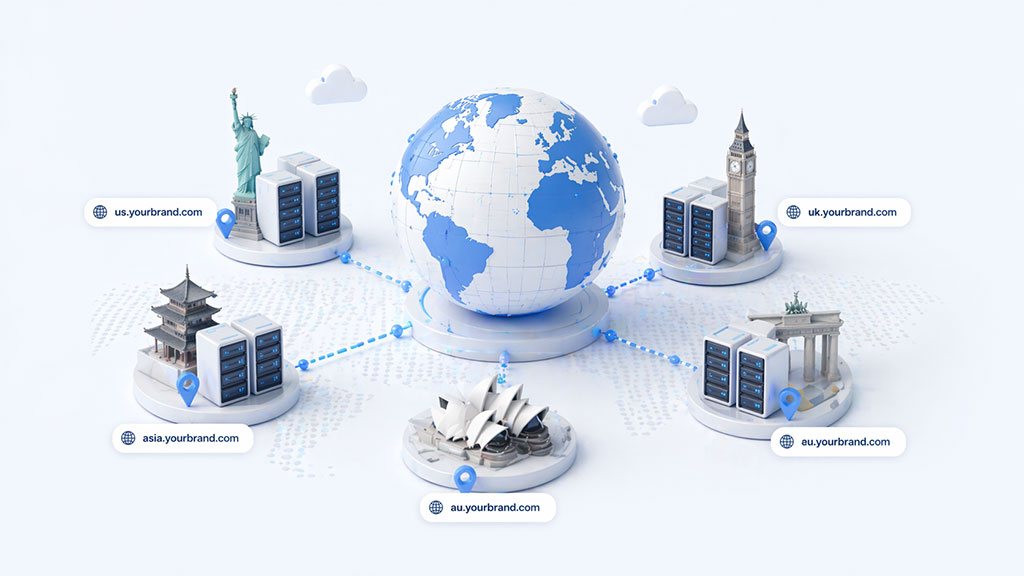
If your business operates on a global scale, subdomains are an indispensable tool for tailoring your online presence to different regions and languages.
Catering to International Audiences
Reaching customers in different countries requires more than just translation; it involves understanding cultural nuances and providing region-specific product or service offerings.
Country-Code Top-Level Domain (ccTLD) Subdomains
While you might own a domain like yourcompany.co.uk or yourcompany.de, you could also use subdomains for more granular targeting.
uk.yourcompany.comorde.yourcompany.com: These subdomains clearly indicate to users and search engines that the content is tailored to a specific country. This can be particularly useful for offering localized pricing, shipping options, or product variations.- Independent Website Management: Each country-specific subdomain can host a website with content, promotions, and even a design that is optimized for that particular market. This allows for greater flexibility in adapting to local business practices and consumer preferences.
- Improved Local SEO: Search engines often prioritize local results. By having a clearly defined subdomain for a country, you signal to search engines that your website is relevant to users in that region, potentially improving your local search rankings.
Language-Specific Subdomains
Even within a single country, offering content in multiple languages can broaden your appeal.
es.yourcompany.comfor Spanish speakers: This subdomain can host your entire website in Spanish, from product descriptions to marketing materials. This signals a commitment to serving a diverse customer base.- Consistent Branding Across Languages: While the language changes, you can maintain consistent branding and visual identity across all language-specific subdomains, reinforcing your global brand perception.
- Meeting Accessibility Standards: Providing content in multiple languages is a key aspect of digital accessibility and inclusivity.
Organizing Complex Projects and Initiatives

Sometimes, a specific project, event, or distinct business unit requires its own online presence, but you still want to keep it under your main brand umbrella. Subdomains are the perfect solution here.
Showcasing New Products and Services
When launching a new product or service, you might need a dedicated space to highlight its features, benefits, and unique value proposition.
- Dedicated Landing Pages and Information:
newproduct.yourcompany.comcan be a microsite focused entirely on the new offering, designed to convert visitors into leads or customers. This allows for focused messaging and a streamlined user journey. - Beta Testing and Early Access Programs: Use subdomains like
beta.yourcompany.comto provide access to early versions of your products or services, allowing you to gather feedback from a targeted group of users. - Event-Specific Microsites: For a major conference or product launch event, you might create
eventname.yourcompany.comto house all relevant information, registration, agenda, and speaker details.
Managing Different Business Units or Brands
If your company operates multiple distinct business units or acquired brands, subdomains can help you manage their online identities effectively.
- Independent Branding and Marketing: If you have acquired a company with its own established brand identity, you can maintain its separate online presence using a subdomain like
acquiredcompany.yourcompany.com. This allows each brand to retain its unique voice and target audience. - Clear Separation of Functionality: This can be especially useful for large enterprises with diverse product offerings. For example, a software company might have
enterprise.yourcompany.comfor its business solutions andconsumer.yourcompany.comfor its personal software. - Simplified DNS and Hosting Management: While each subdomain functions independently, they can still be managed under your central domain’s DNS records, simplifying overall website infrastructure.
When considering strategies for enhancing your online presence, it’s essential to explore various avenues, including the effective use of subdomains for business website expansion. A related article that delves into optimizing your website’s performance is available at boosting your business with faster NVMe storage, which highlights how improved storage solutions can significantly impact your site’s speed and user experience. By integrating these strategies, you can create a more robust online platform that supports your growth objectives.
Technical Considerations and Best Practices for Subdomain Implementation
<?xml encoding=”UTF-8″>
| Subdomain | Benefits | Considerations |
|---|---|---|
| blog.example.com | Separate content, better SEO, targeted audience | Additional maintenance, potential for duplicate content |
| shop.example.com | Distinct branding, specialized product focus | Separate marketing efforts, potential for confusion |
| events.example.com | Clear event promotion, focused user experience | Separate analytics, potential for dilution of main brand |
Implementing subdomains isn’t just about choosing a name; it involves technical setup and strategic planning to ensure they perform optimally.
DNS Configuration and Setup
The Domain Name System (DNS) is what translates human-readable domain names into IP addresses. Setting up subdomains involves creating new DNS records.
Creating Subdomain Records
You will need to add new “A” (address) records or “CNAME” (canonical name) records to your DNS configuration.
- Adding an “A” Record: This points your subdomain directly to an IP address. For example,
shop.yourcompany.commight point to the IP address of your e-commerce server. - Adding a “CNAME” Record: This points your subdomain to another domain name. You might use this if your subdomain is hosting a service that is itself on a different domain (e.g., a third-party email provider).
- Propagation Time: Be aware that DNS changes can take some time to propagate across the internet (typically a few minutes to 48 hours).
Choosing the Right Hosting for Each Subdomain
Depending on the purpose of your subdomain, you might need different hosting environments.
- Shared Hosting for Blogs and Simple Sites: For content-heavy subdomains like blogs, shared hosting can be a cost-effective solution.
- VPS or Dedicated Hosting for E-commerce: For high-traffic e-commerce subdomains, a Virtual Private Server (VPS) or dedicated hosting provides the necessary resources and scalability.
- Cloud Hosting for Dynamic Applications: Cloud platforms offer flexibility and scalability for subdomains running complex web applications.
SSL Certificates and Security
Ensuring the security of all your online assets is paramount, and this includes your subdomains.
Wildcard SSL Certificates
A wildcard SSL certificate is a convenient option for securing multiple subdomains.
- **
*.yourcompany.com:** A wildcard certificate secured with an asterisk (*) will protect all first-level subdomains of your domain (e.g.,shop.yourcompany.com,blog.yourcompany.com,support.yourcompany.com). This simplifies certificate management and ensures that all your subdomains appear to users as secure. - Individual SSL Certificates: Alternatively, you can obtain individual SSL certificates for each subdomain. This offers more granular control but requires more management.
Securing Third-Party Subdomain Services
If you use third-party services for specific subdomains (e.g., a CRM hosted on a subdomain), ensure those services also provide robust security measures.
- Data Encryption: Verify that data transmitted to and from these subdomains is encrypted using SSL/TLS.
- Regular Security Audits: For critical subdomains, consider regular security audits to identify and address potential vulnerabilities.
SEO Implications and Best Practices Revisited
While the SEO landscape is constantly evolving, here are some points to consider when using subdomains.
Consolidating Authority (or Not)
The debate continues on whether subdomains dilute or consolidate SEO authority.
- Google’s Statement: Google has stated that they treat subdomains and subdirectories similarly in terms of crawling and indexing. However, the perception and the way you structure your subdomains can still influence how well they perform.
- Content Relevance: The most crucial factor remains the quality and relevance of the content on your subdomain. If your
blog.yourcompany.comis packed with high-quality, relevant articles that attract backlinks, it will likely benefit your overall brand authority. - Internal Linking Strategy: Establish clear internal linking between your main domain and its subdomains. This helps search engines understand the relationship between them and pass authority. For example, in your blog posts, link back to relevant product pages on your main site.
User Signals and Experience
Google increasingly emphasizes user experience as a ranking factor.
- Clear Navigation: Ensure that users can easily navigate between your main domain and its subdomains. Confusing navigation can lead to high bounce rates, which is a negative user signal.
- Consistent Branding: Maintain consistent branding across all your subdomains. This reinforces your brand identity and builds trust with your audience.
- Mobile-Friendliness: Each subdomain must be mobile-friendly, as a significant portion of internet traffic comes from mobile devices.
In the process of expanding your business website through subdomains, it’s essential to ensure that all links are functioning correctly to maintain a positive user experience. A related article that can help you with this is about identifying and fixing broken links, which can significantly impact your site’s performance. You can read more about this topic in the article on how to find and fix 404 pages. By addressing these issues, you can enhance the effectiveness of your subdomain strategy and improve overall site navigation.
Conclusion: A Strategic Approach to Digital Presence
You’ve seen that subdomains aren’t just a technical detail; they are a versatile tool for strategic business website growth. By organizing your online presence into distinct, focused sections, you can significantly improve user experience, reach new markets, and manage complex projects more effectively.
Remember, the successful implementation of subdomains hinges on a clear understanding of your business goals and target audience. Whether you’re looking to build a dedicated e-commerce platform, establish a robust content hub, cater to international consumers, or showcase a new product, subdomains offer a flexible and scalable solution.
By carefully considering the technical aspects, security implications, and SEO best practices, you can harness the power of subdomains to create a more organized, user-friendly, and ultimately, more successful online presence for your business. Don’t view subdomains as an afterthought; see them as an integral part of your digital strategy.
FAQs
What are subdomains?
Subdomains are extensions of your domain name that can be used to organize and navigate to different sections of your website. They appear before the domain name in a URL, such as blog.example.com.
How can businesses use subdomains for website expansion?
Businesses can use subdomains to create separate sections for different products or services, target specific geographic locations, or create a blog or knowledge base. This can help organize content and improve user experience.
What are the benefits of using subdomains for business website expansion?
Using subdomains can help businesses create a more organized and user-friendly website, improve SEO by targeting specific keywords or locations, and provide a platform for expansion without the need for separate domain names.
Are there any potential drawbacks to using subdomains for business website expansion?
While subdomains can be useful for organizing content, they can also dilute the overall authority of the main domain in the eyes of search engines. Additionally, managing multiple subdomains can require additional time and resources.
How can businesses set up and manage subdomains for their website?
Businesses can set up and manage subdomains through their domain registrar or web hosting provider’s control panel. They can create new subdomains, assign them to specific directories or web applications, and manage DNS settings as needed.









Add comment