

You stand at the precipice of a significant transformation in how server infrastructure and web hosting operate. The future isn’t about incremental improvements on existing paradigms; it’s about a fundamental shift in design, deployment, and management. As you navigate this evolving landscape, you’ll encounter technologies that promise to reshape your understanding of what’s possible, challenging the very foundations upon which current systems are built.
For years, the allure of centralized public clouds has dominated the industry, offering scalability and convenience. However, you’re beginning to see the limitations of this model, particularly concerning single points of failure, data sovereignty, and the inherent inefficiencies of transporting data across vast distances. The future, for a significant portion of your infrastructure, lies in decentralization.
Edge Computing’s Ascendance: Processing at the Source
You’re no longer content with sending all data back to a distant central server for processing. Edge computing brings computation closer to the data source, whether that’s an IoT device, a smart city sensor, or a local branch office. This paradigm shifts the burden from the core network, reducing latency and bandwidth consumption. You’ll find yourself deploying micro-data centers, often in less traditional environments, equipped with sophisticated processing capabilities. Imagine medical imagery being processed at the hospital, not a data center hundreds of miles away, or autonomous vehicle data being analyzed within the vehicle itself, making real-time decisions without external reliance. The security implications demand a new approach to distributed trust and access control, moving beyond traditional perimeter-based models.
Blockchain and Distributed Ledger Technologies (DLTs) for Trust and Resilience
Blockchain, often associated with cryptocurrencies, offers a far broader application in decentralized infrastructure. You’ll leverage DLTs not for financial transactions, but for establishing immutable records of infrastructure changes, managing access control, and ensuring data integrity across a distributed network of servers. Imagine a certificate authority no longer tied to a single, vulnerable entity, but distributed across a blockchain, making it virtually impossible to compromise. This distributed trust model underpins the next generation of secure, resilient hosting. Furthermore, you can envision decentralized content delivery networks (CDNs) where content is served from multiple, independently operated nodes, with a blockchain layer ensuring content authenticity and load balancing.
Serverless Architectures’ Evolution: Beyond FaaS
While serverless functions (FaaS) have gained traction for specific stateless workloads, the future of serverless extends beyond these discrete units. You’re moving towards an era of “serverless by default” for a wider range of applications, where the underlying infrastructure becomes truly abstracted away. This means you focus solely on your application logic, and the platform dynamically provisions, scales, and manages all necessary resources. This also includes the development of more complex serverless orchestration tools, allowing you to define entire application workflows without explicit server management. The challenge lies in managing stateful applications in a serverless paradigm, which requires innovative approaches to ephemeral storage and persistent data services that seamlessly integrate with a transient execution environment.
As we explore the future innovations in server infrastructure and web hosting, it’s essential to consider the impact of cloud hosting on these advancements. A related article that delves into the fundamentals of cloud hosting and its benefits can be found at this link. Understanding cloud hosting is crucial for grasping how it influences the evolution of server technologies and web hosting solutions, paving the way for more scalable and efficient systems in the digital landscape.
The Intelligent Infrastructure: AI and ML Driving Autonomy
The days of manual configuration and reactive troubleshooting are numbered. Your future server infrastructure and web hosting environment will be profoundly intelligent, leveraging artificial intelligence and machine learning to achieve unprecedented levels of autonomy.
Predictive Analytics for Proactive Maintenance
You’ll move beyond reactive monitoring to predictive analytics. Machine learning models will analyze vast datasets of performance metrics, logs, and historical incidents to anticipate potential failures or performance bottlenecks before they occur. Imagine your infrastructure automatically identifying a degrading disk component and initiating a swap before any user experiences an outage, or predicting traffic surges and pre-emptively scaling resources without human intervention. This requires robust data collection pipelines and sophisticated anomaly detection algorithms that can distinguish between normal fluctuations and genuine precursors to problems. You’ll spend less time fighting fires and more time optimizing and innovating.
Automated Resource Optimization and Self-Healing Systems
AI will autonomously optimize resource allocation across your server fleet, dynamically adjusting CPU, memory, and storage provisioning based on real-time demand and predicted future needs. This goes beyond simple auto-scaling; it involves granular, intelligent allocation at the container or even process level. Moreover, your systems will exhibit self-healing capabilities. When a component fails, AI-driven agents will not only detect the failure but also initiate remediation, whether that’s restarting a service, migrating workloads to healthy nodes, or even deploying entirely new infrastructure segments. This closed-loop automation significantly reduces downtime and operational overhead, allowing your teams to focus on strategic initiatives rather than mundane operational tasks.
AI-Driven Security Operations and Threat Detection
The sheer volume and complexity of cyber threats demand an AI-driven approach to security. Machine learning models will analyze network traffic, system logs, and user behavior patterns to identify novel attack vectors and insider threats that evade traditional signature-based detection systems. You’ll see AI-powered SIEM (Security Information and Event Management) systems that can correlate events across your distributed infrastructure, pinpointing anomalous activities and automatically initiating defensive measures. This includes identifying zero-day exploits, detecting sophisticated phishing attempts by analyzing linguistic patterns, and recognizing subtle deviations in user access patterns that could indicate compromised credentials. The speed and scale of AI-driven threat detection become crucial in a landscape where attack surfaces are continuously expanding.
Networking’s Evolution: Programmable, Secure, and Hyper-Efficient
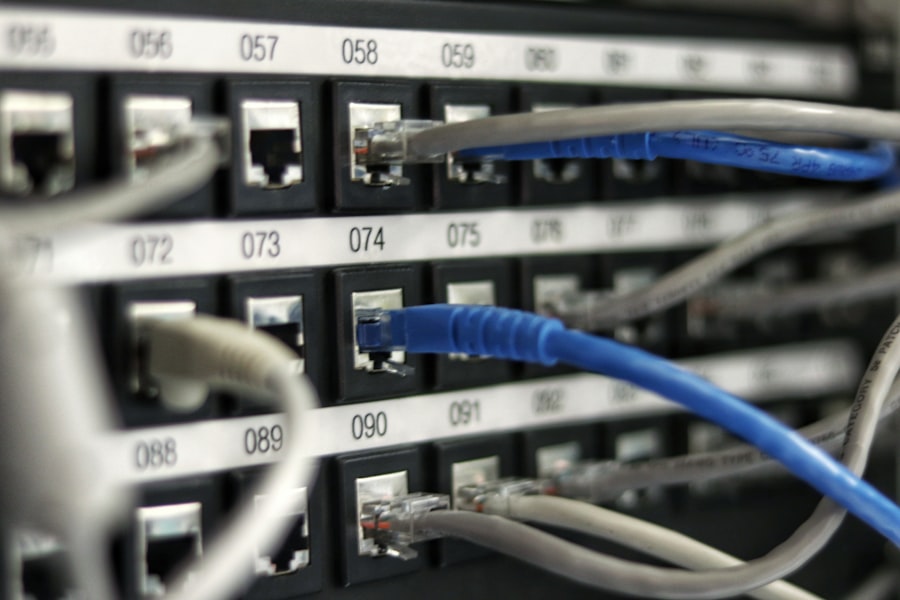
The network, often an afterthought, is becoming a central pillar of your future infrastructure. It must be highly programmable, inherently secure, and capable of handling increasingly complex traffic patterns with minimal overhead.
Software-Defined Wide Area Networking (SD-WAN) and Network Slicing
You’re moving beyond rigid, hardware-centric network configurations to a software-defined approach. SD-WAN allows you to centrally manage and optimize network traffic across diverse connectivity options, prioritizing critical business applications and ensuring optimal performance. Coupled with network slicing, you can create virtualized, isolated network segments tailored to specific applications or customer requirements. Imagine dedicated network slices for mission-critical applications with guaranteed bandwidth and latency, coexisting on the same physical infrastructure as less demanding services, all managed programmatically. This offers unprecedented flexibility and granular control over your network resources, allowing you to adapt rapidly to changing business needs and security postures.
Zero-Trust Networking for Granular Security
The traditional perimeter-based security model is obsolete. Your future network embraces a zero-trust philosophy, where no user or device, whether inside or outside your network, is inherently trusted. Every access request is authenticated, authorized, and continuously validated. This means micro-segmentation at every level, with policies applied to individual applications, services, and even containers. Imagine a scenario where a compromised server within your data center cannot access any other resource without explicit, continuously re-verified authorization. This significantly reduces the blast radius of any security breach and makes lateral movement by attackers far more difficult. Implementing zero trust requires robust identity and access management solutions integrated deeply into the network fabric.
Quantum-Resistant Cryptography and Post-Quantum Security
You are keenly aware of the looming threat posed by quantum computing to current cryptographic standards. As quantum computers become more powerful, they will be capable of breaking algorithms like RSA and ECC, which underpin much of your current internet security. The future necessitates a transition to post-quantum cryptography (PQC) – algorithms designed to resist attacks from quantum computers. This involves a monumental effort to research, standardize, and implement new cryptographic primitives across your entire infrastructure, from TLS certificates to VPNs and data encryption at rest. You’ll be actively involved in migrating your systems to these new standards, ensuring the long-term confidentiality and integrity of your data against a new generation of adversaries. This transition will be a multi-year effort, requiring careful planning and execution.
Sustainable and Resilient Infrastructure: Beyond Uptime Metrics
Your future focus extends beyond mere uptime to the overall sustainability and resilience of your infrastructure, acknowledging environmental impact and global challenges.
Energy Efficiency and Renewable Energy Integration
The energy consumption of data centers is a growing concern. You’ll deploy highly energy-efficient hardware, optimize cooling systems with advanced AI, and actively seek to power your infrastructure with renewable energy sources. This isn’t just about corporate social responsibility; it’s about reducing operational costs and future-proofing your business against fluctuating energy prices and carbon taxes. Imagine data centers designed with direct liquid cooling, minimizing reliance on traditional air conditioning, or locating facilities in regions with abundant hydroelectric or wind power. You’re also exploring innovative power management techniques at the chip level, dynamically adjusting power consumption based on real-time workload demands.
Water Conservation and Sustainable Cooling Technologies
Water is another critical resource in data center operations, especially for evaporative cooling systems. You’re implementing advanced water recycling techniques, exploring alternative cooling methods like direct liquid cooling, and designing facilities to minimize their water footprint. This includes using recycled or greywater for cooling purposes where feasible and investing in technologies that reduce water evaporation. The focus is on closed-loop systems that require minimal makeup water, demonstrating a commitment to responsible resource management.
Geographic Redundancy and Disaster Preparedness Evolution
While geographic redundancy is a current best practice, its implementation will evolve. You’re moving towards more dynamic and globally distributed architectures that can withstand not just localized outages but also regional disasters or even climate-induced disruptions. This means not just duplicating data but designing applications to be inherently resilient to partial infrastructure failures, spreading components across multiple, independent availability zones and regions, often leveraging the decentralized principles discussed earlier. Your disaster recovery plans will incorporate AI-driven simulations to identify vulnerabilities and optimize recovery strategies, reacting not just to hardware failure but to broader environmental and geopolitical challenges.
As businesses increasingly rely on digital platforms, the importance of robust server infrastructure and web hosting solutions cannot be overstated. Future innovations in these areas promise to enhance performance, scalability, and security, ensuring that websites can handle growing traffic demands while safeguarding sensitive data. For those interested in understanding how to protect their online presence, a related article discusses the latest website security best practices that can complement these advancements. You can read more about it in this insightful piece on website security best practices.
The Human-Machine Interface and Developer Experience
| Topic | Metrics |
|---|---|
| Edge Computing | Latency, Bandwidth, Scalability |
| Green Hosting | Energy Efficiency, Carbon Footprint, Renewable Energy Usage |
| Containerization | Density, Isolation, Orchestration |
| Serverless Computing | Cost, Scalability, Management |
| AI and Automation | Efficiency, Predictive Maintenance, Workload Optimization |
Despite the increasing autonomy of infrastructure, the human element remains crucial. Your focus will shift from managing servers to designing and interacting with increasingly intelligent systems, demanding a refined developer experience.
Low-Code/No-Code for Infrastructure Deployment and Management
The complexity of future infrastructure will necessitate simpler interfaces for non-specialists. Low-code and no-code platforms will empower developers, and even business users, to provision resources, deploy applications, and manage infrastructure services without deep technical expertise. Imagine a drag-and-drop interface for constructing complex distributed systems, with the underlying orchestration handled autonomously by AI. This democratizes access to advanced capabilities and accelerates innovation by reducing the friction associated with infrastructure provisioning. This doesn’t eliminate the need for expert engineers, but it allows them to focus on designing these highly abstract and intelligent platforms.
Augmented Reality (AR) and Virtual Reality (VR) for Operations and Training
AR and VR will transform how you interact with and manage your physical and virtual infrastructure. Imagine wearing AR glasses to overlay real-time performance metrics and diagnostics onto physical server racks, eliminating the need for monitors and making troubleshooting more intuitive. VR simulations will provide immersive training environments for complex operational procedures, allowing engineers to practice disaster recovery scenarios or new deployment techniques in a safe, virtual space before implementing them in production. This enhances operational efficiency, reduces errors, and accelerates the onboarding of new personnel into increasingly complex environments.
Explainable AI (XAI) for Transparency and Trust
As AI makes more autonomous decisions within your infrastructure, the demand for explainable AI (XAI) will grow. You need to understand why an AI system has made a particular scaling decision, or why it has flagged a specific security anomaly. XAI provides transparency into these black-box models, building trust and enabling human oversight and intervention when necessary. This is crucial for debugging, ensuring compliance, and refining AI models over time. Without XAI, you risk operating a highly autonomous but ultimately opaque system, which can lead to compliance issues, unforeseen problems, and a loss of confidence in the automated processes. This transparency ensures that you maintain control and understanding of your critical infrastructure.
FAQs
What are some future innovations in server infrastructure?
Some future innovations in server infrastructure include the adoption of edge computing, the use of containerization and microservices, the implementation of serverless computing, and the integration of artificial intelligence for predictive maintenance and optimization.
How will web hosting evolve in the future?
Web hosting is expected to evolve with the adoption of cloud-native technologies, the use of multi-cloud and hybrid cloud environments, the implementation of serverless hosting solutions, and the integration of advanced security measures to protect against cyber threats.
What role will automation play in future server infrastructure and web hosting?
Automation will play a significant role in future server infrastructure and web hosting by enabling efficient provisioning, scaling, and management of resources, as well as streamlining deployment processes, optimizing performance, and enhancing security through automated monitoring and response mechanisms.
How will the rise of IoT impact server infrastructure and web hosting?
The rise of IoT will impact server infrastructure and web hosting by increasing the demand for edge computing capabilities to process and analyze data closer to the source, as well as requiring scalable and reliable hosting solutions to support the growing number of connected devices and the data they generate.
What are the potential benefits of future innovations in server infrastructure and web hosting?
Potential benefits of future innovations in server infrastructure and web hosting include improved scalability, flexibility, and reliability of hosting solutions, enhanced performance and efficiency through advanced technologies, increased security and compliance measures, and the ability to support emerging trends and technologies such as AI, IoT, and 5G.








Add comment